- PM terms the verdict “great disappointment” to foreign enemies and local mafias
- Legal experts say Gen Bajwa’s appointment will be considered null and void if parliament fails to legislate within six months
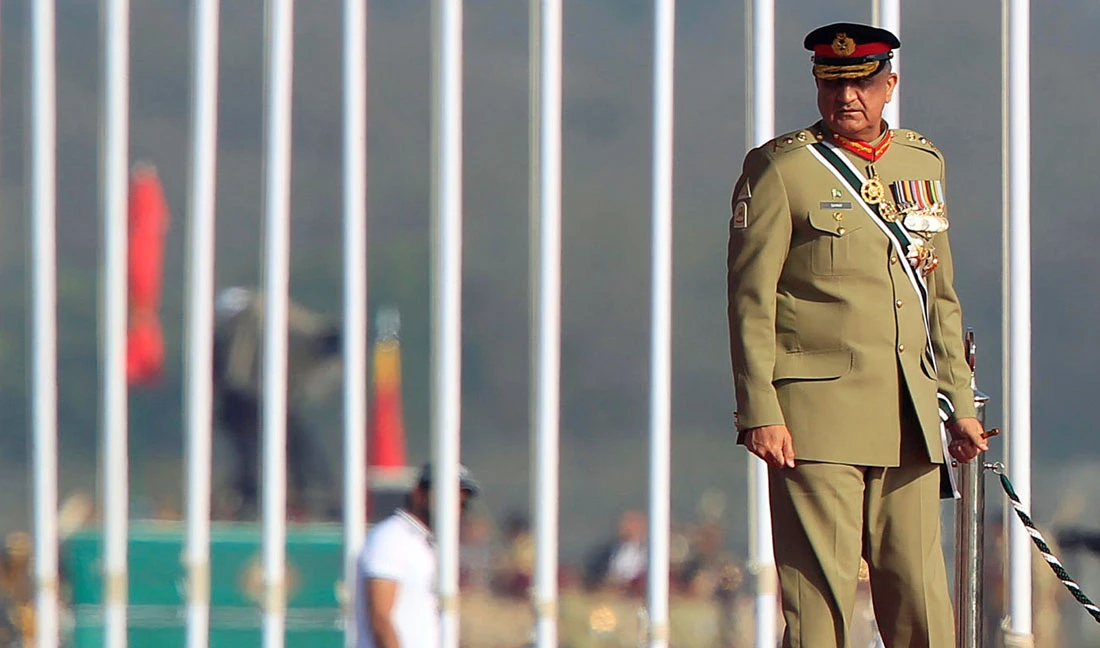
ISLAMABAD: Pakistan’s top court on Thursday allowed Chief of Army Staff (COAS) General Qamar Javed Bajwa to stay in the office for another six months while asking the government to specify the terms and conditions of the country’s army chief’s service through an act of parliament.
The Supreme Court ruled this through a short order after hearing a petition challenging the government’s decision to grant a three-year extension to General Bajwa after the completion of his term in the office.
“The current appointment of General Qamar Javed Bajwa as COAS shall be subject to the said legislation and shall continue for a period of six months from today,” the court said in its order.
The ruling was announced just in time since the army chief was set to retire later tonight.
Earlier on Tuesday, the court suspended the government’s notification of Aug. 19 wherein it extended General Bajwa’s term for another three years, citing procedural flaws and legal loopholes related to the army chief’s retirement, reappointment and extension.
Shortly after the court issued its short order on Thursday, however, the prime minister termed it a “great disappointment to those who expected the country to be destabilized by a clash of institutions.”
“That this did not happen must be of special disappointment to our external enemies and mafias within – mafias who have stashed their loot abroad and seek to protect this loot by destabilizing the country,” he wrote in a Twitter post.
Meanwhile, Attorney General Anwar Mansoor Khan assured the court in writing during the hearing that the government would legislate on the issue to plug all the loopholes that were pointed out by the learned judges.
“We, while exercising judicial restraint, find it appropriate to leave the matter to the Parliament and the Federal Government to clearly specify the terms and conditions of service of the COAS through an Act of Parliament,” the court said in its verdict.
Legal experts say the court’s verdict has rightly pointed out the gaps in the country’s constitution and legislation regarding the appointment and tenure of the army chief while upholding the parliament’s supremacy by referring the matter to it for legislation.
“If the parliament fails to legislate on the issue within six months, this will automatically render General Bajwa’s appointment as null and void,” Barrister Omer Malik told Arab News.
He said the apex court’s ruling had also “strengthened the role of parliament,” adding it was now up to the public representatives how they wanted to deal with the issue.