- Party outlines route through southern Khyber Pakhtunkhwa, without specifying when march would reach Islamabad
- Truckers avoiding northern routes report cargo accumulating in Karachi and mounting costs for detained vehicles
KARACHI: Pakistan’s opposition Pakistan Tehreek-e-Insaf party said Friday its Oct. 4 march demanding jailed former prime minister Imran Khan’s release remained on schedule, as authorities’ security preparations disrupted freight deliveries and government officials prepared for talks.
The party had postponed its original Sept. 27 march after authorities blocked routes toward Islamabad with shipping containers and deployed security forces. Transporters say continued vehicle seizures have discouraged truckers from traveling north, leaving cargo accumulating in Karachi, Pakistan’s main trade gateway.
“So far the call for long march is intact,” PTI said in a statement.
The march would begin at Gandi Chowk in Lakki Marwat, a district in southern Khyber Pakhtunkhwa, with its first stop in Karak and a second stop in Kohat on Oct. 5 before entering Peshawar district, the PTI said.
The timetable indicates Oct. 4 is the departure date, rather than the date protesters would reach Islamabad. The statement did not specify when the march would arrive in the capital.
The government opened talks with a PTI negotiations team on Thursday, amid a separate dispute over governance and worsening militant violence in Khyber Pakhtunkhwa, the northwestern province governed by PTI. Federal ministers have raised the possibility of governor’s rule, which would place provincial government functions under federal control. No decision to impose it has been announced.
The government’s decision to pursue talks followed a Thursday meeting between President Asif Ali Zardari and Prime Minister Shehbaz Sharif that reviewed the political and security situation and expressed concern over conditions in Khyber Pakhtunkhwa.
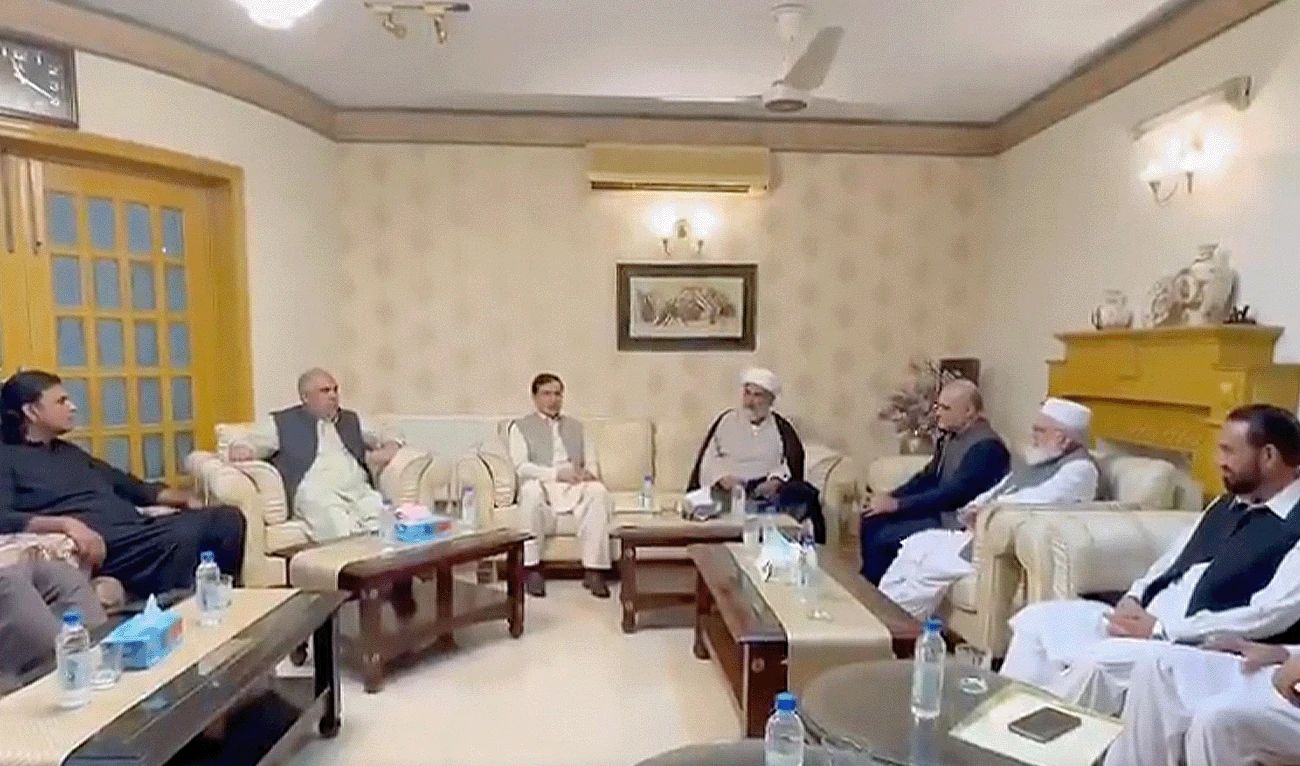
PTI named an opposition negotiating team comprising former parliamentary speaker Asad Qaiser, Senate opposition leader Raja Nasir Abbas, party chairman Barrister Gohar Khan, Salman Akram Raja, Amir Dogar and Haleem Adil Sheikh.
The government delegation includes Interior Minister Mohsin Naqvi, Sharif’s political affairs adviser Rana Sanaullah and Federal Minister Amir Muqam. Sherry Rehman, Naveed Qamar and Aijaz Jakhrani represent the Pakistan Peoples Party, a partner in the ruling coalition.
Pakistani media reported that the government had held off on immediately imposing governor’s rule or emergency measures while giving dialogue a chance. Those reports cited unnamed sources; the official announcement of Friday’s talks did not say either option had been withdrawn.
Muqam said Monday the conditions for governor’s rule had been met. Other federal ministers have accused the provincial administration of failing to confront militancy, allegations the provincial government rejects.
Under Article 234 of Pakistan’s constitution, the president can assume provincial government functions if satisfied that a province cannot be governed in accordance with constitutional provisions. The proclamation is subject to parliamentary approval.
CARGO BACKLOG AND MOUNTING COSTS
The confrontation is affecting businesses far beyond the capital, with truckers refusing northern journeys for fear their vehicles will be seized and their containers used as barricades.
“Right now, going toward Punjab is like committing suicide,” driver Javid ur Rehman, 35, told Reuters, referring to Pakistan’s most populous province.
“The police seize the vehicles and snatch the containers, and then we are left distressed.”
Transporters told Reuters police had taken over more than 2,000 vehicles in September, many carrying cargo and held for days with little or no compensation.
Rana Mohammad Aslam, president of the Karachi Goods Carrier Association, said the disruption affected routes to Islamabad, Rawalpindi, Jhelum, Peshawar and Attock. Some operators had halted journeys beyond Gujranwala in Punjab, while others were taking alternative routes.
Charges for a single detained container could reach Rs30,000–Rs40,000 ($110–$150) a day, Aslam said, adding to losses from missed deliveries and idle trucks.
Pakistan’s interior, information, commerce and finance ministries, along with Punjab police and the provincial home department, did not respond to Reuters’ requests for comment.
Previous protests seeking Khan’s release have sometimes turned violent, including a November 2024 march on Islamabad that ended in deadly clashes with security forces. Federal authorities cite past unrest in defending restrictions, while PTI says its planned march will be peaceful.
Khan has been imprisoned since August 2023 and faces multiple criminal cases. He denies wrongdoing, while PTI says the prosecutions are politically motivated. The government denies interfering in judicial proceedings.
With additional inputs from Reuters