- Daily fluctuations have created uncertainty in the currency market for Hajj operators
- Pakistanis spend about $3 billion a year on Hajj and Umrah, say currency dealers
KARACHI: In a time of major exchange rate fluctuations, Pakistan’s private Hajj operators find themselves in a tight spot since they are losing a major chunk of their profit but can’t seem to do much to fix the situation.
“It’s a difficult time for us. The price of package we offer to Hujjaj [or Hajj pilgrims] goes up again once we’ve finalized the deal due to the continuous devaluation of our national currency,” Faisal Naeem, chairman of Hajj and Umrah committee of the Karachi Chambers of Commerce and Industry (KCCI), told Arab News on Friday.
The Pakistani rupee has lost about 17 percent of its value against the US dollar – from Rs138 to Rs161 to a dollar – and 13 percent against the Saudi Riyal – from Rs36 to Rs141.70 to a Saudi Riyal – since the beginning of the Hajj application process on February 25, 2019 until today, according to the forex exchange companies data.
“It is a serious situation for those who just provide services and do not charge too much from Hujjaj since they consider it a religious duty. It is the worst situation for us. The currency fluctuation is being absorbed by Hajj operators,” Naeem added.
Pakistan is scheduled to operate Hajj flights from July 5, 2019 until August 5, 2019, according to the country’s Civil Aviation Authority (CAA).
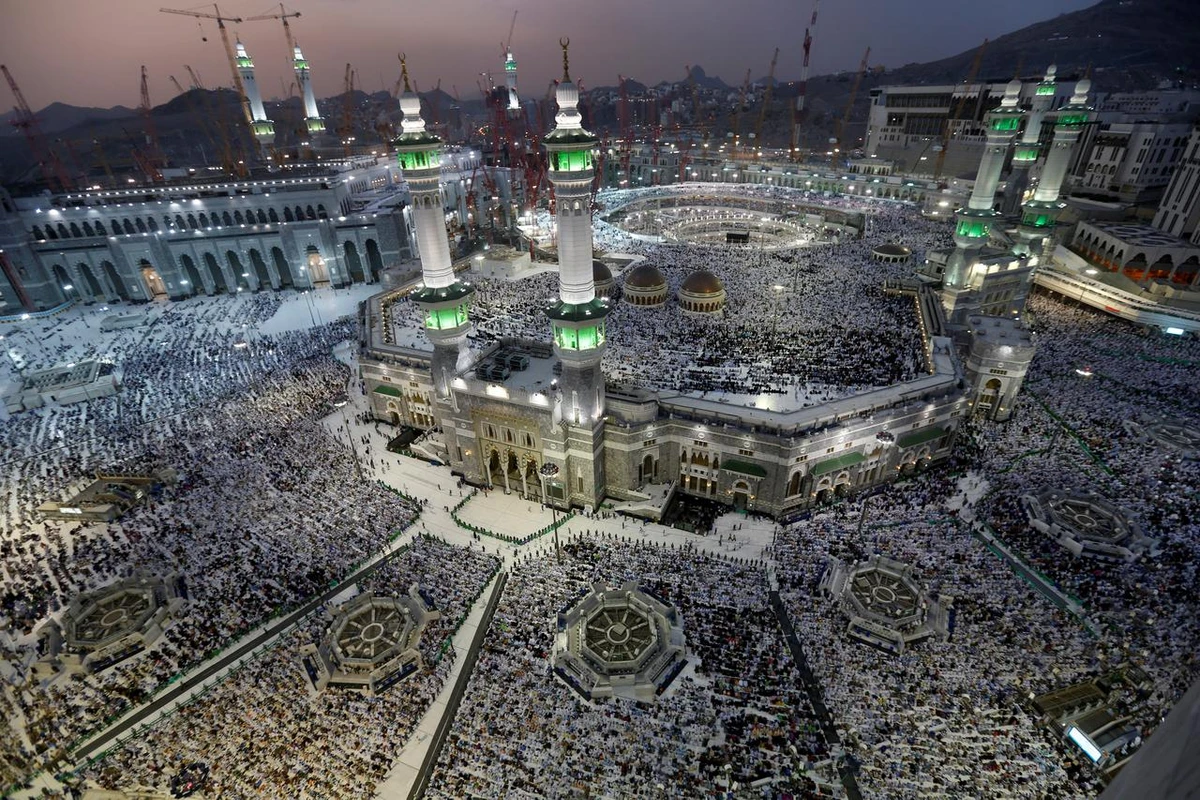
Every year, around 2 million Pakistanis travel to Saudi Arabia for Hajj or Umrah, mobilizing billions of dollars drawn mostly from the country’s open market. “For Hajj and Umrah and other travels to Saudi Arabia, open market provides $3 billion to visitors every year,” Malik Bostan, president of the Forex Association of Pakistan, told Arab News.
As per the Hajj quota fixed for Pakistan by the Saudi ministry of Hajj, about 179,210 Pakistanis will perform Hajj this year. On the request of Pakistan’s administration, the Saudi authorities have maintained the additional quota of 5,000 pilgrims for Hajj-2019, according to the ministry of religious affair in Islamabad.
Out of the total country’s Hajj quota of 179,210, 60 percent – or 107,526 – will avail the government Hajj scheme while 40 percent – or 71,684 – will opt for private Hajj scheme, Hajj Group Organizers (HGOs). The additional quota of 5,000 pilgrims will also be allocated to private sector. As per the Hajj rules of the Kingdom of Saudi Arabia, the HGO with less than 50 Hujjaj would not be permitted.
Private Hajj operators make payments for transportation charges, Maktab fee, Mina charges etc. that are deposited directly through their International Banking Account Number (IBAN).
“If we have finalized a package deal with someone during the last week on the basis of prevailing exchange rate and the payment is not made or gets delayed, we have no option but to go ahead and fulfil our commitment. The difference between the exchange rates is the loss the operator suffers,” Naeem explained.
However, former chairman of the Travel Agents Association of Pakistan (TAAP) Yahya Polani partially holds operators responsible for the losses due to the late transfer of payments to Saudi Arabia. “There are problems due to currency fluctuations, but the losses are not 100 percent in any case. Operators should transfer the amount to the Kingdom on time to avoid unnecessary losses,” he added.