- The rupee recovered in the beginning of the month, though it has been declining during the ongoing week again
- Local traders say the depreciation of Pakistani rupee is caused by currency smuggling to Afghanistan
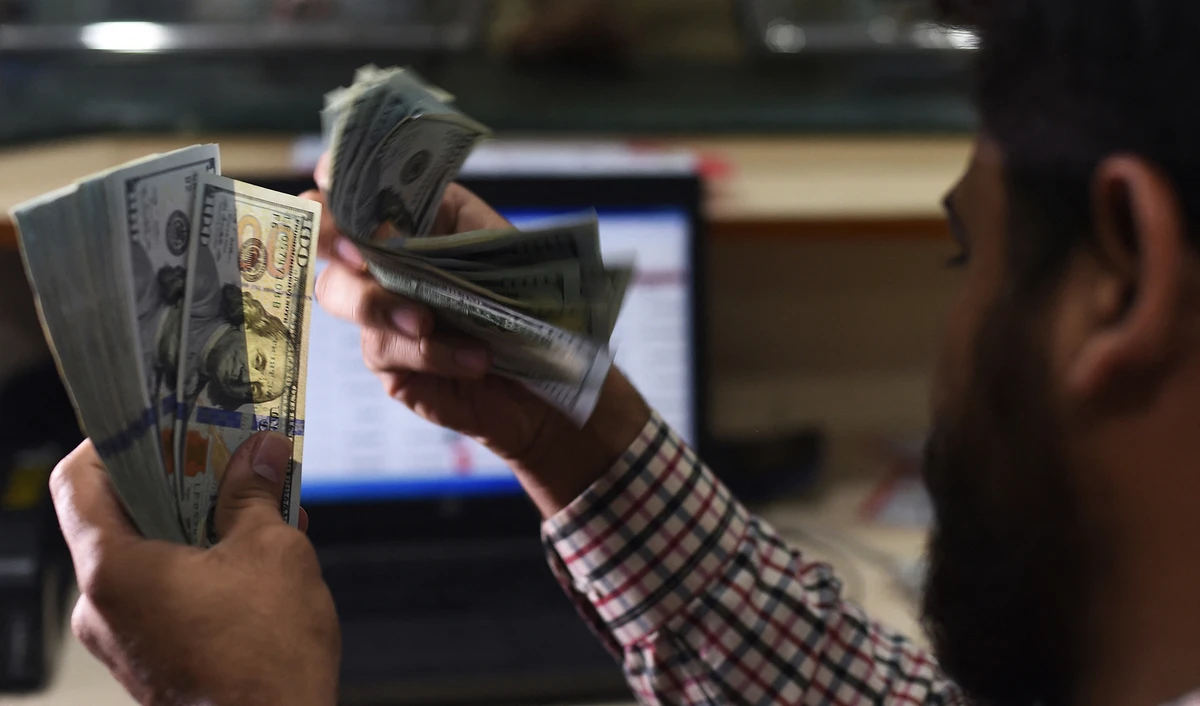
KARACHI: Pakistan’s national currency continued to slide against the US dollar on Thursday, losing 0.47 percent of its value in the interbank market, according to the central bank, as experts attributed its depreciation to the growing demand for oil import payments.
Until recently, officials, traders and analysts in Pakistan were counting the rupee among the global “top performers” during the month of August since it had recovered much of its value after months of depressed trading against the backdrop of political and economic uncertainty in the country.
However, the rupee has consistently declined against the dollar during the ongoing week and closed at Rs219.41 on Thursday.
The Pakistani national currency stood at Rs214.65 at the end of the last week.
“The rupee is under pressure in the interbank market mainly due to the short supply of dollar amid higher demand for the oil import payments,” Samiullah Tariq, research director at the Pakistan-Kuwait Investment, told Arab News. “In the open market, the currency’s appreciation is due to the demand for Emirati Dirham after the UAE authorities imposed the condition on travelers to carry AED5,000.”
Local traders said, however, the depreciation of rupee was caused by currency smuggling to Afghanistan.
“There is shortage of dollar in local market due to the rise in currency smuggling to Afghanistan,” Zafar Paracha, general secretary of the Exchange Companies Association of Pakistan, said. “The smugglers have enhanced their activities after the government increased import duties mainly on luxury goods. The government needs to step up measures at border crossings with Afghanistan to curb the smuggling of currency.”
The Pakistani currency remained under pressure in recent months due to growing current account deficit and dwindling foreign exchange reserves. The government was trying to address the problem by seeking external finances from the International Monetary Fund (IMF) and friendly nations.
The IMF reached a staff-level agreement with Pakistan on July 13 to resume a $6 billion loan facility which was stalled earlier this year.
The international lending agency’s executive board is now scheduled to hold a meeting on August 29 before releasing $1.2 billion to support Pakistan’s cash-strapped economy.