- Jamaat-e-Islami plans to protest in Islamabad against imposition of petroleum levy
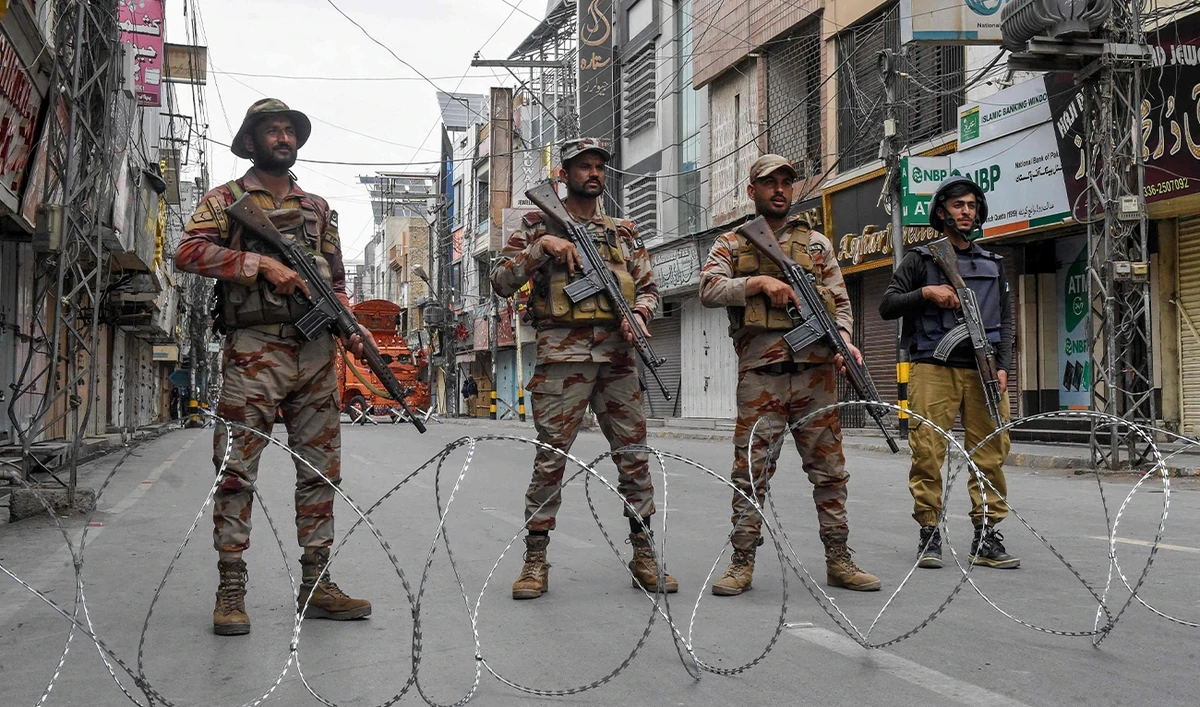
- Islamabad officials review security, say maintaining law and order is their top priority
ISLAMABAD: Pakistan’s religio-political Jamaat-e-Islami (JI) party will begin its “long march” to the capital to protest against petroleum levy and high fuel prices today, Sunday, as Islamabad police officials reviewed the law-and-order situation in the city.
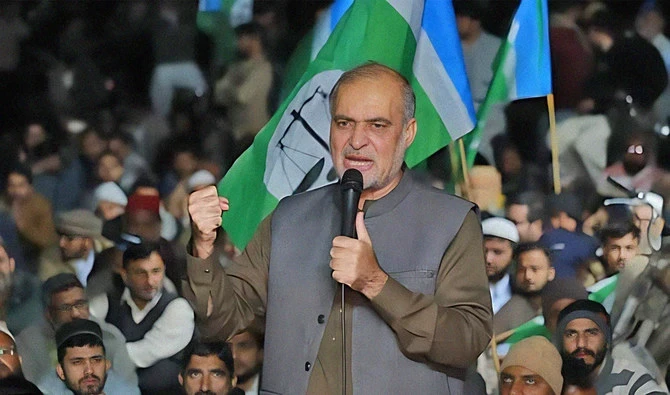
The JI had announced earlier it will lead hundreds of thousands of supporters in a march to Islamabad on Sept. 20 to demand the total abolition of the government’s petroleum levy. This is a tax imposed on fuel that has become a major source of federal revenue.
Pakistani authorities have placed shipping containers to seal off the Red Zone area in Islamabad ahead of the protest. The area is home to Pakistan’s most important executive, legislative, and judicial buildings, and also features several foreign embassies.
JI chief Naeem-ur-Rehman announced on Saturday night that the march would go ahead as planned after a fifth round of talks between the government and the party failed to achieve a breakthrough.
“Tomorrow, here from the Karachi Cantonment Station, a historic march will begin,” Rehman told JI supporters in Karachi. “This march will head toward Islamabad.”
Rehman said the march will head from Karachi to Rohri in Sindh and onwards to Multan via train. From Multan, the JI chief said thousands of supporters will head toward Islamabad via road.
He said JI supporters in Pakistan’s northwestern Khyber Pakhtunkhwa (KP) province will also head toward Islamabad from the Bab-e-Khyber (Khyber Gate) monument on Sunday.
Pakistan’s government levies Rs114 [$0.41] per liter in taxes and duties on petrol and Rs100 [$0.36] per liter on diesel. The government has regularly increased the prices of petroleum products as the US-Iran war and increasing attacks by the Houthis against Saudi Arabia drive up global oil prices.
The JI has been protesting with regular sit-ins in Lahore, Peshawar, Karachi and dozens of other locations across the country since last month, demanding the government abolish the levy.
The JI’s protest is expected to present a challenge to the government, as it coincides with another march to the capital by former prime minister Imran Khan’s Pakistan Tehreek-e-Insaf (PTI) party.
The PTI plans to assemble hundreds of thousands of supporters in the capital on Sept. 27 as it aims to pressurize the government for the jailed former premier’s release.
ISLAMABAD OFFICIALS REVIEW SECURITY
Separately, Islamabad’s chief commissioner and chief of police on Saturday reviewed security and law and order arrangements at major entry and exit points of the capital.
The officials inspected various areas of the city to assess police deployment, traffic management and the preparedness of relevant departments to respond to any situation, the state-run Associated Press of Pakistan reported.
The chief commissioner said maintaining law and order was the administration’s top priority, stressing that citizens, traders, businesses, professionals and government employees should be able to carry out their lawful activities without unnecessary disruption during protests.
The protests take place amid a stern warning from Interior Minister Mohsin Naqvi, who said on Friday that law enforcement personnel had been given clear “rules of engagement” to respond if fired upon during planned opposition protests in Islamabad.
“This time, we are giving very clear rules of engagement to our soldiers and there is no possibility that if you shoot them, they will remain silent,” Naqvi said at a press conference on Friday.
An Islamabad High Court judgment this week said political parties and leaders had no lawful right to block roads, highways or other public places in ways that obstructed citizens’ movement or access to schools and hospitals.
The court also directed provincial governments not to use public funds, officials, vehicles or other state machinery to facilitate political marches, and ordered authorities to protect the constitutional rights of Islamabad residents.
Naqvi said law enforcement agencies had been instructed to enforce the ruling and authorities would use legal means to stop anyone attempting to violate it