- Economic experts say such price comparisons are not justifiable on technical grounds since they ignore purchasing power parity
- The government will provide direct food subsidies to the lowest social segments comprising 12.5 million households from this month
KARACHI: Pakistan’s finance minister Shaukat Tareen on Friday defended the government’s decision to increase petroleum prices to a historically high level by saying the country was still offering the cheapest rates in the region.
According to a notification issued by the finance division on Thursday, the government increased the per liter price of petrol by Rs4 to Rs127.30, high speed diesel by Rs2 to Rs122.04, kerosene oil by Rs7.05 to Rs99.31 and light diesel oil by Rs8.82 to Rs99.51.
Pakistan fixes the rates of petroleum products on a fortnightly basis to pass on the impact of the fluctuating international prices to consumers.
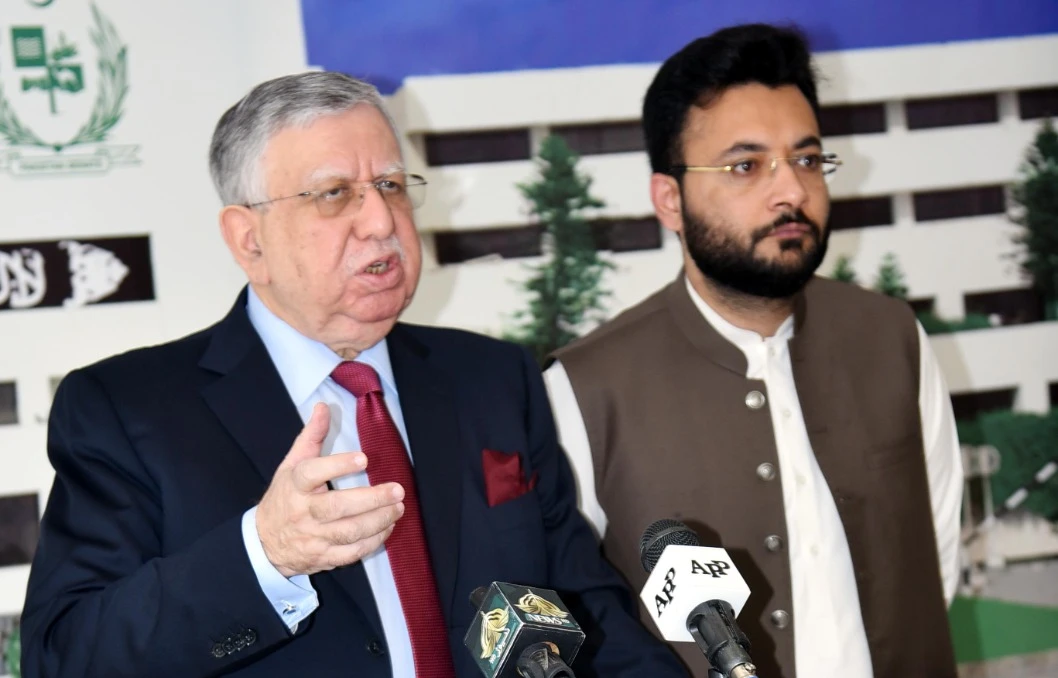
“Petroleum prices in Pakistan are the cheapest in the region, including India and Bangladesh,” Tareen said during a joint news conference held in Islamabad with the state minister for information Farrukh Habib.
“There are only 16 countries which have lower petrol prices than Pakistan and they are oil producing nations,” he continued.
The finance minister informed the prices of crude oil in international market since October 2020 had increased from $42 to $80 per barrel, adding the government would have to pay from its own pocket if it decided to take steps to reduce the prices.
“The petroleum levy had also been reduced to Rs2 to Rs3 per liter from Rs30 per liter in 2018,” he informed.
Tareen said the prime minister had instructed his team not to burden people any further which reflected the “feelings of the current ruler toward the poor population of the country.”
Pakistan aims to generate Rs610 billion in revenue through petroleum levy, according to the fiscal budget of the ongoing year.
Economic experts say it is not fair to make a comparison of petroleum prices with the regional and other countries.
“You cannot do that technically,” Dr. Farrukh Saleem, a senior economist, told Arab News. “You cannot take the price of one country and convert it into dollars and compare it with your own rates.”
“From an economic standpoint, you need to consider purchasing power parity which means that the average income in a country has to be taken into account,” he continued. “For instance, the average income in Pakistan is about $1,150 and petrol is being sold at Rs127 [$0.74]. But in the US, the price is $1 while the average income is $60,000. So, the government’s comparison has no basis.”
Saleem said, however, the current administration should not be blamed for the recent price hike since it cannot control the international market.
“That said, the petroleum price increase will have an impact on the overall economy and lead to soaring prices of commodities and services,” he added.
According to the Pakistan Bureau of Statistics, the inflationary pressure in Pakistan’s economy increased by nine percent on an annual basis in September 2021 as compared to an increase of 8.4 percent the previous month.
The consumer price index also indicated an increase of 2.1 percent in inflation on a monthly basis compared to 0.6 percent last month and 1.5 percent in September 2020.
The finance minister said during the news conference the government would provide direct food subsidies from this month to the lowest segment of the Pakistani society which comprised about 12.5 million households.
Tareen maintained the incumbent administration wanted to make people self-reliant by helping them acquire necessary skills, adding that cash distribution through Ehsaas (empathy) program was not a permanent solution.
“We will teach people how to catch fish and not just give them fish so they can stand on their own feet,” he said.