KARACHI: India and Pakistan can resolve their bilateral differences by increasing the exchange of goods instead of gunfire, leading members of the country’s business community and economic experts told Arab News on Sunday.
“The potential for direct trade between India and Pakistan is about 20 times greater than the recorded level,” said Prof. Dr. Athar Ahmed, an expert on international trade, while talking to the newspaper.
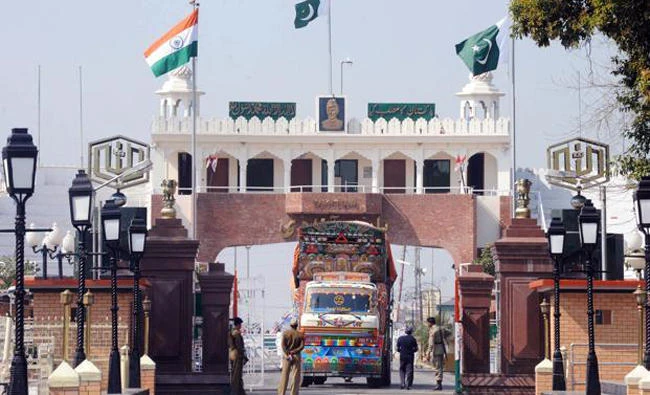
There are three channels of trade between the two countries, according to the State Bank of Pakistan. The formal trade, through official means, is marginal. However, there is a significant quantum of illegal trade between them that takes place through smuggling via the porous India-Pakistan border and through Afghanistan.
The central bank also mentions that trade between India and Pakistan through third countries. These mainly include Dubai and Singapore, which are free ports and accommodate legal agents of traders from both India and Pakistan.
The official trade figures show that the bilateral trade between two South Asian neighbors averages around $2 billion. Undocumented trade is about four times higher, going up to $8 billion, while the trade through third countries is estimated to be around $5 billion.
“If you sum up this trade volume, it accumulates to roughly $15 billion,” Ahmed observed, adding that steps must be taken to officialize the undocumented trade.
Members of Pakistan’s business community also advocated strengthening of regional trade because of timely and cheap access to goods and services.
They were reacting to Indian High Commissioner Ajay Bisaria’s statement on Friday in which he called for the removal of non-tariff barriers besides liberalization of visas and normalization of mutual relations that could increase the bilateral trade up to $30 billion for the better future of the two countries.
Similar sentiments were also echoed by Pakistan’s High Commissioner to India, Sohail Mahmood, who called for giving the next generations of India and Pakistan a future of hope and opportunities.
“Whenever the relations between India and Pakistan get tense, it adversely affects their bilateral trade. Some essential items find their way into Pakistan through third countries, but that significantly increases their prices,” Muffasar Atta Malik, president of the Karachi Chamber of Commerce and Industry, told Arab News.
He added that the quantum of direct trade between the two countries could be increased and taken anywhere between $5 billion and $10 billion annually in the short run.
India is a big market and it is also Pakistan’s next-door neighbor, Waheed Ahmed, vice president of the Federation of Pakistan Chamber of Commerce and Industry, pointed out.
“About $25 billion to $30 billion trade potential exists between the two countries which can only materialize if the relations between them are normalized. The money being spent on purchasing weapons should be used to alleviate poverty from the subcontinent, which accommodates the world’s largest chunk of poor people,” Ahmed told Arab News.
“About 60 to 70 percent of the world’s population lives around us, mostly in China and India. Normalization of relations will open a market of more than one billion people to Pakistan,” Ahmed said.
He added: “Disputes can be resolved by increasing trade relations as some of the European countries have done in the past. Now their populations are financially benefiting from their decisions.”
“The potential for direct trade between India and Pakistan is about 20 times greater than the recorded level,” said Prof. Dr. Athar Ahmed, an expert on international trade, while talking to the newspaper.
There are three channels of trade between the two countries, according to the State Bank of Pakistan. The formal trade, through official means, is marginal. However, there is a significant quantum of illegal trade between them that takes place through smuggling via the porous India-Pakistan border and through Afghanistan.
The central bank also mentions that trade between India and Pakistan through third countries. These mainly include Dubai and Singapore, which are free ports and accommodate legal agents of traders from both India and Pakistan.
The official trade figures show that the bilateral trade between two South Asian neighbors averages around $2 billion. Undocumented trade is about four times higher, going up to $8 billion, while the trade through third countries is estimated to be around $5 billion.
“If you sum up this trade volume, it accumulates to roughly $15 billion,” Ahmed observed, adding that steps must be taken to officialize the undocumented trade.
Members of Pakistan’s business community also advocated strengthening of regional trade because of timely and cheap access to goods and services.
They were reacting to Indian High Commissioner Ajay Bisaria’s statement on Friday in which he called for the removal of non-tariff barriers besides liberalization of visas and normalization of mutual relations that could increase the bilateral trade up to $30 billion for the better future of the two countries.
Similar sentiments were also echoed by Pakistan’s High Commissioner to India, Sohail Mahmood, who called for giving the next generations of India and Pakistan a future of hope and opportunities.
“Whenever the relations between India and Pakistan get tense, it adversely affects their bilateral trade. Some essential items find their way into Pakistan through third countries, but that significantly increases their prices,” Muffasar Atta Malik, president of the Karachi Chamber of Commerce and Industry, told Arab News.
He added that the quantum of direct trade between the two countries could be increased and taken anywhere between $5 billion and $10 billion annually in the short run.
India is a big market and it is also Pakistan’s next-door neighbor, Waheed Ahmed, vice president of the Federation of Pakistan Chamber of Commerce and Industry, pointed out.
“About $25 billion to $30 billion trade potential exists between the two countries which can only materialize if the relations between them are normalized. The money being spent on purchasing weapons should be used to alleviate poverty from the subcontinent, which accommodates the world’s largest chunk of poor people,” Ahmed told Arab News.
“About 60 to 70 percent of the world’s population lives around us, mostly in China and India. Normalization of relations will open a market of more than one billion people to Pakistan,” Ahmed said.
He added: “Disputes can be resolved by increasing trade relations as some of the European countries have done in the past. Now their populations are financially benefiting from their decisions.”