- Pakistan's new $53.93 billion federal budget sets 4.8% GDP growth target
- Experts and members of the business community welcome the new budget as “pro-growth”
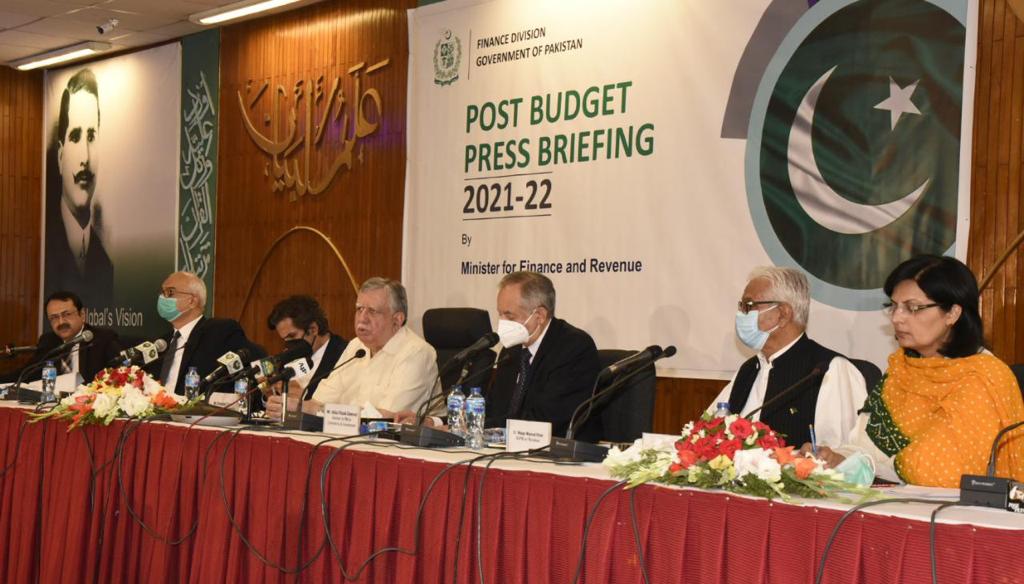
KARACHI: Pakistan’s federal budget presented for the next fiscal year is the county’s first growth-oriented budget and would focus on sustainable economic recovery, Finance Minister, Shaukat Tarin said on Saturday.
On Friday, Tarin presented the fiscal year 2021-22 budget with a total outlay of Rs8.4 trillion ($53.93 billion), a revenue generation target of Rs5.829 trillion and a growth target at 4.8 percent of GDP.
“Now the main challenge is to stabilize the growth,” Tarin told reporters in a post-budget press conference in Islamabad. “We have presented inclusive growth-oriented budget for the first time in Pakistan.”
“The budget focuses on the measure to uplift the poor so they would not have to wait for the trickledown effect of economic outcome,” he said.
He added that the country’s poor have been waiting for the past 74 years to see change in their lives but still lack basic facilities.
“Now bottom-up-approach will be adopted to uplift poor ... We have increased pro-poor spending,” he said, adding that a poor household will be eligible to get a Rs500,000 interest free loan to start own business.
As for the country’s growth, Tarin said sustainable export growth by 20 percent in the coming years in needed to increase Pakistan’s dollar-based earnings.
“Exports from Pakistan need to grow by 20 percent of the overall economic growth from eight percent in next eight to 10 years,” he said. “We want to see the IT exports which are growing by 40-50 percent increase by 100 percent every year on the back of incentives rolled out.”
He added that incentives have been given to the agriculture and industrial sector to increase productivity and job opportunities.
Experts and members of the business community also describe the new budget as “pro-growth.”
“The budget is growth-oriented which offers major concessions to the manufacturing sector via reduction in custom duties on the import of raw material,” Samiullah Tariq, director research at the Pakistan-Kuwait Investment, told Arab News.
Dr. Sajid Amin Javed, senior economist at the Sustainable Development Policy Institute (SDPI), said the budget is “good in terms of setting our direction in the short run.”
“If implemented in letter and spirit, it will mitigate the impact of the COVID-19 pandemic,” he added.
Uzair Younus, a political economist, said the budget would catalyze near-term growth and create some optimism about the economy.
“It is also good to see that efforts have been made to catalyze manufacturing,” he said. “However, the medium-term concerns with regard to sustaining equitable growth will persist.”