- Both foreign ministers stress importance of dialogue and diplomatic engagement for regional pace, says FO
- Development takes place days after the US struck Iran’s Qeshm Island, dealing a blow to peace prospects
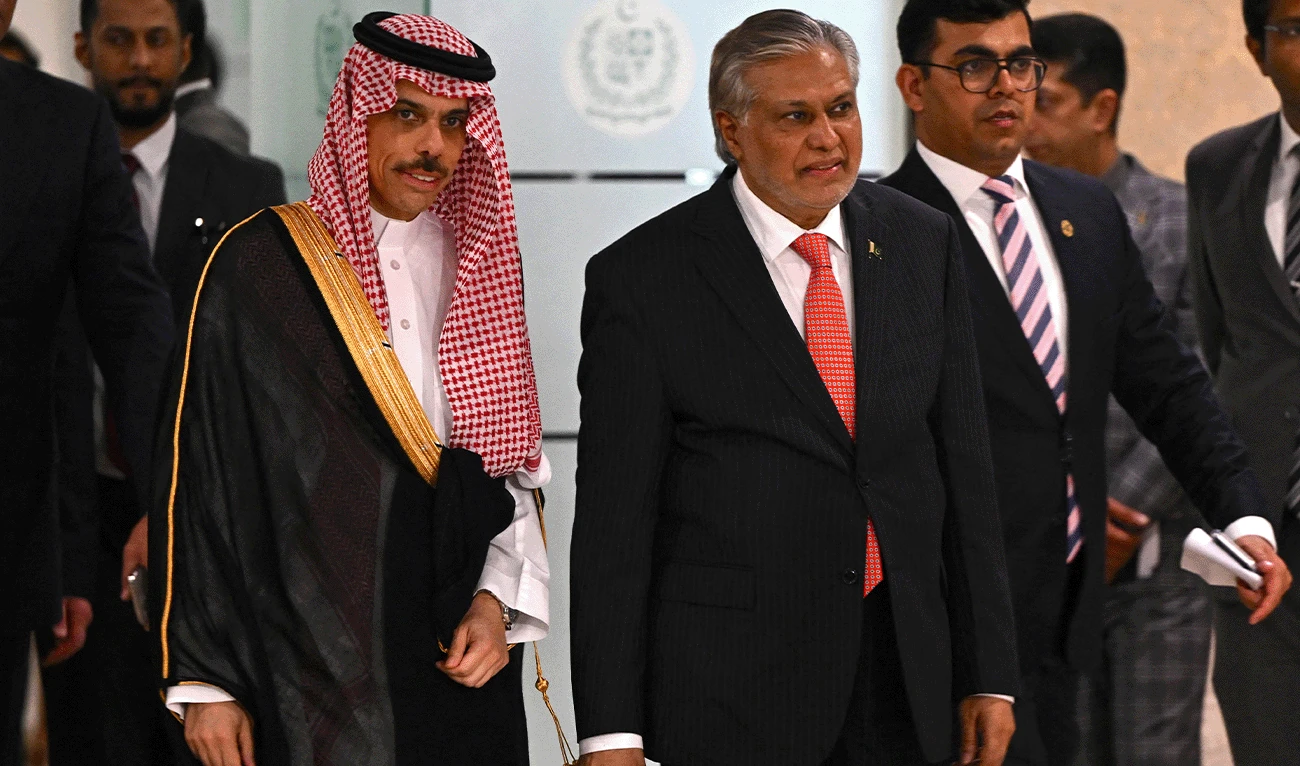
ISLAMABAD: The foreign ministers of Saudi Arabia and Pakistan discussed regional developments this week, Pakistan’s foreign ministry said, highlighting the need to pursue dialogue and diplomacy for regional peace, as tensions between the United States (US) and Iran persist.
Tensions between Washington and Tehran rose further on Monday when the US struck Iran’s Qeshm Island. Some US officials described the assaults as defensive and aimed at preventing Iran from attacking commercial ships in the Strait of Hormuz. The move drew a sharp response from Tehran, with Iran’s Secretary of the Supreme National Security Council (SNSC) Mohsen Rezaei warning on Wednesday that anyone who confronts the country will pay a heavy price.
Pakistan and Saudi Arabia have played key roles in attempting to resolve the US-Iran dispute peacefully, with Pakistan’s civilian and military leadership actively mediating between US and Irani officials. Pakistan’s Foreign Minister Ishaq Dar spoke to his Saudi counterpart Prince Faisal bin Farhan over the phone on Wednesday, the Pakistani foreign office said in a statement.
“The two leaders exchanged views on current regional and international developments and matters of mutual interest,” it said. “They underscored the importance of continued dialogue and diplomatic engagement in promoting regional peace and stability.”
The Pakistani foreign office said both sides agreed to maintain close contact and continue consultations.
The war began in February when the US and Israel launched joint airstrikes against Iran, saying the military action was a preemptive measure to halt Iran’s nuclear and ballistic missile programs. Tehran denies it is developing a nuclear weapon.
Iran has since then launched attacks against US military bases and civilian infrastructure in the Gulf region. Tensions in the region and disruption of key global maritime trade routes have driven up prices of oil and other energy supplies high worldwide.
The war has since then spread to Yemen with renewed fighting between the internationally recognized government there and the Iran-backed Houthi rebels. The Houthis have also launched attacks against civilian infrastructure in Saudi Arabia.
While Irani and Qatari officials last week discussed the prospects of lasting peace between Tehran and Washington, the US strikes targeting Qeshm Island have dealt a blow to chances of a diplomatic solution to the conflict.
Hamidreza Moghadamfar, an adviser to the Revolutionary Guard Corps commander-in-chief, said on Wednesday that Tehran will broaden its response beyond US military bases if Gulf states allow Washington to launch attacks against it from their territory.