- Finance Minister Muhammad Aurangzeb says IMF board will review Pakistan’s $7 billion program in December
- External debt servicing to fall to $3.5 billion next fiscal year as Islamabad seeks longer-term financing, he adds
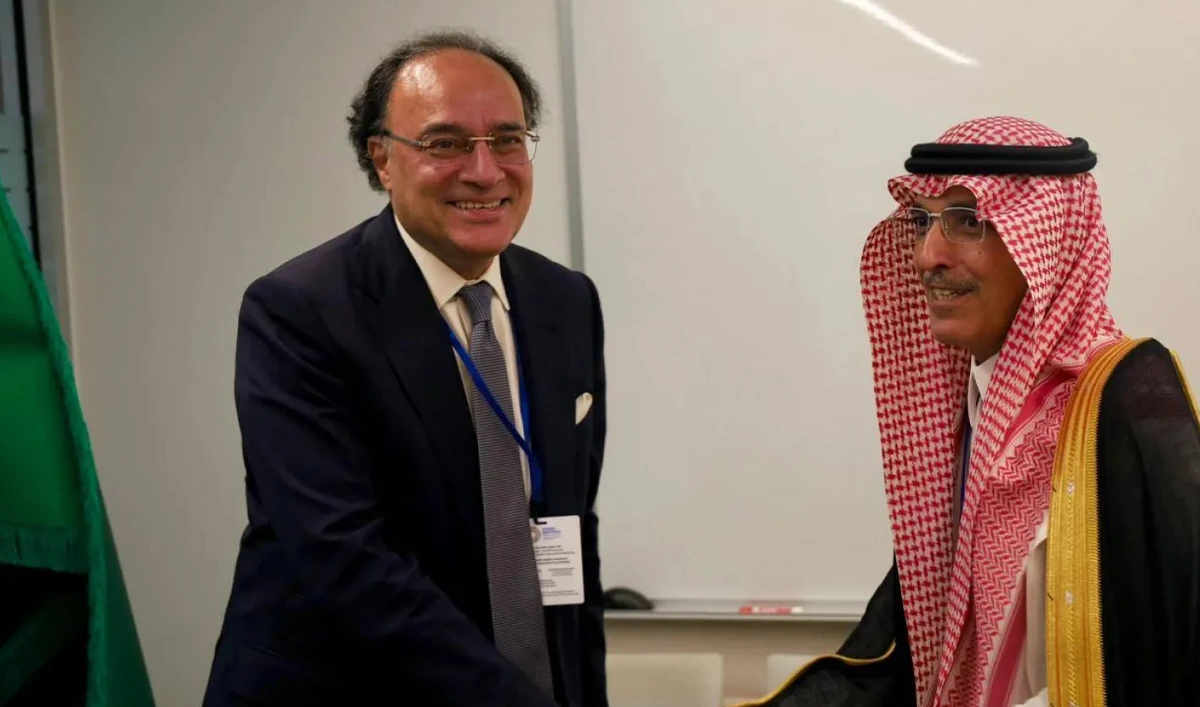
ISLAMABAD: Saudi Arabia has extended its $3 billion additional financial support to Pakistan for a “reasonable period,” Pakistani Finance Minister Muhammad Aurangzeb said on Wednesday.
Pakistan relies heavily on external financing to meet its import needs and debt obligations, with support from allies such as Saudi Arabia playing a critical role alongside an International Monetary Fund (IMF) program aimed at restoring macroeconomic stability.
Riyadh has been a key financial backer of Pakistan, providing financial deposits, oil facilities and budgetary support to help the country navigate these pressures. The Kingdom has already rolled over a $5 billion deposit with Pakistani central bank till 2028.
Saudi Arabia’s latest extension of $3 billion additional financing, agreed in April this year, is expected to help the South Asian country shore up its foreign exchange reserves and meet external debt obligations.
“Yes, its term has been extended,” Aurangzeb told reporters, when asked if the additional Saudi deposit of $3 billion had been rolled over. “It has been extended for a reasonable period.”
The extension comes as Pakistan seeks to reduce its dependence on short-term external borrowing and prepare for substantial debt repayments over the coming years.
Aurangzeb confirmed that the IMF executive board is expected to review Pakistan’s $7 billion program later this year.
“It is [in] December,” he said, without specifying a date.
Addressing a Senate committee meeting earlier, the finance minister said Pakistan aimed to reduce its external debt servicing to $3.5 billion in the next fiscal year, from an estimated $4 billion this year and $4.5 billion in the previous fiscal year.
The government is seeking to replace expensive short-term borrowing with longer-maturity financing, including international bond issuances and private placements, to reduce refinancing risks, he said.
“Our objective is very clear: we do not want to increase our external debt,” Aurangzeb said. “We are repaying short-term and expensive debt and replacing it with borrowing carrying maturities of five or ten years.”
Pakistan has struggled with high external financing requirements for years, with repeated debt repayments and refinancing obligations putting pressure on its foreign exchange reserves and balance of payments.
Aurangzeb said the country’s external debt had increased by around $6-7 billion annually during the previous decade, rising from $45 billion in fiscal year 2015-16 to more than $100 billion at present. Over the past four years, he said, the annual increase had slowed to approximately $1 billion.
Pakistan is pursuing further Eurobond and Panda Bond issuances, alongside rupee-linked, dollar-settled bonds, to diversify its financing sources, according to the minister.
The country raised $3 billion through an international bond issuance in the first week of September, attracting an order book of $6 billion.
Asked about a proposed $10 billion liquidity support facility from the United States (US), Aurangzeb said Pakistan had made a request but would continue with its financing plans even if the facility did not materialize.
The government was also exploring financing arrangements with the US Export-Import Bank and the US Development Finance Corporation to support American exporters and investors in Pakistan.
“That is real financing and real credit,” he said, distinguishing these arrangements from the proposed liquidity support facility intended to provide assistance to the sovereign.
Islamabad was also targeting an upgrade of Pakistan’s sovereign credit rating to B-plus by the end of the current fiscal year or early next fiscal year, with a longer-term ambition of entering the double-B category, according to Aurangzeb.
Presenting figures to the committee, he said public debt had declined to 68.6 percent of gross domestic product by the end of June 2026, from 75.1 percent in fiscal year 2022-23.
The year-on-year growth in public debt had slowed to 7.7 percent in the last fiscal year, the lowest in 20 years, he said.
He attributed the improvement partly to active liability management, including retiring expensive debt, buying back bonds before maturity and exchanging existing liabilities.
The government had retired, bought back or exchanged approximately Rs5.9 trillion ($20.9 billion) in debt, including Rs3.6 trillion ($12.9 billion) in State Bank debt and Rs2.3 trillion ($8.2 billion) in market debt, Aurangzeb said.