- Pakistan’s Foreign Office describes the midterm election outcome as an ‘internal matter’ of the United States
- Ex-envoy says Trump’s negotiating position has weakened as over 70 percent of voters said Iran war influenced them
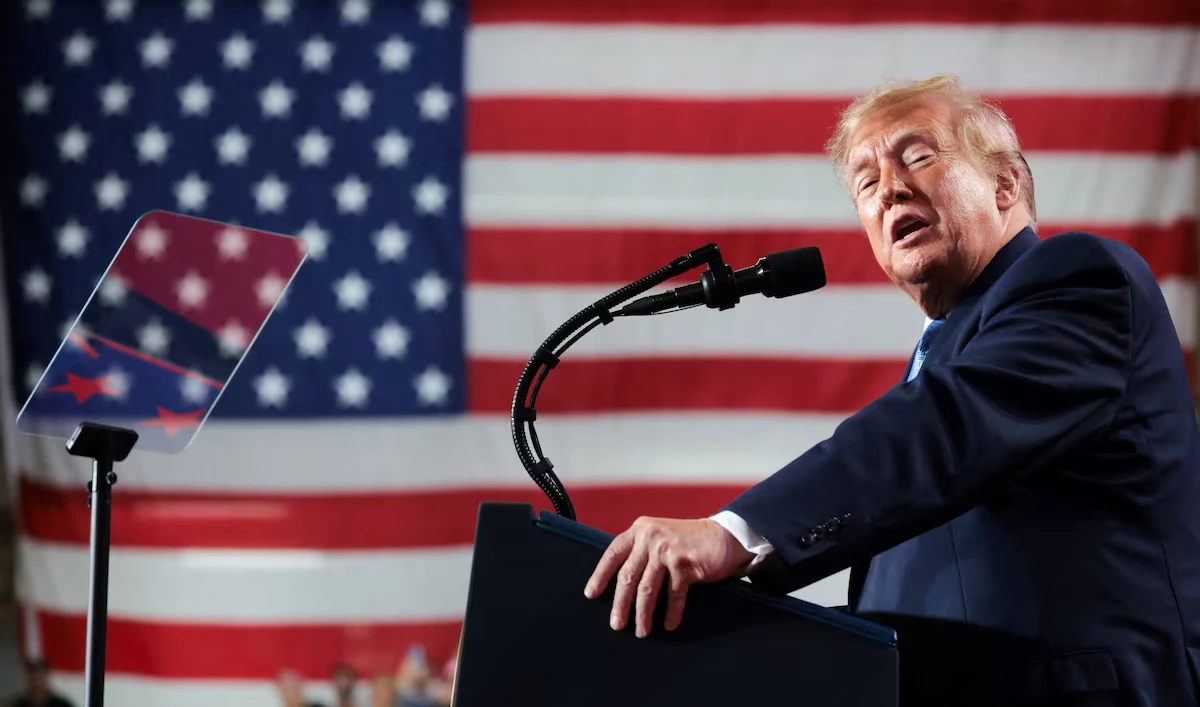
ISLAMABAD: US President Donald Trump’s electoral setback in the midterm elections could weaken his position, intensify scrutiny of his foreign policy and increase pressure on his administration to pursue diplomacy rather than renewed military action against Iran, Pakistani analysts said on Wednesday.
Democrats won control of both the House of Representatives and the Senate in Tuesday’s midterm elections, dealing a major blow to Trump’s Republican Party and giving the opposition greater leverage to scrutinize his administration and influence legislative decisions.
The outcome comes at a critical time for the Middle East, with the prospect of renewed US-Israeli attacks against Iran raising fears of another escalation in the region already on the edge due to the US-Iran conflict, which began in Feb. this year.
“It is an internal matter for the USA,” Pakistani Foreign Office spokesman Sajjad Haider Khan told Arab News, when asked about the Republican Party’s losses in the midterm elections.
Former Pakistan ambassador to the US Maleeha Lodhi believed Trump would retain considerable authority over the US foreign policy but face greater pressure from a Democratic-controlled Congress, particularly over the war with Iran.
“The fact that over 70 percent of voters said the war on Iran influenced the way they voted shows how unpopular the war is and will likely weigh on Trump’s next steps,” Lodhi told Arab News.
“After the election setback, Trump’s negotiating hand has weakened, but he is more than likely to pursue the diplomatic path rather than an escalatory one.”
Lodhi did not expect an immediate impact on Pakistan-US relations, although she cautioned that the political vulnerability of the US president could raise questions about the durability of recent improvements in bilateral ties.
“I don’t see any immediate impact of the election results on Pakistan-US relations. But because the recent warming in ties rested on a personalized relationship there will be question marks about its future with a weakened US president,” she said.
President Trump has repeatedly praised Pakistani leadership in his comments during the last-one-and-a-half year, calling Pakistan’s Chief of Defense Forces Field Marshal Asim Munir his “favorite Field Marshal” and applauding Prime Minister Shehbaz Sharif, who publicly endorsed Trump for a Nobel Peace Prize for brokering a ceasefire in a four-day Pakistan-India military standoff in 2025.
Masood Khan, another former Pakistani ambassador to the US, said the election results were unlikely to produce immediate consequences for Islamabad but could have longer-term implications, particularly if political control changes again in Washington.
“I don’t foresee any immediate implications for Pakistan after the US elections, but we’ll have to see what happens in the long run, particularly if there’s a change of government in the next elections and after two years,” Khan told Arab News.
“I think that we will continue to invest in this relationship as we have done over the past two years. And we would like to institutionalize the areas in which we have established a solid threshold.”
About the possibility of renewed US military action against Iran, Khan said the election outcome had created uncertainty about Trump’s next move.
He, however, cautioned that Trump’s response to the electoral setback could also take a different direction, given the president’s political approach and previous criticism of congressional opposition to his military operations.
A renewed US military campaign could face stronger resistance, according to Khan. Congress could seek to invoke its war powers to challenge presidential military action or restrict funding for arms, ammunition and other defense requirements.
Khan said the US administration should take into account the warnings being issued by regional and international partners against fresh attacks on Iran, referring to appeals by European countries, including the United Kingdom, Germany, France and Italy, alongside regional powers like Saudi Arabia, Egypt, Pakistan and Türkiye.
“The appeal to the United States was unanimous that if a fresh attack is launched, it would be detrimental not only for the Middle East and its neighborhood, the West Asia or Europe, it would be catastrophic for President Trump and the United States of America,” he said.