- Dealers say condition of declaring AED5,000 at Dubai airport creating additional demand, supply crunch
- Pakistani government's decision to lift a ban on import of luxury goods also adding to pressure rupee against greenback
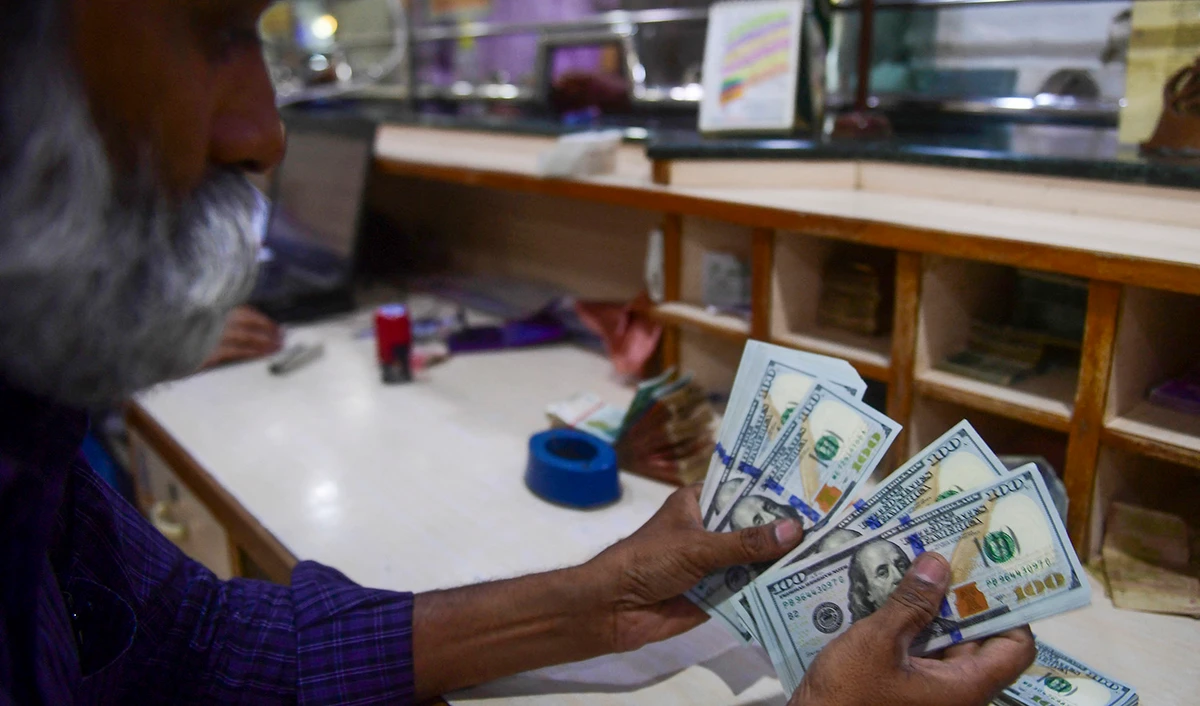
KARACHI: After a brief bullish spell, Pakistan’s national currency on Monday reversed its gaining trend and lost 0.93 percent of its value against the US dollar, dealers and analysts said, attributing it to the rising demand for Emirati dirham, permission to import luxury goods and currency smuggling to Afghanistan.
The greenback closed at Rs216.66, compared to the previous close of Rs214.65, in the interbank market on Monday, after the government last week allowed the import of luxury goods at enhanced duties. The US dollar was trading at Rs222 for selling in the open market on Monday.
Currency dealers say the condition imposed by United Arab Emirates (UAE) for passengers to show 5,000 upon arrival at Dubai airport is also building pressure on the Pakistani rupee.
“The UAE authorities have made it mandatory for passengers arriving at Dubai International Airport to show 5,000 United Arab Emirates Dirham (AED) or equivalent in other currencies. This has created an additional demand for dirham as well as dollar,” Malik Bostan, president of Forex Association of Pakistan, told Arab News.
“Around 55 flights depart from Pakistan for the UAE on a weekly basis and we estimated that a demand of around 20 million dirhams has been created while the supply is limited in the local currency market.”
The AED also appreciated against the rupee in the open market from Rs60.20 on Friday to Rs61.70 on Monday.
Bostan said the Pakistani government’s decision to make a declaration of cash and jewelry mandatory upon arrival on Pakistani airports has also reduced cash inflows.
“Earlier, Pakistani workers would bring with them cash of their colleagues to hand it over to their families in Pakistan, but they are not bringing extra cash out of fear of the declaration and questioning by tax authorities at airports,” he said.
“The supply in the open market was between AED15 million to AED20 million, but after the government measures, it has witnessed a drastic reduction to AED5 million to AED10 million.”
Bostan said he was planning to meet and urge the finance minister to take up the matter with the UAE authorities and convince them to ease the condition and bring down the amount to AED1,000.
However, Zafar Paracha, general secretary of the Exchange Companies Association of Pakistan (ECAP), downplayed the impact of the UAE's condition, saying the demand for dirham could rise by only an additional AED2 million.
“All the passengers travelling out of Pakistan are not tourists as passengers in transition and businessmen are also among them, who do not need to show AED5,000 on arrival counters at the airport,” Paracha said.
The ECAP general secretary linked the rupee's depreciation with the smuggling of the greenback to Afghanistan, where the rates are higher than the Pakistani market.
“A dollar is being sold in Afghanistan for Rs230 which makes it an attractive market for smugglers,” he told Arab News. “As per information Indian agents in Afghanistan are involved in smuggling of dollars from Pakistan and paying higher rates to destabilize Pakistan’s economy.”
Pakistani analysts say the government's decision to lift the ban on import of luxury goods has also added to the pressure on the rupee.
"Today’s dollar appreciation was also the result of government decision to allow import of luxury items that would create demand for dollar for opening of Letter of Credits (LCs)," Abdul Azeem, research head at the Karachi-based Spectrum Securities brokerage house, told Arab News.
“However, the rupee will stabilize around these levels after inflows from the International Monetary Fund (IMF) and the end of artificial demand of dollar.”
Pakistan is expected to get $1.2 billion from the IMF after its executive board meeting on August 29 as well as catalyzing financing from multilateral and bilateral lenders. In addition, Pakistan has also successfully secured an additional $4 billion from friendly countries over and above its external financing needs this fiscal year, the State Bank of Pakistan (SBP) said in its monetary policy statement on Monday.
The central bank maintained the policy rate at 15 percent, saying 800 basis point cut and the government measures were expected to work in the coming months.
Financial experts described the central bank's decision as “prudent.”
"With domestic demand beginning to moderate and the external position showing mild improvement and resumption of the IMF program, it is prudent for MPC to have kept policy rate at 15 percent," Dr Khaqan Najeeb, a former advisor to the finance ministry, told Arab News.
“This time will allow us to assess impact of 800bps tightening since September 21 and also the effect of hopeful fiscal consolidation for Fiscal Year 23. It is also prudent to keep the rate steady, considering global growth and commodity prices have slowed.”
The central bank said the expected completion of the upcoming IMF review and the additional assistance secured from friendly countries would further increase forex reserves and strengthen the rupee.