- Import payments and shortage of dollar in interbank market depreciated rupee by over 13% in last 10 trading sessions
- Pakistani analysts expect the currency would rebound and emerge stronger after inflows from IMF, friendly countries
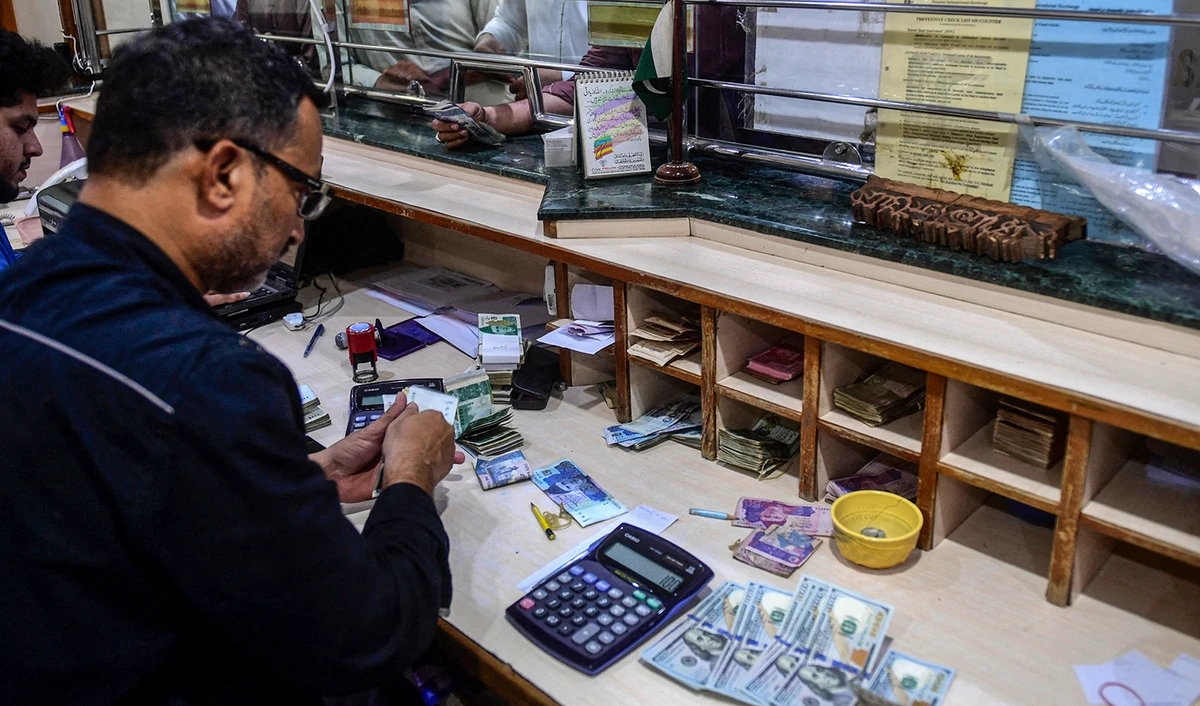
KARACHI: Pakistan’s national currency regained some lost ground against the US dollar on Friday after plunging 13.31 percent in the last 10 trading sessions, traders and analysts said, attributing the recovery to easing off of pressure for import payments.
The Pakistani currency recovered 0.24 percent of its value during the weekend trading session to close at Rs239.37 against the greenback in the interbank market. The rupee had lost its value by 26.26 percent since January.
Analysts linked Friday’s recovery of the rupee with the expected external trade surplus numbers for July as compared to $4.96 billion deficit recorded in June.
“The pressure of June import payments has now eased off that has impacted the rupee in the interbank market which closed bullish,” Tahir Abbas, research head at the Karachi-based Arif Habib Limited brokerage firm, told Arab News.
“The government has taken measures to control imports and it is also expecting the trade would be in surplus. With an expected disbursement of $1.17 billion from the International Monetary Fund (IMF) and inflows from friendly countries, the Pakistani rupee will strengthen in coming days.”
Pakistan’s official reserves decreased to $8.57 billion in the week ending on June 22 due to external debt and other payments, according to the country's central bank.
The South Asian country now awaits $1.17 billion disbursement from the IMF immediately after the approval of its board, which along with likely inflows from Saudi Arabia and the United Arab Emirates (UAE) would strengthen the cash-strapped nation's foreign reserve position.
However, Pakistan's external resources are likely to remain “under pressure even after expected disbursements from the IMF under the restored Extended Fund Facility (EFF) program,” the S&P Global credit ratings agency said on Thursday, after it downgraded Pakistan’s outlook from stable to negative.
Besides the S&P, Moody’s and Fitch have also downgraded Pakistan’s outlook due to the country's weakening external position due to higher commodity prices, rupee's depreciation and tighter global financial conditions.
“Ratings agencies, like Pakistan's central bank, are behind the curve here. The downgrades come long after the market priced in default risk for Pakistan,” said Uzair Younus, director of the Pakistan Initiative at the Washington-based Atlantic Council think tank.
"They have just confirmed what we all have known for a long time: Pakistan's economy is teetering on the edge."
Pakistan’s finance minister hopes that imports for the current month would be $4.82 billion in the month of July which would help curtail the current account deficit (CAD) from $17.4 billion recorded in the last fiscal year.
Pakistani financial experts expect the CAD would remain in the range of $6 billion to $8 billion this fiscal year in response to the government’s measures to control imports.