- Central bank in emergency meeting last week increased key interest rate by 2.5%, raising it to 12.25%
- Reasons were deterioration in inflation outlook, risks posed by domestic political uncertainty and Ukraine war
KARACHI: Pakistani industrialists and traders have decried a recent 2.5% hike in the key interest rate by the country’s central bank, saying it would increase the cost of doing business, hurt economic growth and increase fiscal deficit.
Last week, Pakistan’s central bank in an emergency meeting increased its key interest rate by 2.5%, raising it to 12.25%. The reasons cited by the central bank were a deterioration in the inflation outlook and rising risks posed by domestic political uncertainty as well as the international uncertainty brought about by the Russia-Ukraine war.
The policy rate sets the minimum benchmark for commercial banks to extend loans to borrowers.
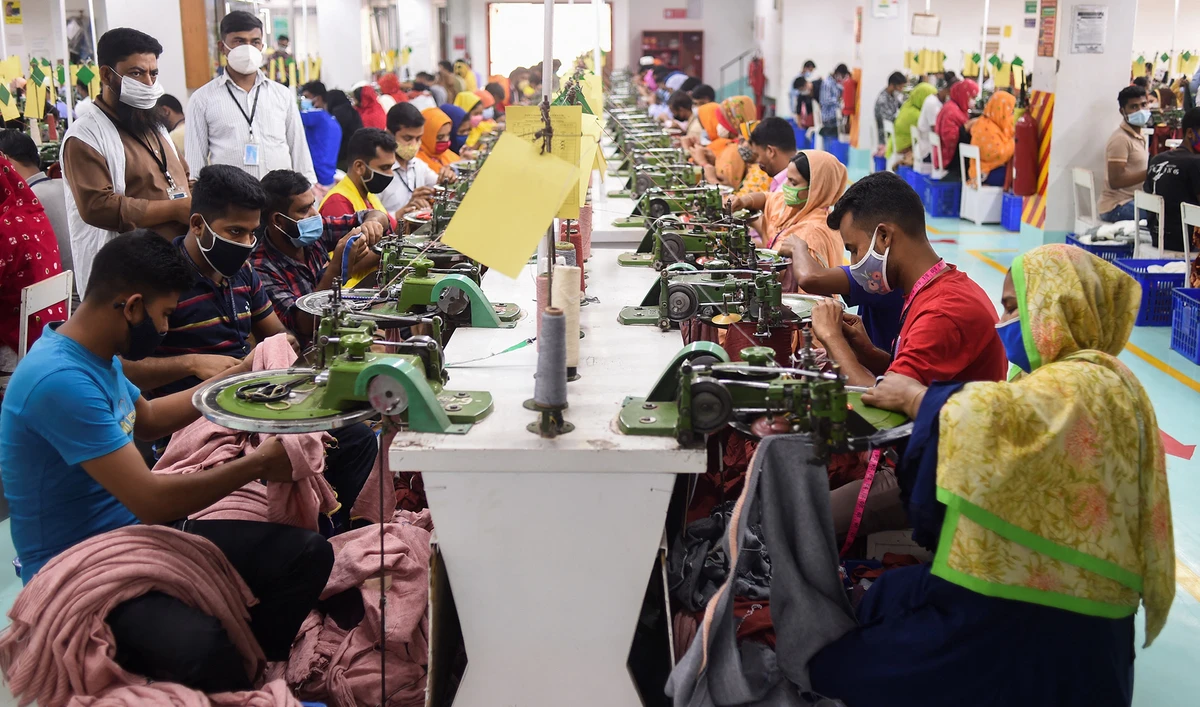
“The rate hike will increase the cost of manufacturing in Pakistan, that will lead to suppressed demand and ultimately production will suffer,” Engr. M. A. Jabbar, vice president of the Federation of Pakistan Chambers of Commerce and Industry (FPCCI), told Arab News on Thursday.
“This sudden and exorbitant move will have negative consequences for the economy of the country as it will increase the borrowing cost to a large extent,” Jabbar said. “Banks lend at 3-4 percent above the policy rate and in some cases, it is even more. This is too large for our economy and there is no control over it.”
Pakistani industrialists said the higher interest rate regime would adversely impact exports from the country when other regional competitors offered comparatively low interest rates.
“A comparative analysis of the interest rates in Pakistan and regional countries also shows a big difference to Pakistan’s disadvantage. Malaysia’s interest rate is at 2%, China is at 3.7%, India is at 4% and Bangladesh is at 5%,” a statement issued by the FPCCI last week said.
“If the interest and export refinancing rates are not decreased drastically in Pakistan, we will not be able to compete with even regional countries.”
The Karachi Chamber of Commerce & Industry (KCCI) and other trade bodies have also decried the rate hike and called for authorities to review the decision.
“The COVID epidemic already had a devastating effect on business and industries, the recent political crisis in the country has also troubled the business community as no one at the government level cared about saving businesses and industries from destruction,” said Saqib Naseem, the chairman of the Pakistan Yarn Merchants Association (PYMA). “They were busy in politics.”
Naseem was referring to weeks of political crisis in Pakistan that climaxed on Sunday with the ouster of Prime Minister Imran Khan in a vote of no-confidence. Opposition leader Shehbaz Sharif was elected the new PM on Monday.
“Now, the 250-basis point increase in interest rates by the central bank will sink the economy,” Naseem said, adding that the central bank must revisit its decision for the sake of promoting business in the country.
Trade association representatives said the rate hike would further burden small-and-medium enterprises (SMEs) as their cost of doing business would go up.
“Banks would now extend loans at around 17% to borrowers that would add more burden to the businesses which will impact their production cycle,” Zulfiqar Thavir, president of the Union of Small and Medium Enterprises (UNISAME), a body of small businesses, said.
However, Thavir said the step was also necessary due to the inflation rate having increased above the policy rate and for the continuation of talks with the International Monetary Fund for the completion of the seventh review of a $6 billion loan facility.
Economists agreed the policy rate hike would hit economic growth.
“Over the years, empirical data suggests that the rise in interest rate significantly affects Pakistan’s industrial and large-scale manufacturing activities and economic growth and consequently affects investments,” Aadil Jillani, head of the economic division at Trust Securities & brokerage, said.
“This increases the cost of doing businesses; borrowing becomes more expensive for the private sector and government, consequently, this also increases the fiscal deficit as the government is the biggest borrower from the banking system,” he said.
“Therefore, a rise in interest rate discourages spending, inflates fiscal slippages, and consequently slows down economic growth.”