- Court convicts couple of terrorism and obstructing police, acquits them on four other charges
- Counsel says they will appeal, judgment orders prison sentences to run concurrently
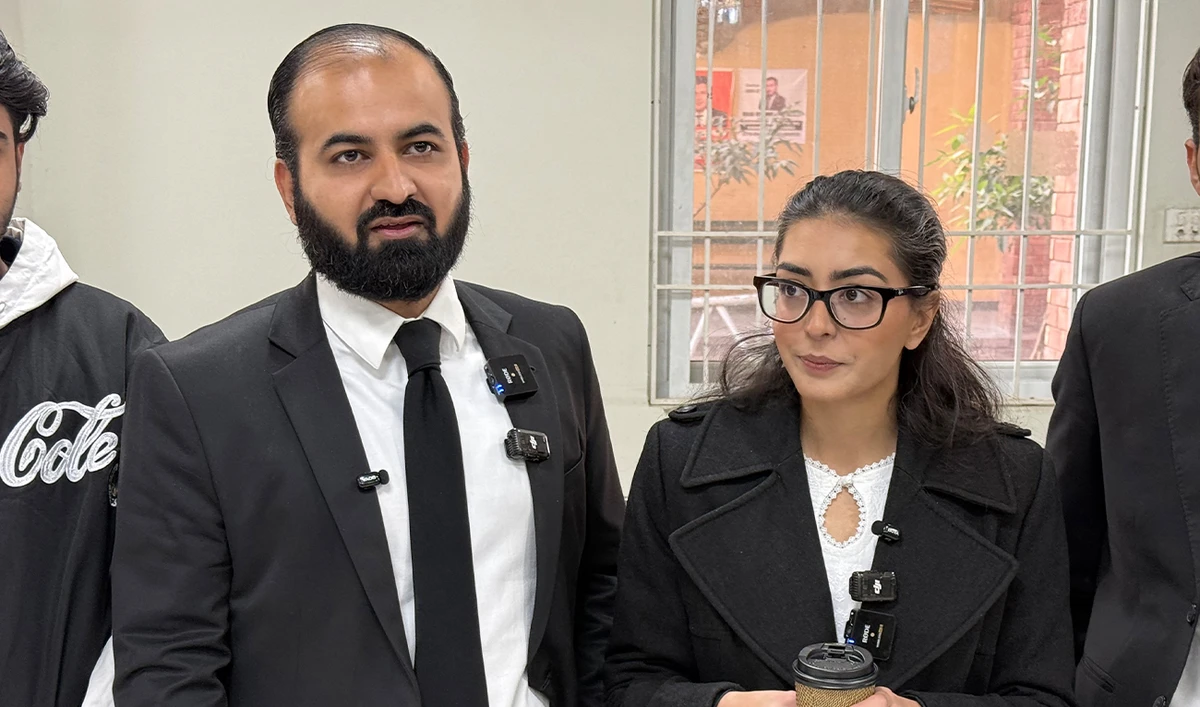
ISLAMABAD: A Pakistani anti-terrorism court sentenced human rights lawyers Imaan Zainab Mazari-Hazir and Hadi Ali Chattha to 10 years in prison each on Thursday after finding they assaulted police and disrupted security arrangements for a visiting cricket team.
The case stems from a confrontation over road closures in Islamabad on October 25, 2024. The defense disputed the terrorism charges, arguing that police assaulted Mazari-Hazir and that the prosecution was retaliation for the couple’s human rights work.
The lawyers have represented marginalized communities and people alleging abuses by security agencies. Their prosecutions have drawn criticism from rights organizations over freedom of expression and fair-trial protections. Thursday’s ruling is separate from their social-media convictions, whose sentences the Supreme Court suspended in September.
“Imaan Mazari and Hadi Ali Chattha have been sentenced to 10 years in prison,” Zainab Janjua, counsel for the accused, told Arab News earlier on Thursday. “We will challenge the decision.”
The subsequently released 22-page judgment, issued by Judge Tahir Abbas Sipra following a trial inside Rawalpindi’s Adiala Jail, convicted both lawyers under Pakistan’s Anti-Terrorism Act and provisions concerning obstruction of public servants and assault or criminal force against them.
The court imposed 10 years of rigorous imprisonment and a fine of Rs100,000 ($361) each under the terrorism provision. It also imposed separate sentences for the other convictions, including one year for obstructing public servants.
“All the sentences awarded to all the convicts shall run concurrently,” the judgment said, meaning the prison terms will be served simultaneously rather than consecutively. The court also granted credit for time already spent in detention in the case.
However, it acquitted the couple on four other charges concerning aggravated criminal intimidation, criminal conspiracy, armed rioting and liability as members of an unlawful assembly, finding that the prosecution had not proved them beyond reasonable doubt.
In particular, the judge said no evidence of criminal conspiracy had been produced and the footage did not establish that the couple acted together with enough other people to constitute an unlawful assembly.
In explaining the convictions, the court relied on police testimony and video footage of the confrontation. It said a forensic examination found no evidence that the recording had been edited or tampered with.
The judgment said the footage showed the couple attempting to remove barriers, allowing some motorcyclists to pass, and obstructing and assaulting officers deployed to secure the cricket team’s route.
Rejecting the defense’s argument that the incident did not constitute terrorism, the judge said the couple’s objective was to compromise security arrangements by pressuring police.
The judgment referred to the earlier attack on Sri Lanka’s cricket team in Lahore and the heightened protection subsequently provided to visiting teams.
The couple denied the prosecution’s account. In statements reproduced in the judgment, they alleged that police witnesses had falsely implicated them because of their legal assistance to street vendors, people facing false blasphemy allegations and families of victims of enforced disappearances.
They also challenged the fairness of the jail trial, saying they had been denied effective access to their lawyers. Defense counsel argued that the evidence was contradictory and that Mazari-Hazir had herself been injured by police.
Ahead of the verdict, the couple approached the Supreme Court to challenge an Islamabad High Court order declining to halt the proceedings.
In the separate social-media prosecution, they were convicted in January under Pakistan’s cybercrime legislation over posts authorities alleged were hostile to the state and its security institutions. Amnesty International described those charges as politically motivated and criticized the fairness of the proceedings.
The Supreme Court suspended those sentences and granted bail on September 17, but police rearrested the couple hours later in another case.