- Staff-level IMF agreement with Pakistan will pave the way for disbursement of $1.17 billion
- Foreign currency reserves had fallen as low as $9.8 billion, rupee had weakened to record lows
KARACHI: Pakistani stock and currency markets celebrated on Thursday as the finance minister announced Pakistan would receive $1.17 billion from the International Monetary Fund as part of a stalled $6 billion loan package, following months of talks and unpopular belt-tightening measures by the government of Prime Minister Shehbaz Sharif.
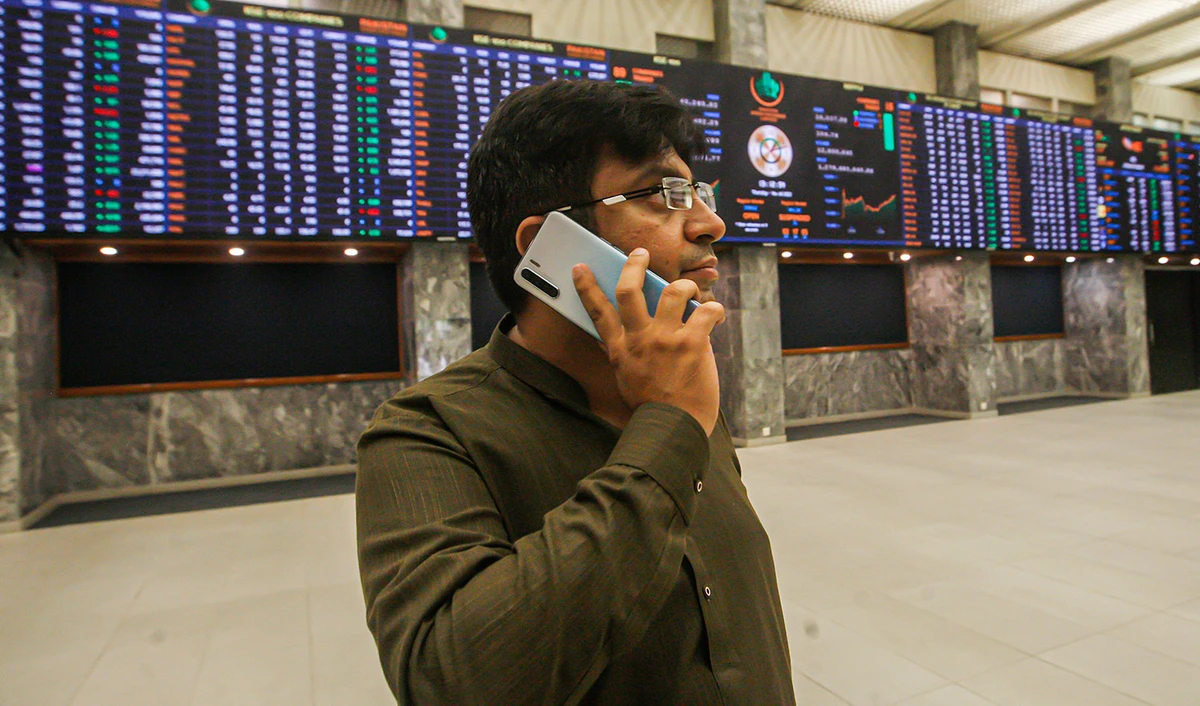
The equity market closed the trading session at 42,348 points by gaining 1.2%, or 486 points, as investors remained actively engaged in buying and selling across the board, expecting stability on the economic front after months of uncertainty about the IMF deal.
Before the IMF agreement, foreign currency reserves had fallen as low as $9.8 billion, hardly enough for five weeks of imports, and the Pakistani rupee had weakened to record lows against the US dollar.
“Stocks closed bullish on strong rupee recovery and IMF staff level agreement [which is] likely to [see] release of IMF tranche this month,” Ahsan Mehanti, CEO of Arif Habib Corporation, told Arab News. “Government decision to reduce petroleum prices on IMF approval and the slump in global crude oil prices ... played a catalyst role in bullish close.”
Positive sentiments also prevailed in the currency market where the rupee posted strong recovery during the mid-session and hit Rs208.71 level against the US dollar as compared to the previous day’s close of Rs 210.10 in the interbank. However, the rupee closed at 209.80 with a gain of 0.14% against the greenback due to persistent pressure.
“The recovery was temporary following the IMF announcement because the rupee still remains under pressure due to the country’s higher external payment obligations as compared to expected inflows from IMF and other sources,” Zafar Paracha, a senior currency analyst, told Arab News.
“The pressure on the rupee will continue to persist as long as the government doesn't take concrete measures to curtail imports and arranges over $40 billion required for external payments during the current year.”
Pakistan entered a 39-month, $6 billion IMF program in 2019, and has so far received $3 billion from the fund, which would increase to $4.2 billion with the inflow of the next tranche after approval by the IMF board.
The IMF suspended the bailout earlier this year after the previous prime minister, Imran Khan, announced unfunded subsidies for the oil and power sectors. Khan’s government was ousted in April.
The new government has since raised the prices of petroleum products and electricity several times, pushing inflation to a 13-year high in June this year, which prompted the central bank to jack up key interest rates to 15%.
In a Twitter post on Thursday afternoon, PM Shehbaz Sharif said he hoped the IMF program would "set the stage to bring country out of economic difficulties."
"Pakistan is at a challenging economic juncture," Nathan Porter, the head of the IMF team, said in a statement on Thursday. “A difficult external environment combined with procyclical domestic policies fueled domestic demand to unsustainable levels.”
The agreed policy actions include steadfast implementation of the fiscal 2023 budget, which aimed to reduce the government's large borrowing needs and boost revenues by targeting higher income taxpayers, while protecting development spending.
“We believe that the implementation of key policy actions like increase in energy tariffs, gas and power rates, and other structural benchmarks like gradual increase in taxes on oil and implementation of anti-corruption law will remain key and will lead to IMF’s executive board approval and release of funds,” Muhamad Sohail, CEO of Topline Securities, said.
But as the coalition government enters an election year in 2023, it may find it difficult to take unpopular decisions to implement much-needed reforms.