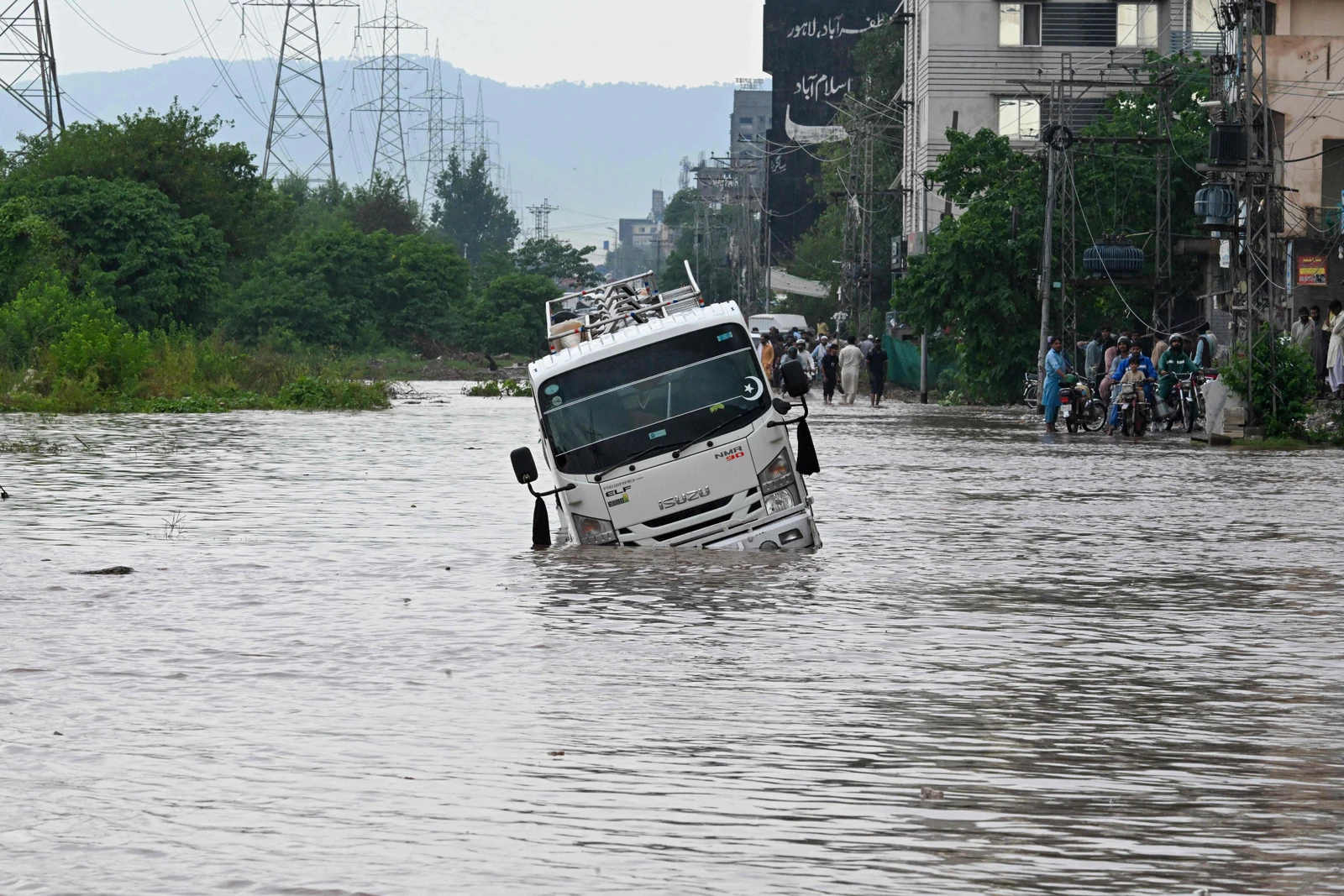
- Heavy rain forecast across northern Pakistan over next 72 hours, raising landslide risks
- Children account for 82 fatalities since June 26; house collapses cause half of all deaths
PESHAWAR: Pakistan warned on Thursday of fresh flooding and landslides across parts of the country over the next 72 hours as it forecast yet another spell of heavy monsoon rains, with the nationwide death toll from rain-related incidents reaching 180 since late June.
The National Disaster Management Authority (NDMA) said torrential rain was expected across upper Khyber Pakhtunkhwa (KP), Gilgit-Baltistan and Azad Kashmir, raising the risk of flash floods and landslides, while increased flows were forecast in several major rivers.
“Over the next 72 hours, flows are likely to increase in the Indus, Kabul, Swat, Panjkora, Kurram, Tochi, Jhelum, Chenab and Ravi rivers,” the NDMA’s National Emergencies Operation Center said in an alert.
The authority warned that heavy rain could swell rivers, streams and seasonal waterways in mountainous areas, with flash flooding possible across vulnerable districts of Gilgit-Baltistan, Azad Kashmir and KP.
Urban flooding was also possible in Nowshera, Peshawar, Swabi and Mardan, where low-lying areas and connecting roads could be submerged, the NDMA said.
It also warned of more rain in Rawalpindi and Islamabad just a few days after the twin cities were inundated.
“People should stay away from low-lying areas, streams and flood channels and avoid unnecessary travel,” the NDMA said, urging residents to follow weather alerts and instructions from local administrations.
The warning comes after weeks of monsoon rains that have killed 180 people and injured 509 across Pakistan since June 26, according to NDMA figures current through Sept. 3.
Khyber Pakhtunkhwa has recorded the highest number of deaths at 74, followed by Punjab with 61, Sindh with 17, Azad Kashmir with 16 and Balochistan with eight. Three people have died in Islamabad and one in Gilgit-Baltistan.
Children have borne a particularly heavy toll, accounting for 82, or about 46 percent, of all deaths. Sixty-two men and 36 women have also been killed.
House collapses have caused half of all fatalities, making them by far the leading cause of death, NDMA data showed. Drowning accounted for 17.2 percent and flash floods for 14.4 percent, while lightning caused 6.1 percent.
Punjab has recorded by far the largest number of injuries, with 362 of the nationwide total of 509, followed by KP with 104.
Pakistan’s meteorological authorities have also forecast widespread rain over the upper catchments of the country’s major rivers through Sept. 5, with isolated heavy to very heavy falls possible across parts of the north and northeast.
The NDMA directed local administrations to remain on high alert, pre-position emergency resources in vulnerable areas and ensure arrangements were in place to evacuate communities if necessary.
“Do not cross floodwater or fast-flowing water on foot or in a vehicle,” the authority said, warning that even apparently shallow, fast-moving water could be dangerous.
Residents, tourists and travelers in flood-prone areas were also advised to stay away from riverbanks and streams, check weather and road conditions before traveling and avoid roads closed by local authorities.
The monsoon season, which typically runs from July through September, brings much of Pakistan’s annual rainfall but frequently causes deadly flooding, landslides and damage to homes and infrastructure.