- Defense minister says Pakistan bound to respond under three-nation collective defense agreement
- Asif says indirect US-Iran contacts continue despite stalemate, accuses Israel of favoring prolonged war
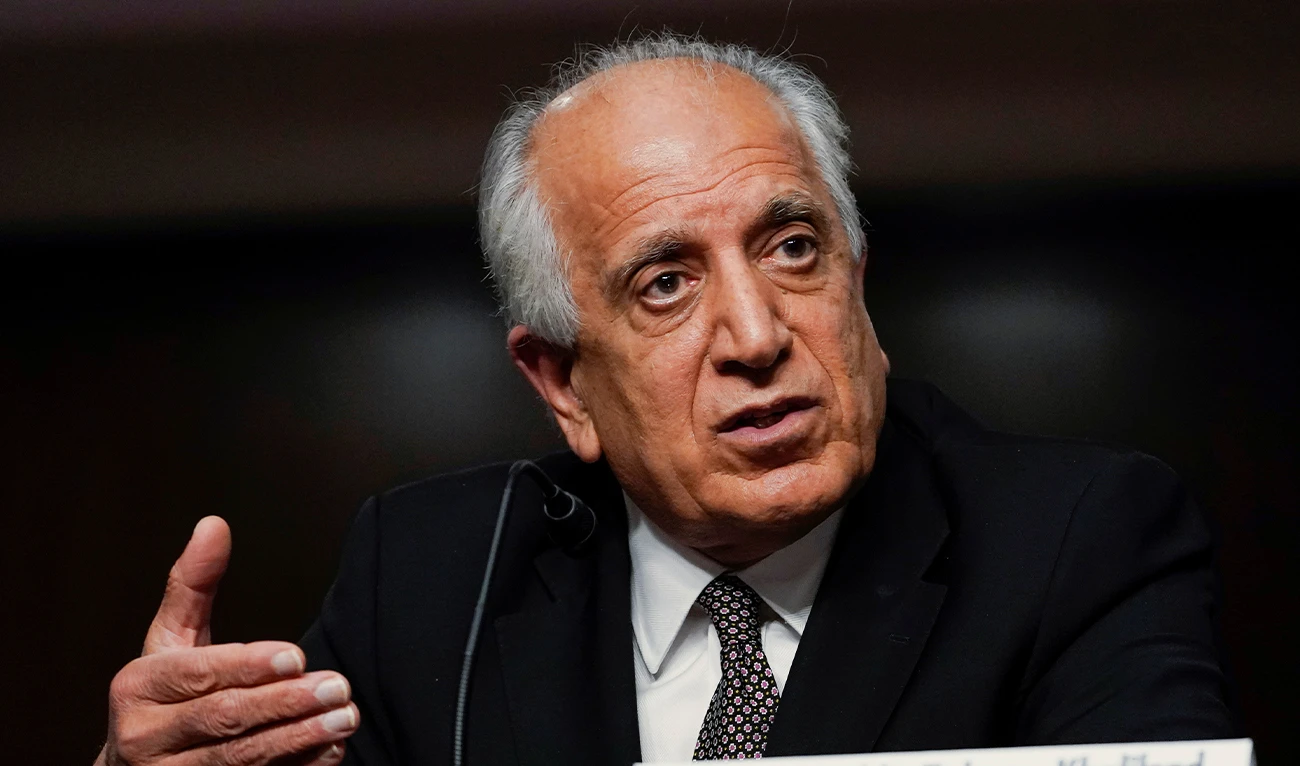
ISLAMABAD: A three-nation defense pact between Pakistan, Saudi Arabia and Türkiye will become operational in the event of aggression against the Kingdom, Defense Minister Khawaja Asif told a Pakistani news channel on Tuesday, after Houthi drone and missile attacks injured over 70 people and struck Saudi civilian and energy facilities.
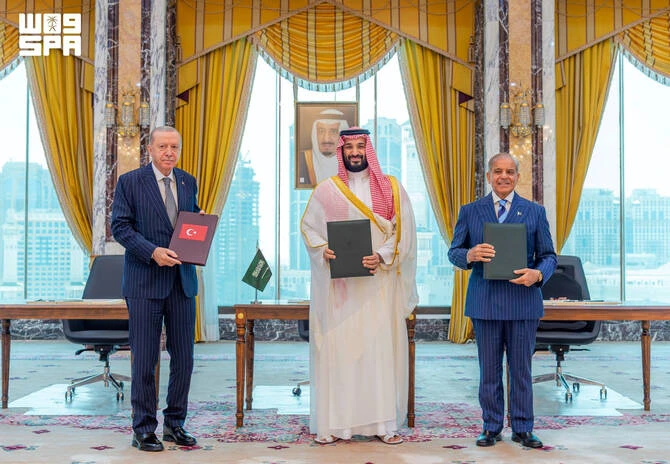
The minister’s comments were the clearest indication yet that Islamabad considers attacks by the Iran-backed Yemeni group capable of triggering obligations under the Makkah Joint Defense Agreement, signed by the three countries last month and stipulating that an armed attack on one member will be treated as an attack on all.
Earlier on Tuesday, Prime Minister Shehbaz Sharif and Pakistan’s foreign office condemned the Houthi attacks, saying they violated Saudi sovereignty and that the Kingdom had the right under international law to take necessary measures to defend its territory, citizens and national assets.
“Unprovoked aggression or spillover of whatever is happening in Yemen into Saudi Arabia will definitely make this agreement operational,” Asif said in an interview with Geo News.
“No one should have any doubt in this,” he added. “We are bound by the terms and conditions of this pact. God willing, we will honor them in case there is a need.”
Asif also warned the Houthis not to exploit the broader US-Iran confrontation to draw Saudi Arabia into the conflict, saying the group would be doing so “at its own peril.”
The Houthis, who control much of northern Yemen including the capital Sanaa, launched drones and missiles at the Saudi cities of Abha, Khamis Mushait, Jazan and Najran on Tuesday, injuring 73 civilians, including women and children, and hitting energy facilities.
Pakistan, Saudi Arabia and Türkiye signed the Makkah Joint Defense Agreement on Aug. 7, establishing a collective defense framework under which an armed attack against any one of the three states is regarded as an attack against all. The countries have repeatedly said the agreement is defensive and is not directed against any particular state.
The three countries also agreed last month to establish a secretariat in Saudi Arabia under the pact, initially headed by a Pakistani secretary-general for three years. The agreement also envisages political and military coordination among the three countries and greater cooperation in areas including joint exercises, air defense, unmanned systems and electronic warfare.
Pakistan also helped broker a roadmap toward a formal US-Iran deal, which was signed in June by all three countries. However, the understanding unraveled, with both the US and Iran resuming attacks against each other in the Gulf region.
Asif said the diplomatic process had reached a stalemate but contacts between the United States and Iran had not ended.
“I will not abandon the hope,” he said. “There is a stalemate ... There are indirect contacts.”
However, the defense minister singled out Israel, saying it wanted the US-Iran war to prolong.
“Israel wants this conflict to continue,” he said, adding that Israel was benefiting from the war, whose costs were largely being borne by others.
Asif said Pakistan remained hopeful that diplomacy would ultimately prevail.
“The doors have not been closed,” he said.