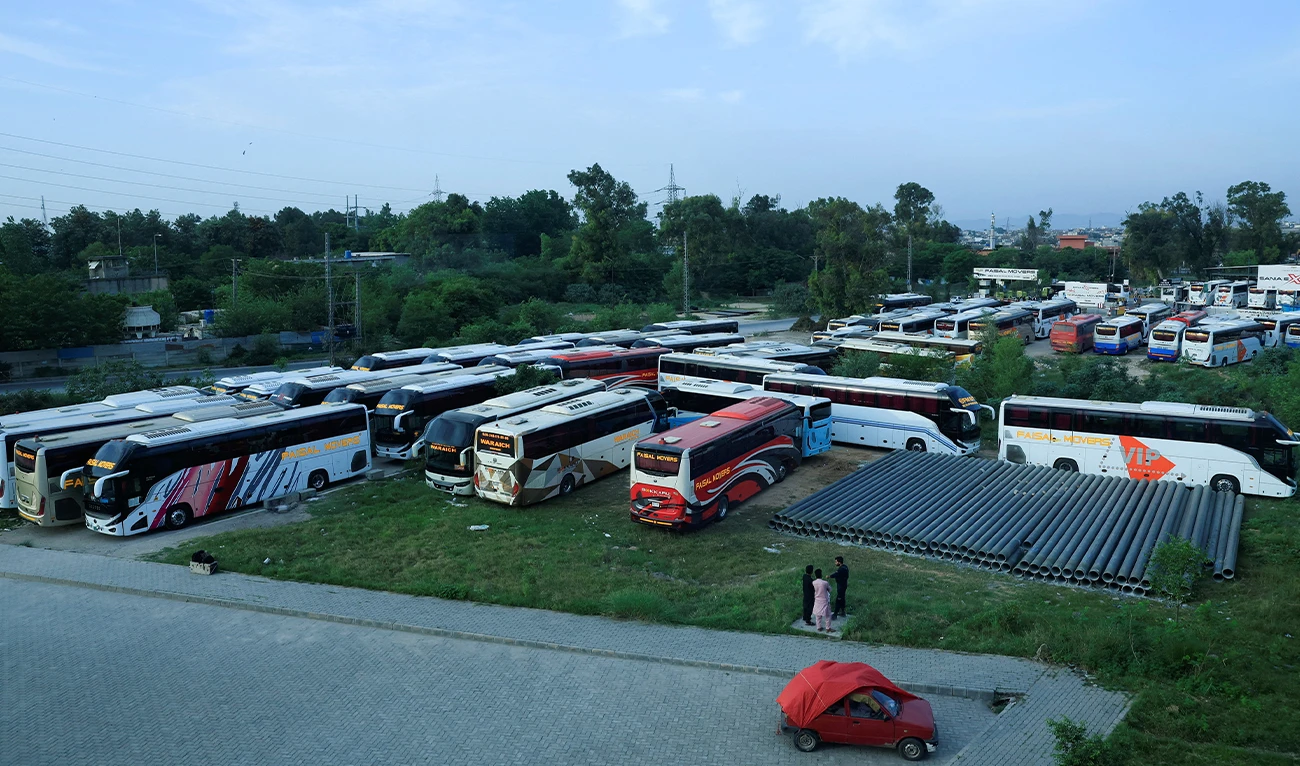
- Freight operators say soaring diesel costs are forcing some vehicles off the road
- Petrol and diesel prices have climbed over Rs30 per liter over the last 10 days
ISLAMABAD: Pakistani goods transporters on Tuesday criticized a government fuel subsidy scheme and called for direct price cuts as petrol and diesel increases topped Rs30 per liter in 10 days amid intensifying Middle East hostilities.
The criticism came a day after Pakistan’s top economic decision-making body approved Rs75 billion ($271 million) for targeted petrol subsidies for motorcycle, rickshaw and small-car owners, as the government announced another increase in fuel prices.
“Running vehicles is now causing continuous losses instead of profits and transporters are facing severe financial difficulties,” All Pakistan Goods Transport Owners Association President Muhammad Owais Chaudhry said in a statement.
The government increased petrol by Rs4.42 to Rs380.24 per liter and high-speed diesel (HSD) by Rs6.10 to Rs409.42, with the new prices effective Sept. 15, according to a Petroleum Division notification on Monday.
The latest revision means petrol has risen by Rs34.37 per liter from Rs345.87 on Sept. 5, while diesel has climbed by Rs31.37 from Rs378.05 over the same period, as the US-Iran war disrupts regional energy supplies and shipping routes.
“The change in price is necessitated by global events including changes in Platts rates, premiums, incidentals etc,” the Petroleum Division said, referring broadly to international benchmark fuel prices, supplier premiums and other import-related costs that feed into Pakistan’s domestic pricing formula.
Earlier, the Economic Coordination Committee (ECC), the country’s top economic decision making body, approved Rs75 billion for a fuel subsidy scheme announced by Prime Minister Shehbaz Sharif to cushion consumers from soaring petrol prices.
Under the scheme, owners of motorcycles, rickshaws and qingqis will receive a Rs100-per-liter subsidy on up to 20 liters of petrol per month, while owners of vehicles up to 800cc will receive the same subsidy on up to 30 liters. The scheme is restricted to non-commercial users, with relief limited to one vehicle per owner.
The domestic price increases come as the Middle East conflict continues to rattle international energy markets, with oil prices rising again on Tuesday amid concerns about supplies and disruption to regional shipping.
Brent crude futures rose $1.24, or 1.18 percent, to $106.93 a barrel in early Asian trade on Tuesday, while US West Texas Intermediate gained $1.29, or 1.24 percent, to $102.65.
Commodity vessel traffic through the Strait of Hormuz fell to fewer than 10 transits a day over the weekend, compared with a 10-day average of 14, according to preliminary ship-tracking data cited by Reuters. Before the war began on Feb. 28, the strategic waterway accounted for around a fifth of the world’s daily crude oil and liquefied natural gas supply.
Pressure elsewhere in the region has also intensified, with Yemen’s Iran-backed Houthis targeting civilian areas in Saudi Arabia with ballistic missiles and drones on Monday, injuring 13 people, according to Saudi authorities.
Saudi Arabia temporarily shut its East-West Pipeline on Friday after it was targeted in several drone attacks in the Riyadh and Madinah regions.
Pakistan, which relies heavily on imported energy, moved to daily fuel pricing in July in response to sharp fluctuations in international petroleum markets following renewed hostilities between Iran and the United States.
Chaudhry said expensive diesel was pushing the goods transport business into a severe downturn, with some operators beginning to take their vehicles off the road as fuel costs eroded earnings.
He urged the government to reduce petrol and diesel prices directly and cut taxes and levies rather than rely on relief packages, saying previous subsidy schemes had failed to deliver meaningful benefits to transporters.