- Built in 19th century, Kalyan Das Temple was a key resting place for pilgrims traveling to Kashmir
- Today, Hindu temple also houses a Punjab higher secondary school for visually impaired children
RAWALPINDI: The guard struck a metal ring with a wooden stick, signaling the end of the school day. One by one, children began filing out of their classrooms.
They are students at the Government Qandeel School for the Blind in Rawalpindi, where children with visual impairment study through Braille and other specialized methods.
But few know that the school is built inside a much older structure: the Kalyan Das Temple, a Hindu place of worship that dates back over 100 years. It was built by Kalyan Das Suri, a wealthy Hindu resident of Rawalpindi, according to the school principal Pervaiz Akhter.
Construction on the temple began in 1850 and was completed around 1880, Akhter said. However, Sanath Suri, the great-grandnephew of Kalyan Das Suri, does not agree with this version. He says family records indicate that construction of the temple began around 1880 and was completed around 1900.
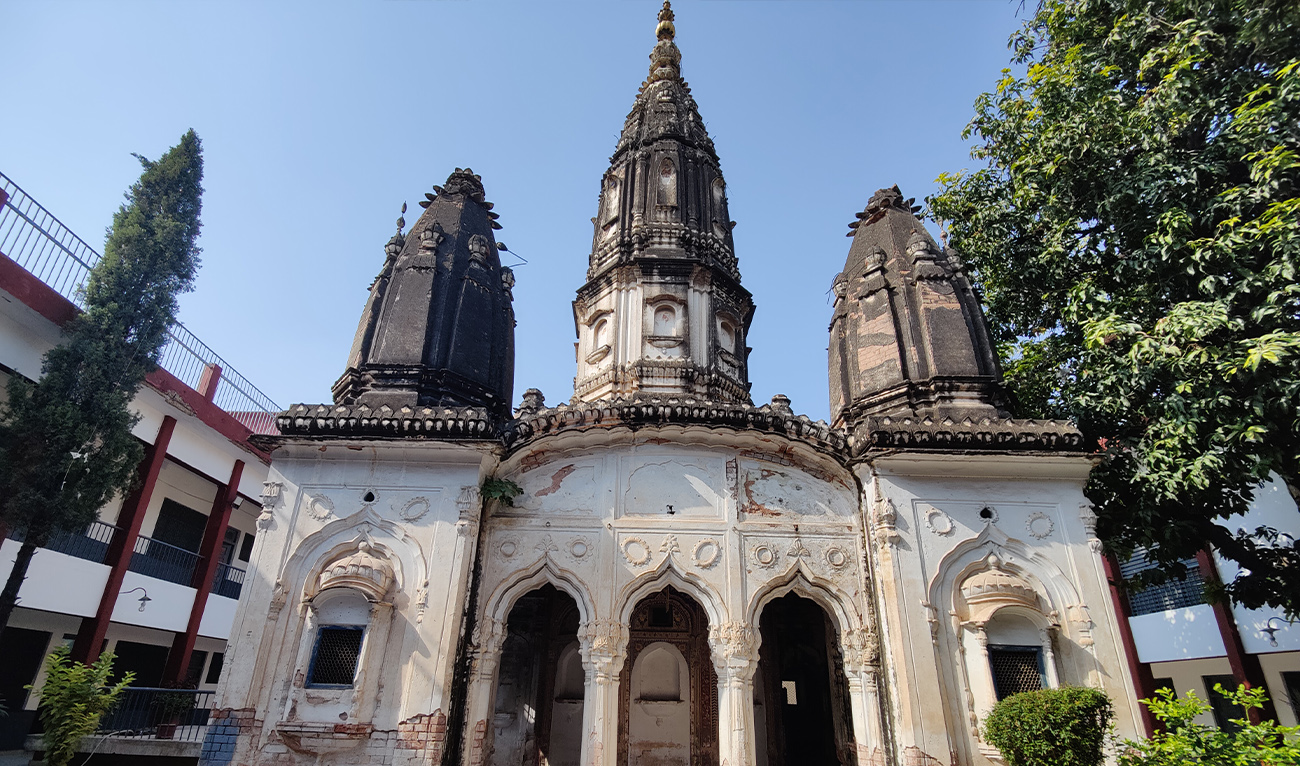
Suri said the temple was built to honor the memory of Kalyan Das, who did not have any children.
“Because Kalyan Das had no children of his own, his brothers decided to build the temple and name it after him,” Suri told Arab News via email from New Delhi.
“So that his name would be remembered and carried on for generations.”
The temple hosted a large number of pilgrims back in its heyday, according to Suri. During the annual Amarnath pilgrimage, when Hindu devotees traveled toward the Indian-administered Jammu and Kashmir territory from Pakistan’s Punjab and Khyber Pakhtunkhwa provinces, pilgrims would stay at the Kalyan Das Temple.
“During Amarnath yatra, all pilgrims used to come and stay in the rooms in this temple where free meals were provided to them,” Suri said.
The temple was once larger than the structure that remains today, according to Akhter.
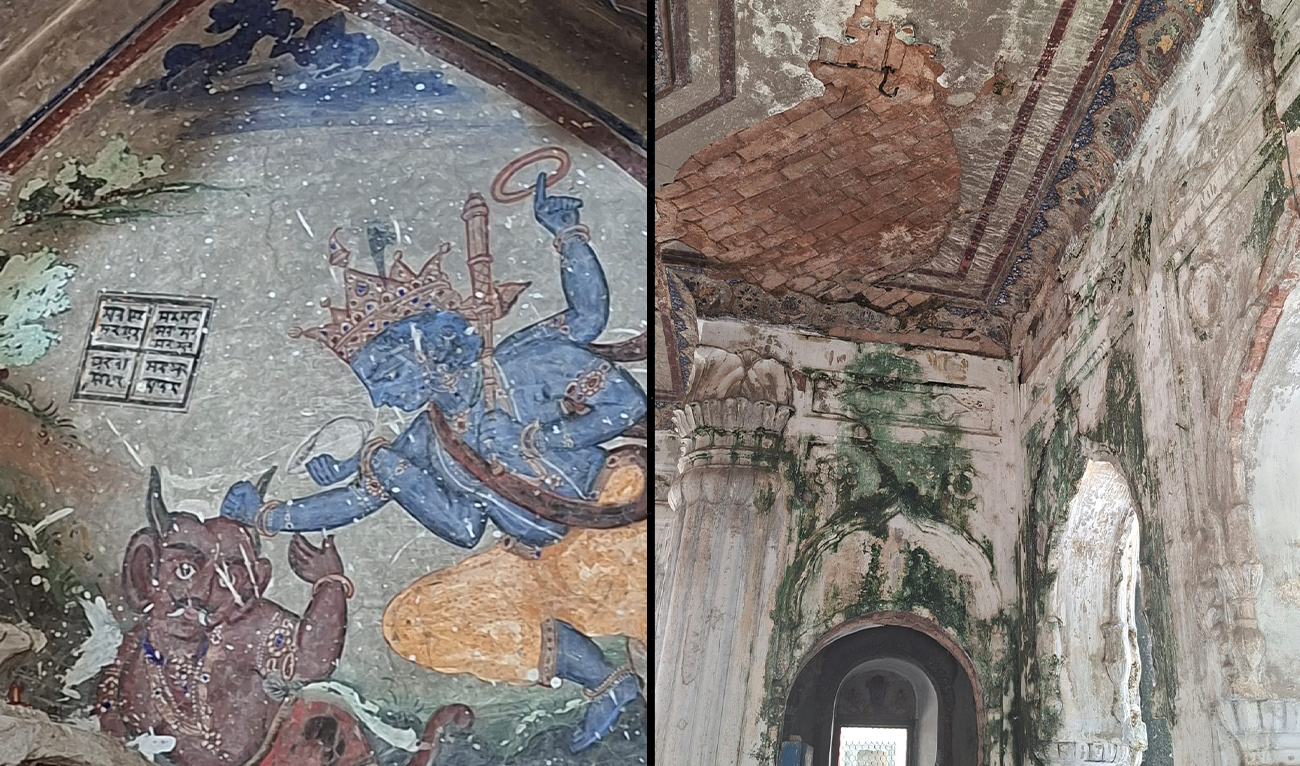
Today, it consists of a worship room where an idol still remains, a veranda, and four small rooms. Its arches and decorative wall work reflect the architectural influences of the period.
Strips of decorative plaster are flaked off, exposing the red bricks underneath the arches, pillars and ceiling. Cracks run through the domed roofs of the temple, with the murals also giving off a withered look.
After the partition of the Indian subcontinent in 1947, when millions of Hindus left present-day Pakistan for India, Suri’s family did the same. It last visited the temple in 1947.
Some members of his extended family visited Rawalpindi in more recent decades, but the older generation that had direct memories of the temple have since passed away.
“Actually, all the elders have died,” Suri said. “What little bit they told us, we noted it down.”
’DANGER TO THE CHILDREN’
Suri’s father, K.L. Suri, wrote a letter to former Pakistani military ruler and president, Pervez Musharraf, requesting the government for a grant to renovate the temple. Suri says he did not receive a response.
Eventually, a school for visually impaired children opened inside the Kalyan Das Temple.
Akhter, the principal, told Arab News a woman started the school after the temple was left vacant following the 1947 partition.
“She was the wife of an army personnel,” Akhter said. “She began a schooling system for blind children here through an NGO. It continued until the 1970s and in 1976, it was nationalized.”
Akhter said the institute first became a primary school and was later upgraded to a middle school before it was eventually given the status of a higher secondary school.
The Punjab government later constructed the building of the school inside the temple around 1986-87 and in 1987, the school’s first batch of students completed their matriculation examinations.
Today, 94 children study at the school, with around 25 staff members.
But while the school has received government-funded renovations, the temple itself remains in poor condition.
The temple falls outside the school’s jurisdiction and is managed by Pakistan’s Evacuee Trust Property Board. It also has no dedicated caretaker, adding to concerns over its upkeep.
Though Akhter believes deterioration of structures happens naturally over long periods of time, the dilapidated state at times makes him fear for the students’ safety.
“We remain concerned that one day a large piece could fall, or the entire structure could collapse,” Akhter said.
“And this could pose a danger, especially to the children.”