- Saudi Arabia to give $1 billion oil on deferred payments facility, acting state bank governor tells analysts
- Central bank on Monday held its main policy rate at 15%, adding it would closely watch inflation data
KARACHI: Pakistan will receive $2 billion from Qatar and $1 billion from the UAE to help ease the South Asian nation’s funding crunch and shore up a gap in foreign reserves highlighted by the International Monetary Fund.
The news, shared by Acting Governor State Bank Murtaza Syed, comes as Pakistani Prime Minister Shehbaz Sharif is visiting Qatar on August 23 and 24. Syed did not confirm if an announcement of the assistance would come during the visit.
“The break-down of commitment of USD 4 billion from friendly countries include: USD 2bn from Qatar, USD 1bn from Saudi (deferred oil facility) and USD 1bn from UAE,” Arif Habib Limited, a major Pakistani securities brokerage, investment banking, and research firm, said in its statement after Syed’s briefing to stock analysts.
“These amounts are expected to be received over the next twelve months.”
Bloomberg also reported Pakistan would receive $2 billion from Qatar in bilateral support, $1 billion in oil financing from Saudi Arabia and a similar amount in investments from the UAE.
The IMF last week announced its executive board would meet on August 29 to review a stalled $6 billion loan program for Pakistan. Last month, the Fund said it had reached a staff level agreement with Pakistan that would pave the way for a disbursement of $1.17 billion. The board is also considering adding $1 billion to the program agreed in 2019. But it has asked Pakistan to guarantee $4 billion to bridge a gap in foreign reserves before it approves releasing the next tranche.
Last week, Finance Minister Miftah Ismail said the funds would come from “friendly countries.”
"The funding of $4 billion has been achieved through our friendly countries Saudi Arabia, UAE and Qatar," Ismail told reporters, saying all prior actions had been met before the scheduled IMF executive board meeting.
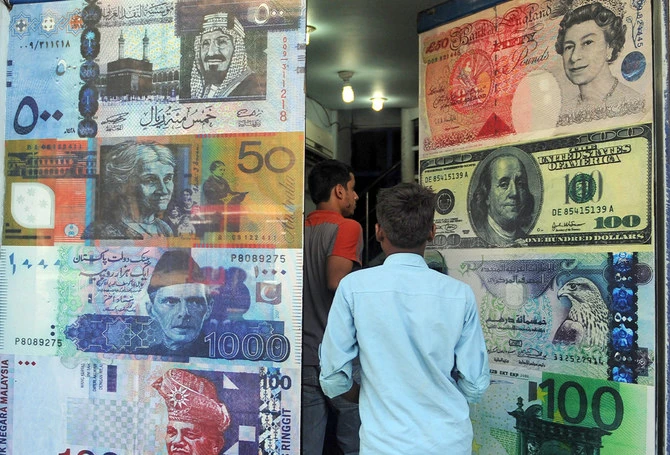
Depleting reserves, a widening current account deficit and the depreciation of the Pakistani rupee against the US dollar have left the South Asian nation facing a balance of payment crisis.
Without the IMF deal, which should open up other avenues for external finance, Ismail has previously said the country could have headed towards default.
On Monday, the State Bank of Pakistan also decided to keep the policy rate unchanged at 15%, adding it would closely watch inflation data and global commodity prices.
“Looking ahead, the MPC (monetary policy committee) intends to remain data-dependent, paying close attention to month-on-month inflation ... as well as global commodity prices and interest rate decisions by major central banks,” the State Bank said in a statement.
Pakistan’s annual consumer price inflation reached 24.9% in July, the highest in 14 years, according to its statistics bureau. Still, the bank said there were signs that inflationary demand pressures were easing, which justified holding rates steady.
“Inflation is expected to peak in 1QFY23 and then to start coming down slowly. With this, SBP has kept inflation projection unchanged at 18-20% for FY23," the Arif Habib statement said. "Pakistan’s external financing requirement (including current account deficit) will be slightly above USD 30bn for FY23 against available financing (including IMF) of around USD 37bn, therefore over financed by USD 7bn.”