- Pakistan’s database authority enables elderly people to complete proof of life verification remotely for pensions
- Elderly citizens say health complications and old age make physical travel, waiting in long queues exhausting
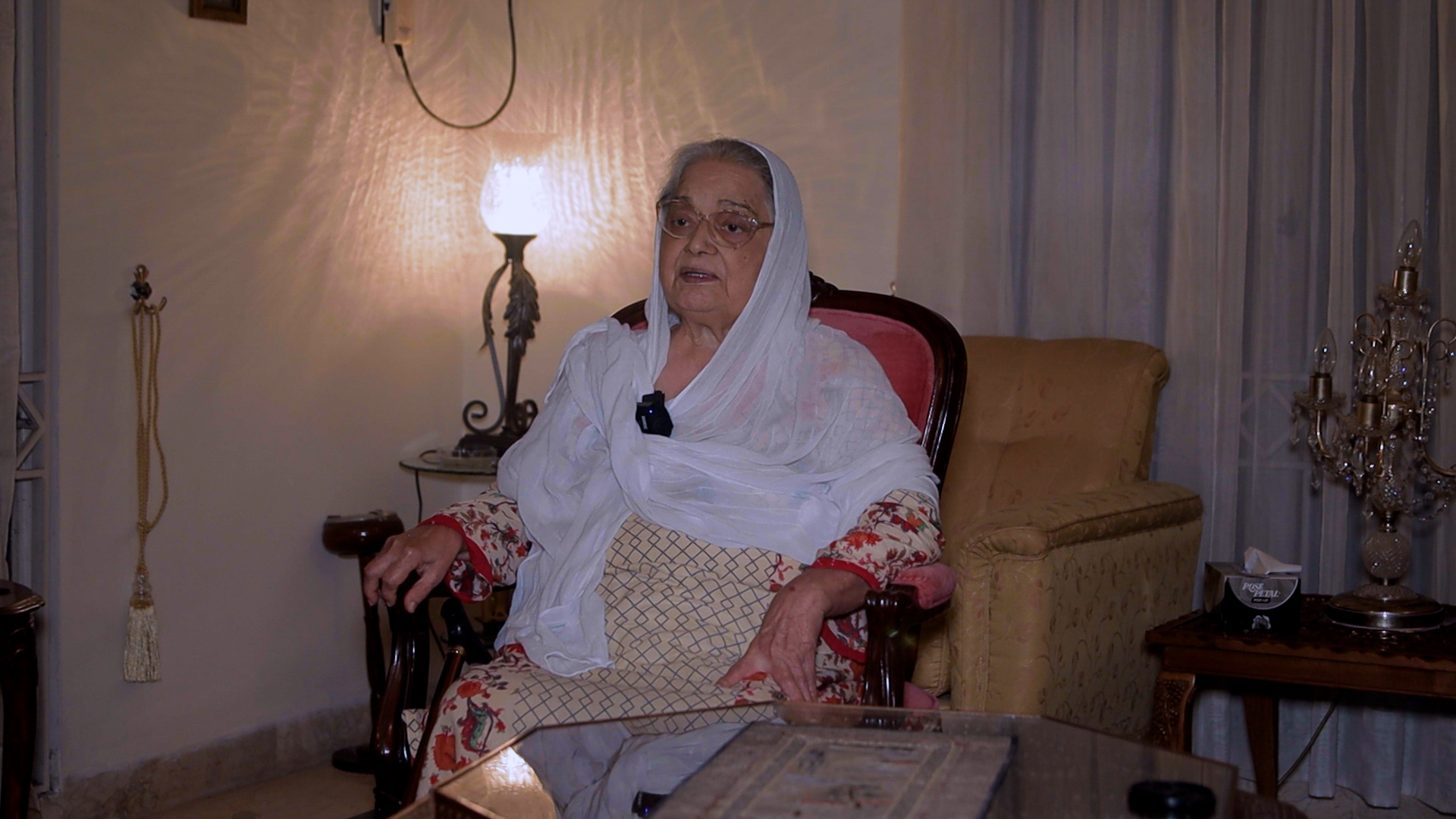
ISLAMABAD: For 89-year-old Mrs. Tanwir Haq, a retired English professor who taught at a public college in Rawalpindi, going to the bank was almost impossible. Severe health complications in recent years, which included an open-heart bypass, meant she could barely walk without support. However, going to the bank once every six months was a necessity she could not avoid if she wanted to secure her pension.
In Pakistan, pensioners have traditionally been required to complete periodic verification procedures, including visits to banks or other offices, to establish that they are still alive and eligible to receive payments.
For years, this has made life difficult for people like Haq, who retired almost three decades ago as a professor at the Rawalpindi Government College for Women. Old, frail and fraught with health difficulties, she says it takes two people to carry her to the car, while walking a few steps is a “huge struggle.”
But that all changed for Mrs. Haq and many like her last month, when the National Database and Registration Authority (NADRA) launched a digital pension verification system that allows pensioners to complete the process remotely. Pensioners can now obtain their Proof of Life Certificate (POLC) by accessing the “Pak ID” mobile application remotely.
“This is a huge blessing for people like us,” Haq, who recently got online proof of registration through the app, said. “Sitting at home, even if we cannot do it ourselves, we can have someone assist us and submit it, so we no longer have to visit the bank.”
The initiative targets longstanding administrative challenges across the country, where bureaucratic requirements often forced millions, especially elderly citizens, to endure long queues at banks and government offices.
A total of 3.1 million beneficiaries have been selected for the first phase of the POLC rollout, comprising direct federal, provincial, and military public sector pension recipients as well as overseas Pakistanis.
Manzoor Ali, a 74-year-old who served as controller of home services at state broadcaster Radio Pakistan, recalled how he had to go through the tedious process to access his pension. A resident of the eastern city of Narowal who retired from government service in 2012, Ali had to travel hundreds of miles to Multan city to get his POLC attested by the station manager there.
“It was a tiresome journey,” Ali told Arab News. “Now with the launch of this app, my life has become easy,” he added.
The mobile application allows pensioners to complete their verification through facial recognition and fingerprint scanning via a smartphone camera. According to NADRA spokesperson Syed Shabahat Ali, pensioners who are unable to complete the process themselves can seek assistance from an immediate family member by selecting the “By Other Relatives” option in the app.
“Technology has come for the rescue of the people, because you understand that many of these pensioners are elderly people who cannot walk to banks for many reasons,” the NADRA official told Arab News.
“In the 10 to 12 days, almost 100,000 people have obtained this certificate.”
The facial recognition system was chosen as elderly people are often unable to complete their biometric verification due to fading fingerprints on account of old age.
“The failure of facial services is very unlikely, mostly in more than 95 percent cases we don’t have a problem,” Shabahat Ali explained. “If the fingerprints do not match, but the face has matched, the process goes on and it doesn’t become a hurdle for you.”
While the initial phase of the initiative covers 3.1 million federal and provincial government beneficiaries, and overseas Pakistanis, the second and third phase aims to incorporate state-owned enterprise retirees into the digital application system.
For citizens like Haq, who had a relative download the app to take her photograph and process her biometrics, the digital transformation provides immediate relief.
“Technology is extremely beneficial,” she said. “It has brought many changes and conveniences to life, provided one knows how to use it correctly.”