- Exports to GCC plunged 32.3 percent in initial four months before contraction narrowed to 6.4 percent as businesses adjusted to supply chains
- The government cut port charges, negotiated cheaper air freight and diverted shipments to alternative markets to cushion exporters
ISLAMABAD: Pakistan’s exports to the Gulf Cooperation Council (GCC) countries suffered a $387 million shortfall between March and October, a senior commerce ministry official said on Wednesday, as the United States-Iran conflict disrupted shipping routes, drove up freight and insurance costs and affected the movement of agricultural and industrial goods.
The conflict, which began with US and Israeli strikes on Iran in Feb., disrupted energy and cargo supplies through the Strait of Hormuz, a narrow waterway between Iran and Oman. Tehran has maintained its stranglehold on the waterway, while Washington continues a counter-blockade of Iranian ports.
The conflict has seen Pakistan’s exports to the six-member GCC bloc fall by $316.9 million, or 32.3 percent, during March-June when compared with the same period last year, according to the commerce ministry. The decline narrowed to 6.4 percent, or $69.8 million, during July-October.
While exporters had adjusted to supply chains, diverted shipments to alternative markets and benefited from government measures to reduce transportation and port costs, a commerce ministry presentation, titled the “Impact of Iran Conflict on Pakistan’s Trade with GCC,” put the cumulative export shortfall at $387 million for March-October 2026.
“As soon as the conflict started, the impact was highly visible,” Commerce Secretary Jawad Paul told a parliamentary panel on Wednesday, adding that Pakistani businesses had gradually adapted to the changing trade environment.
The GCC, comprising Saudi Arabia, the United Arab Emirates, Qatar, Kuwait, Bahrain and Oman, is a major destination for Pakistani agricultural and textile products and an important source of the country’s energy imports.
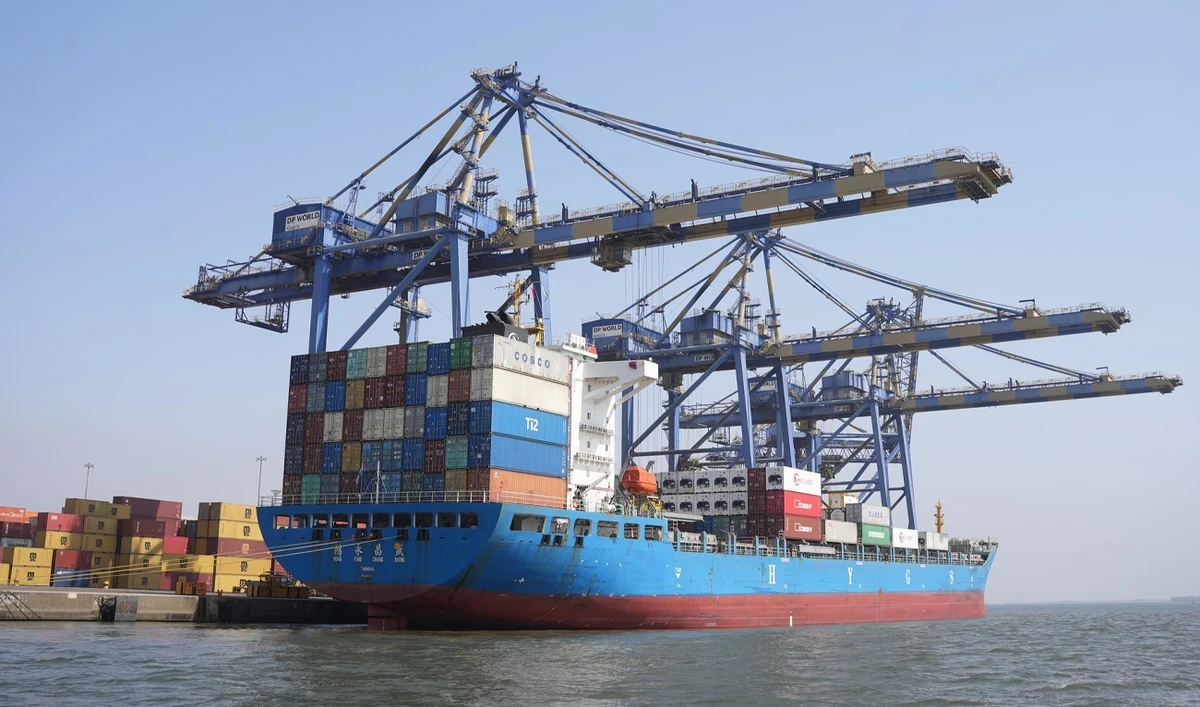
Higher war-risk insurance premiums, container shortages, longer shipping routes and airspace closures also pushed up transportation costs and disrupted deliveries, with freight charges from Karachi to major Gulf ports rising sharply.
Rates for a 40-foot dry container to Qatar’s Hamad port increased from $1,300-$1,900 to $8,500-$8,800, while shipments to Kuwait’s Shuwaikh port cost around $8,500, up from $1,800-$2,000. Freight charges for the UAE’s Jebel Ali port rose to $5,000-$6,000 from $1,200-$2,000, according to the Pakistani commerce ministry.
The UAE and Qatar were among the hardest-hit markets during the initial phase, with Pakistani exports falling 42.7 percent, or $264.8 million, and 49.8 percent, or $15 million, respectively. Shipments to Kuwait declined 38.7 percent, Oman 25.1 percent and Bahrain 13.3 percent. Saudi Arabia recorded a comparatively modest fall of 1.7 percent.
To cushion exporters, the government established an inter-ministerial committee in March to coordinate responses with relevant departments and private-sector stakeholders.
Subsequent measures included introducing dedicated cargo flights and increasing their frequency, particularly for meat exports, and negotiating lower air freight rates with regional carriers Emirates, Gulf Air and Jazeera Airways, according to Paul. Port handling charges were also reduced by up to 60 percent following negotiations with port operators.
The official said the government had identified areas where transportation and port costs could be reduced “through active daily coordination.”
Pakistan also sought alternative trade corridors and export destinations as regional disruptions complicated access to traditional markets, according to the commerce ministry. Exporters also turned to Khunjerab-Sost border with China, while some shipments were redirected to Southeast Asian and African markets.