- The agreements amounting to $845 million were signed under the G20 Debt Service Suspension Initiative to provide relief to weaker economies
- Pakistan has managed to reschedule $2,934 million with bilateral creditors and is negotiating for the remaining $754 million
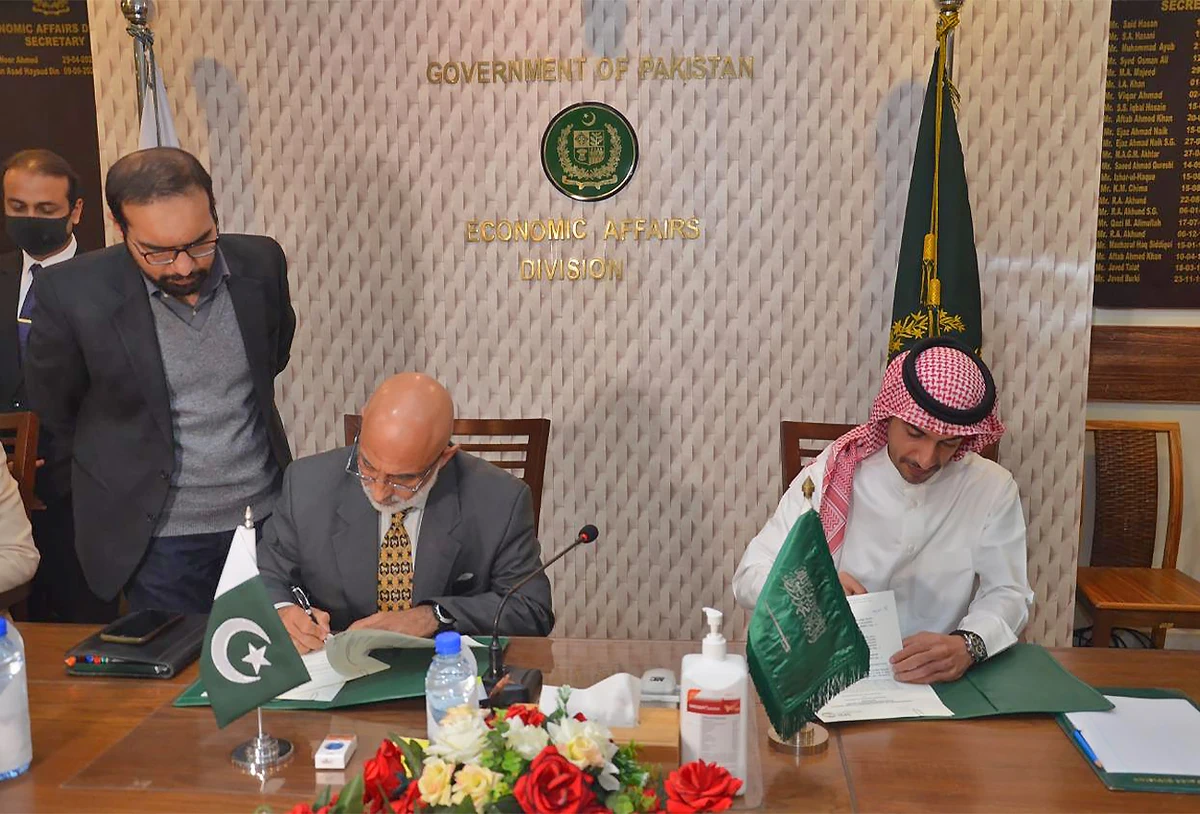
ISLAMABAD: Pakistan has signed two debt service suspension agreements amounting to $846 million under the G20 Debt Service Suspension Initiative (DSSI) framework with the Saudi Fund for Development (SFD), the country’s economic affairs ministry announced on Thursday.
The initiative was adopted by the world’s top 20 economies amid the coronavirus pandemic to provide financial relief to poorer nations at a time when global economic activities were losing their pace and public debt in emerging markets was rising.
The rationale behind the program was to save lives and livelihoods of millions of people in financially vulnerable countries who faced a mounting debt crisis while dealing with raging COVID-19 infections.
“This amount which was due to be paid during the testing period from May 2020 to December 2021 will now be repaid over a period of six years starting from 2022 in semi-annual installments,” the ministry said in an official statement. “Due to the support extended by the Saudi Fund for Development – one of the major bilateral development partners of Pakistan – along with other bilateral creditor countries, the G-20 DSSI has provided the fiscal space which was necessary to deal with the urgent health and socioeconomic needs of the Islamic Republic of Pakistan.”
The statement added the total amount of debt that had been suspended and rescheduled under the initiative during the stated period was $3,688 million.
Pakistan signed the agreements with the Saudi Fund for Development in the presence of the kingdom’s envoy, Nawaf bin Saeed Al-Malky, in Islamabad.
“Pakistan has already concluded and signed 80 agreements with 21 bilateral creditors for the rescheduling of its debts under the G-20 DSSI framework, amounting to rescheduling of $2,088 million,” the ministry informed.
It said the signing of agreements with the Saudi Fund for Development had brought the total rescheduled amount to $2,934 million, adding that negotiations for the remaining $754 million were underway.
“The agreements for this amount [$754 million] are expected to be signed with respective bilateral development partners within the current fiscal year,” it added.