- PM Sharif says Pakistan to receive $2 billion tranche after resumption of stalled IMF bailout program
- Pakistan’s finance minister hopes to generate 33 percent more tax revenue in the next fiscal year
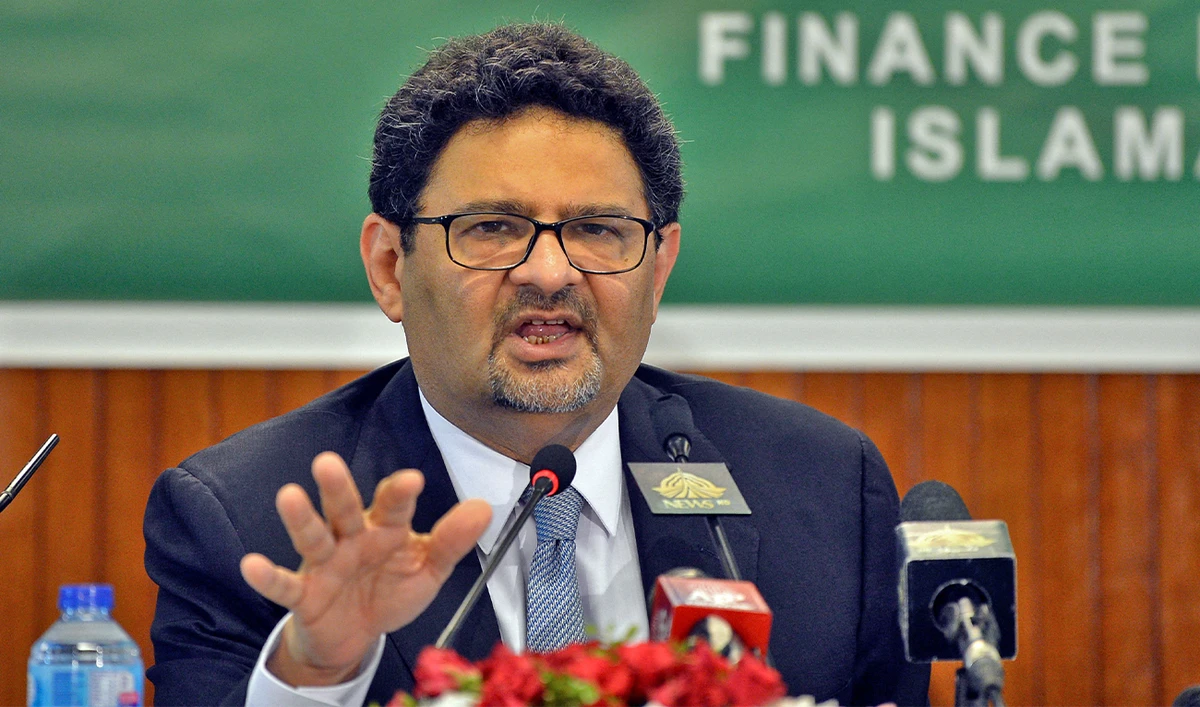
ISLAMABAD/KARACHI: Finance minister Miftah Ismail said on Tuesday talks with the International Monetary Fund (IMF) for a staff-level agreement on a stalled $6 billion bailout program would “hopefully” begin on June 30.
Earlier in the day, Ismail announced a breakthrough in the country’s talks with the lender, saying the government had received a Memorandum of Economic and Financial Policies (MEFP), bringing it one step closer to the revival of the stalled loan facility.
Pakistan entered the IMF program in 2019, though the loan facility was halted earlier this year after the administration of former prime minister Imran Khan went against the lender’s terms by offering power and fuel subsidies ahead of a no-confidence vote which he lost in April.
The country’s new government reversed the financial grants, including raising the prices of petroleum prices thrice within a month, to convince the IMF to resume the loan program amid a mounting current account deficit and dwindling foreign currency reserves.
“The Memorandum of Economic and Financial Policies (MEFP) was received today and the authorities concerned will need at least two days to read the document,” Ismail said in an interview to Geo News.
While addressing a conference on Tuesday morning, Prime Minister Shehbaz Sharif said Pakistan was going to receive $2 billion from the International Monetary Fund (IMF) after the global lender shared combined economic targets with the country for the seventh and eighth reviews under the stalled loan facility.
“Miftah [Ismail] sent me a message this morning that we were going to get $2 billion [from the IMF] instead of $1 billion,” Sharif said.
Pakistan has been seeking a $2 billion increase in the IMF loan along with an extension in its tenure for about a year.
Last week, the government revised its budgetary targets by reversing economic relief for salaried individuals and imposing a super tax on 13 industries.
Discussing the super tax, Sharif said it was a source of satisfaction for him that it had been accepted by much of the affluent classes of Pakistan.
“This will help generate Rs230 billion,” he added.
“Our ultimate goal is to achieve self-reliance since it is the only guarantee that we will be able to take independent political and economic decisions,” the PM added.
Speaking on the occasion, Pakistan’s finance minister said the country no longer faced the threat of default.
“We aim to reduce the primary deficit from Rs1,600 billion to Rs125 billion surplus during this fiscal year,” he said.
Ismail also promised to give “good news” to the country on the IMF front and expressed optimism to generate 33 percent more tax revenue in the coming fiscal year.
Speaking to Arab News, financial experts described the receipt of the MEFP as a significant step toward the revival of the loan program and the implementation of the seventh and eighth reviews of the Extended Fund Facility (EFF).
“The MEFP is a document that will provide the basis for the conclusion of talks with the IMF,” Dr. Khaqan Najeeb, former adviser to the finance ministry, said. “The MEFP contains all prior actions and instructions, benchmarks and other timelines along with structural issues ... So, to move forward with the implementation of seventh and eighth review, it is an important development.”
“This development will be followed by a staff-level agreement, and it signals the revival of the loan program,” Samiullah Tariq, director research at Pakistan Kuwait Investment Company, told Arab News.
“The MEFP will lay out major economic policies that will have to be considered by the government while moving forward,” Tahir Abbas, head of research at Arif Habib Limited, said.