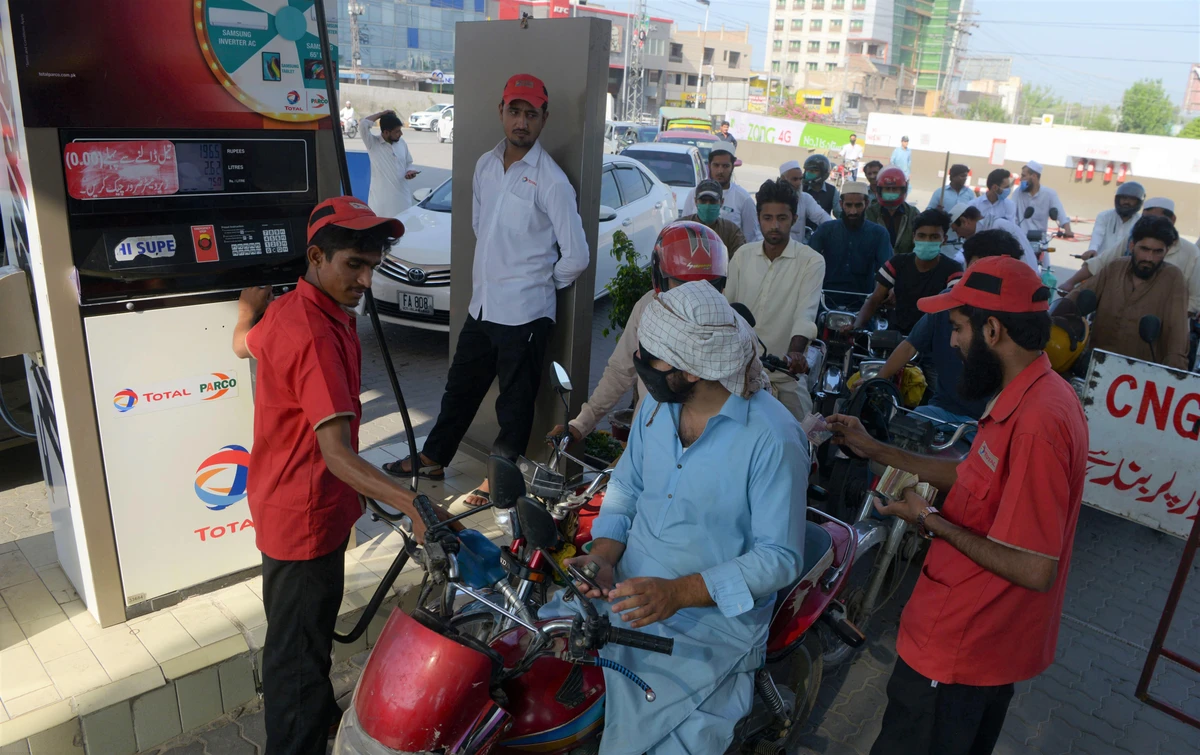
- Pakistan has suffered chronic energy supply problems for years with regular power blackouts and gas outages
- A mix of inefficient regulation, inadequately maintained distribution networks and poor governance are to blame for supply problems
ISLAMABAD: Pakistan will face revenue shortfall of Rs50 billion this fiscal year due to the diversion of costly imported gas to the domestic sector to meet demand during the winter season, a senior petroleum official said this week, as gas shortages are expected to cross 4,000 million cubic feet per day (mmcfd).
Last winter, Pakistanis using natural gas for cooking and heating at home, as well as industries and power plants that rely on the fuel, experienced major inconvenience due to low gas pressure or no supply at all.
Despite gas discoveries dating back to the 1950s, much of mineral-rich Pakistan remains unexplored. Conventional gas reserves are estimated at 20 trillion cubic feet (tcf), or 560 billion cubic meters, and shale gas reserves, which are untouched, at more than 100 tcf.
But Pakistan has still suffered from chronic energy supply problems for years, with regular power blackouts and gas outages caused by a combination of poor governance, inadequately maintained distribution networks and inefficient regulation. Supply constraints have led to an increasing demand for liquefied natural gas (LNG) imports and Pakistan has built two import terminals.
“Diversion of the imported gas to the domestic sector will result in an estimated revenue shortfall of 50 billion rupees [this fiscal year],” Sajid Qazi, joint-secretary at the petroleum division, told Arab News, saying over 4,000 mmcfd in gas shortages were expected this winter.
Pakistan’s local gas production stands at 3.1 billion cubic feet per day, but existing domestic reserves are depleting at the rate of 7.5 percent annually, the petroleum division said. The government spends Rs29 billion each month to import 1150 mmcfd LNG to bridge the demand-supply gap, Qazi said.
Though many blame the Sui Natural Gas Pipeline Limited (SNGPL) and Sui Southern Gas Company Limited (SSGC) for the severe winter energy crisis that has seen repeated supply outages in the last few years, natural gas companies are not solely responsible.
In October, Prime Minister Imran Khan’s government announced it would renegotiate agreements for two LNG import terminals as part of a wider investigation into deals struck by the previous government.
The rapid adoption of LNG infrastructure made Pakistan one of the industry’s fastest-growing markets in Asia, sparking interest from the world’s major energy producers and traders.
Now, Qazi said, the petroleum division was planning to float a tender for around 20 new oil and gas exploration blocks in a bid to increase local production. The government was also planning to build a Strategic Underground Gas Storage with the help of Asian Development Bank to improve energy security and affordability in the country, the petroleum division said in a statement.
“The project will significantly enhance Pakistan’s capability to provide uninterrupted gas supply for sustainable economic growth,” the statement said.
The government hopes improved security in recent years and the country’s extensive pipeline network will attract investors. Pakistan is also drafting its first shale gas policy. One recent study by the US Agency for International Development (USAID) put Pakistan’s shale gas reserves at more than 100 tcf in the Lower Indus Region alone, enough to meet current demand for at least a few decades.