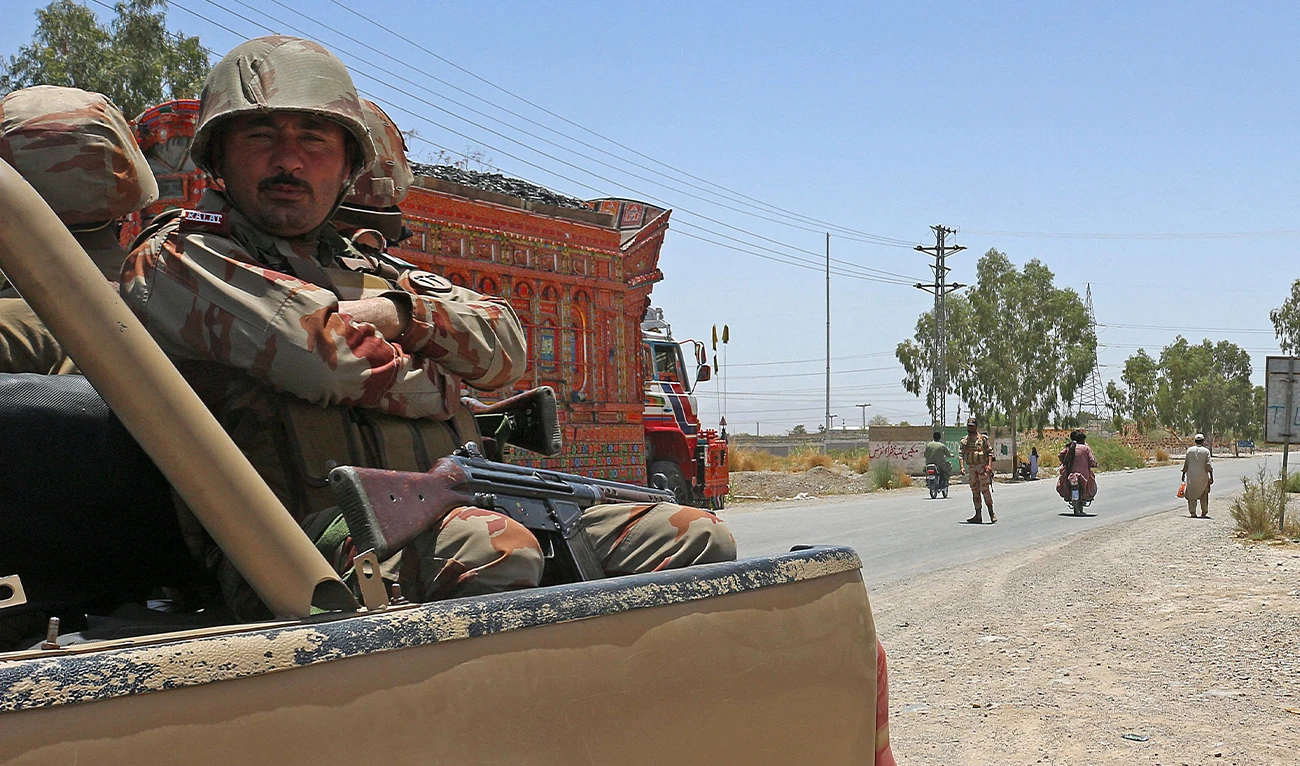
- Last month President Biden caused uproar with off-the-cuff remarks on Pakistan's nuclear program
- State Department later said it was confident of Pakistan's "commitment and ability" to secure nukes
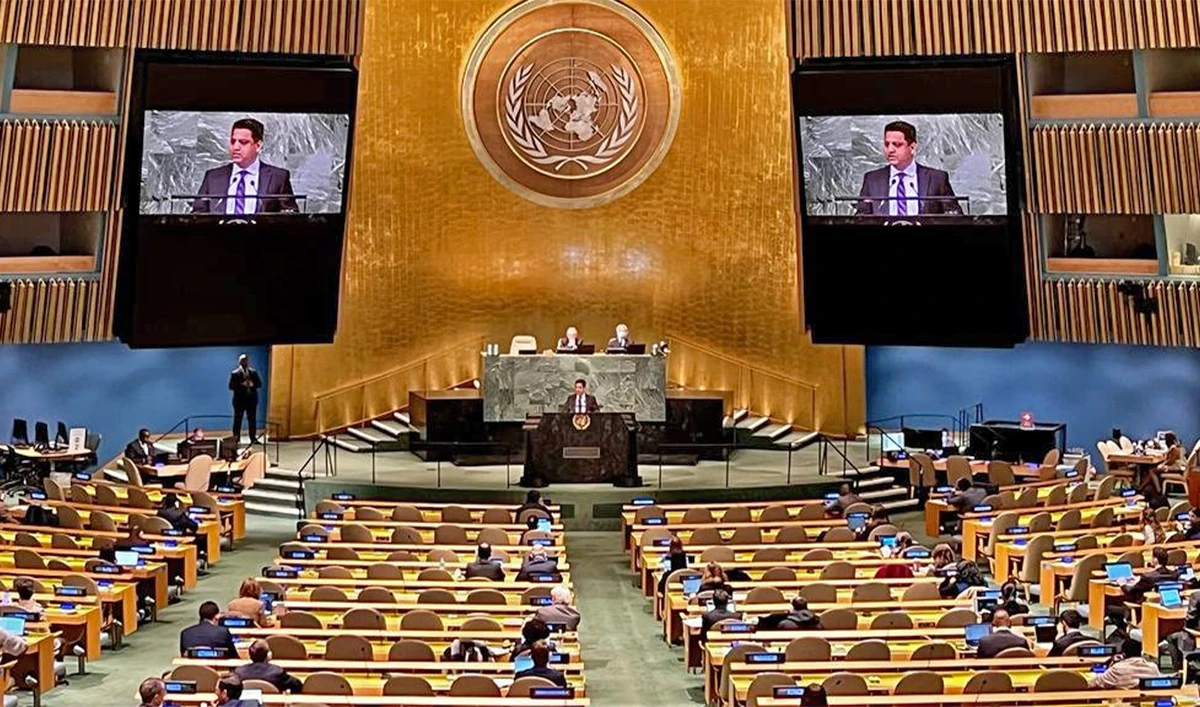
ISLAMABAD: Ambassador Aamir Khan, Islamabad’s Deputy Permanent Representative at the UN, told the General Assembly on Thursday Pakistan considered the security of its nuclear power plants and research reactors a “national responsibility,” adding that all ongoing projects followed International Atomic Energy Agency (IAEA) safeguards.
Last month President Joe Biden caused uproar by making off-the-cuff remarks on Pakistan’s nuclear program while at a private Democratic Party fundraiser in California, saying Pakistan was “one of the most dangerous nations in the world,” and had “nuclear weapons without any cohesion.”
Pakistan, proud to be the only declared nuclear power in the Islamic world, summoned US Ambassador Donald Blome to lodge a protest. Prime Minister Shehbaz Sharif tweeted that Pakistan was a “responsible nuclear state” and took safety measures “with the utmost seriousness.”
Just days later, the US State Department said it was “confident of Pakistan’s commitment and its ability to secure its nuclear assets.”
Speaking on Thursday to the 193-member UNGA on the annual report of the Vienna-based UN agency, Ambassador Khan said Pakistan had developed a “comprehensive nuclear safety and security regime based on an extensive legislative and regulatory framework governing the security of nuclear materials, radioactive substances, associated facilities and activities,” state-run APP reported.
That regime, he said, was regularly reviewed and updated in light of IAEA guidance documents and international best practices, and the safety and verification aspects of the agency’s mandate remained one of the most important pillars of the reviews.
With regards the strengthening of the safeguards system, Khan stressed the need for a balanced approach between the promotional aspects and safety or security related concerns in the IAEA’s functions. He added that the agency’s safeguards should not be used to “serve partisan political objectives.”
“Its verification regime could remain credible only if it is applied on a non-discriminatory basis, as stipulated in the Agency’s Statute,” the Pakistani envoy said.
Noting that the old consensus on disarmament and non-proliferation had broken down, Khan proposed convening a special session of the UN General Assembly to evolve a new consensus that offered equal security to all states, large and small.
“This new consensus should eliminate the discrimination and double standards that characterize the present non-proliferation arrangements,” he said, adding that it should also evolve an agreed basis for the promotion of peaceful uses of nuclear energy under appropriate international safeguards.
Khan said harnessing nuclear technology was a priority for Pakistan as it pursued Sustainable Development Goals (SDGs).
“We view nuclear energy as a reliable, consistent and carbon-free source of electricity generation,” he stressed.
Pakistan’s efforts to expand nuclear power generation and to increase its share in the national energy mix were driven by the fact that it was not only an energy-deficient country but also one of the most vulnerable countries to the impacts of climate change, the ambassador said.
“The recent debilitating effects of climate change— which are being felt strongly by my own country in the wake of the recent unprecedented floods— have heightened vulnerabilities of other countries and people around the globe,” he said.
Referring to recent floods in Pakistan, the envoy said:
“Such global issues require global solutions, and close and unrestricted cooperation … In fact”, he added, “access to nuclear power is the need of the hour.”