- Outages in Islamabad have hit over eight hours a day
- Major cities experiencing blackouts of over 12 hours daily
ISLAMABAD: The government of Prime Minister Shehbaz Sharif said on Monday scheduled electricity outages, known as “load shedding,” would be reduced to 3.5 hours from tomorrow, Tuesday.
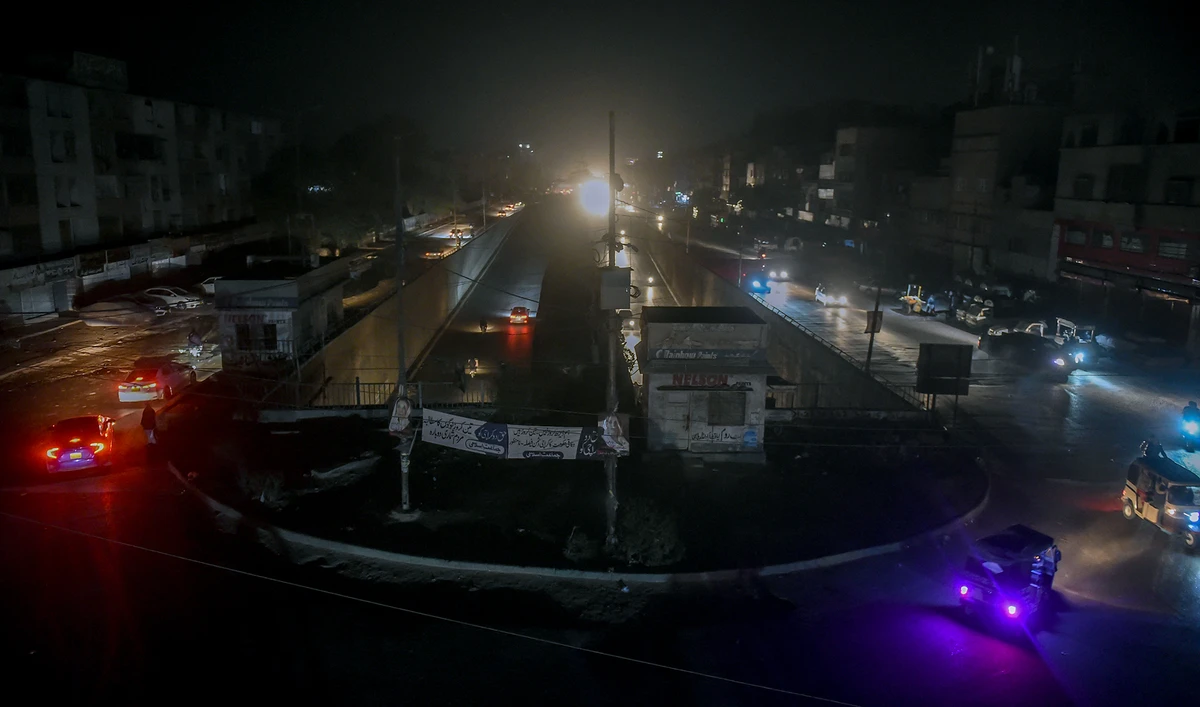
The announcement comes as routine outages in the Pakistani capital, Islamabad, have hit eight hours a day and blackouts in major cities were over 12 hours.
Large-scale construction of new power plants - largely coal-fired ones funded by China - has dramatically boosted the country’s energy capacity after years of power outages that shut down industry and crippled the economy. But even as supply surges, electric power is still not reaching up to 50 million people in Pakistan who need it, according to the World Bank, though expansion of transmission lines is planned.
Addressing a press conference on Monday, senior Sharif aide Shahid Khaqan Abbasi said the country's electricity demand had exceeded 25,000MW during the summer. Electricity generation capacity was at 17,000MW in April, which had been increased to more than 21,000MW over the past three weeks, he added.
"Today, we are producing 21,000MW, which means we have a shortfall of 4,000MW," Abbasi said, adding that this translated into a little more than four hours of load shedding to fill the supply and demand gap.
“We are hopeful that by tomorrow load shedding will be reduced to 3.5 hours,” he told reporters. "By June 30, the duration will be less than two hours, close to an hour and a half."
He expressed the hope that the government would be able to reduce this even further in July.
The power crisis comes while the South Asian nation is in dire need of external finances due to a widening current account deficit and foreign reserves falling as low as $10.5 billion, equivalent to less than two months of imports.