- Saudi finance minister recently said the kingdom was shifting from providing unconditional grants to investing in ‘vulnerable’ states
- Mohammed Al-Jadaan informed his country was in talks with World Bank, others to be ‘more creative’ in supporting Pakistan
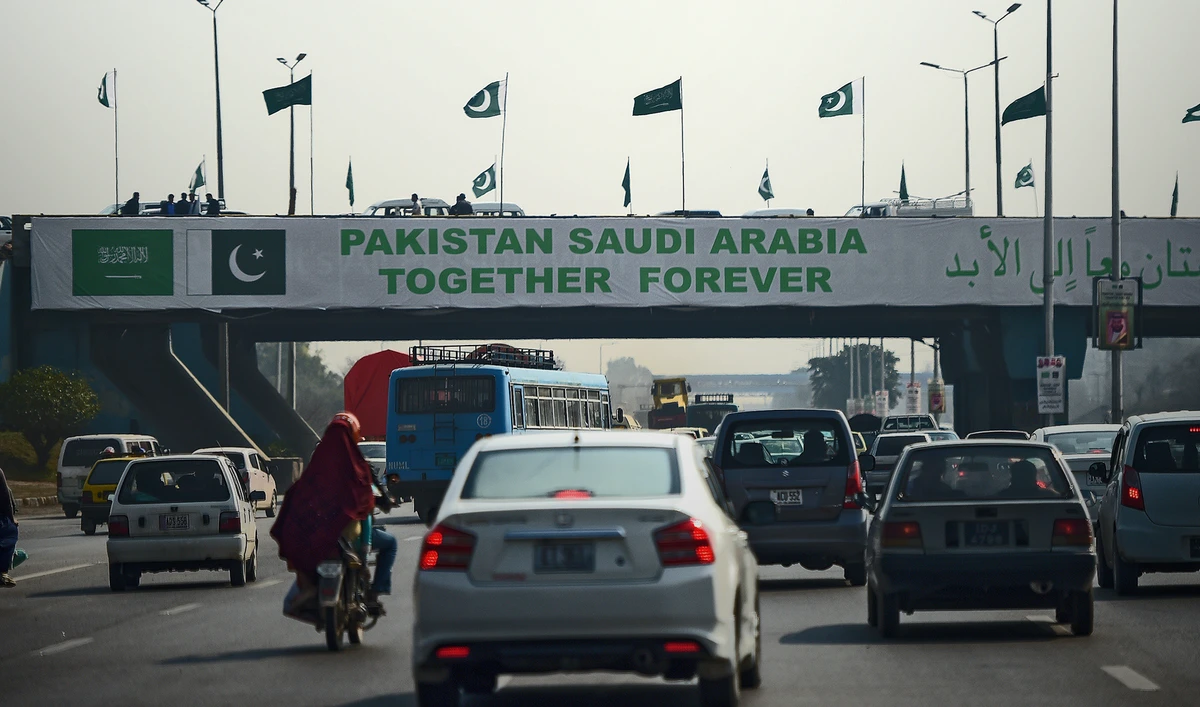
ISLAMABAD: Saudi Arabia and Pakistan have well-established frameworks of cooperation, said the foreign office in Islamabad on Thursday in response to a question about a remark made by a senior official from the kingdom, adding it had long been on the South Asian nation’s economic agenda to attract Saudi investment.
Saudi Minister of Finance Mohammed Al-Jadaan issued a statement at Davos on Wednesday wherein he said the kingdom would change the way it provided assistance to allies, shifting from previously giving direct grants and deposits unconditionally and encouraging countries it supports to enact economic reforms.
Pakistan is currently facing a severe foreign exchange crisis, with State Bank reserves falling to a critical level of $4.6 billion.
As the specter of default looms large, Prime Minister Shehbaz Sharif’s administration has been desperately seeking external financing, particularly a loan tranche from the International Monetary Fund (IMF) which has been pending since September last year. Pakistan is also looking at “friendly” nations like Saudi Arabia and the United Arab Emirates to bail it out.
“We have certain frameworks in which various areas of cooperation are discussed,” foreign office spokesperson Mumtaz Zahra Baloch said during her weekly media briefing. “These include the Economic Pillar of the Saudi-Pakistan Supreme Coordination Council, the meeting of which is chaired by the Finance Minister from our side. Attracting investments from Saudi Arabia has remained on the agenda of Pakistan and in this regard, we are in close contact with Saudi Arabia.”
The Saudi finance minister said in an interview to Bloomberg this week the kingdom was working with multilateral institutions to provide support to Pakistan, Türkiye and Egypt as part of the kingdom’s largesse to nations it deems “vulnerable.”
“We are investing heavily in these countries and will continue to look for opportunities to invest,” he said. “It’s very important to bring stability.”
The kingdom was also discussing with the World Bank and other institutions how it could be “more creative” in providing support to Pakistan.
Al-Jadaan said Saudi Arabia was looking to invest $10 billion in Pakistan and had already extended the term of a $3 billion deposit to boost its foreign-currency reserves late last year. Saudi Arabia was now exploring the possibility of increasing the amount, he added.
“We are providing even oil and derivatives to support their energy needs,” Al-Jadaan said. “So there is a lot of effort.”
During a panel discussion at the World Economic Forum in Davos on Wednesday, Al-Jadaan said the kingdom wanted to move away from its previous policy of giving nations direct grants and deposits “without strings attached.”
“We are working with multilateral institutions to actually say we need to see reforms,” Al-Jadaan said. “We are taxing our people, we are expecting also others to do the same, to do their efforts. We want to help but we want you also to do your part.”
Saudi Arabia and other Gulf Arab states like the UAE and Qatar have increasingly moved toward investing rather than extending direct financial aid.