- Pakistan seeks to boost digital exports, investment under $1 trillion economy plan
- Pakistani, Russian firms explore partnerships in AI, cybersecurity and cloud computing
ISLAMABAD: Pakistan and Russia are exploring commercial partnerships in artificial intelligence, cybersecurity and other emerging technologies, with Islamabad seeking to expand digital exports and attract investment as part of its ambition to build a $1 trillion economy by 2035, officials said on Thursday.
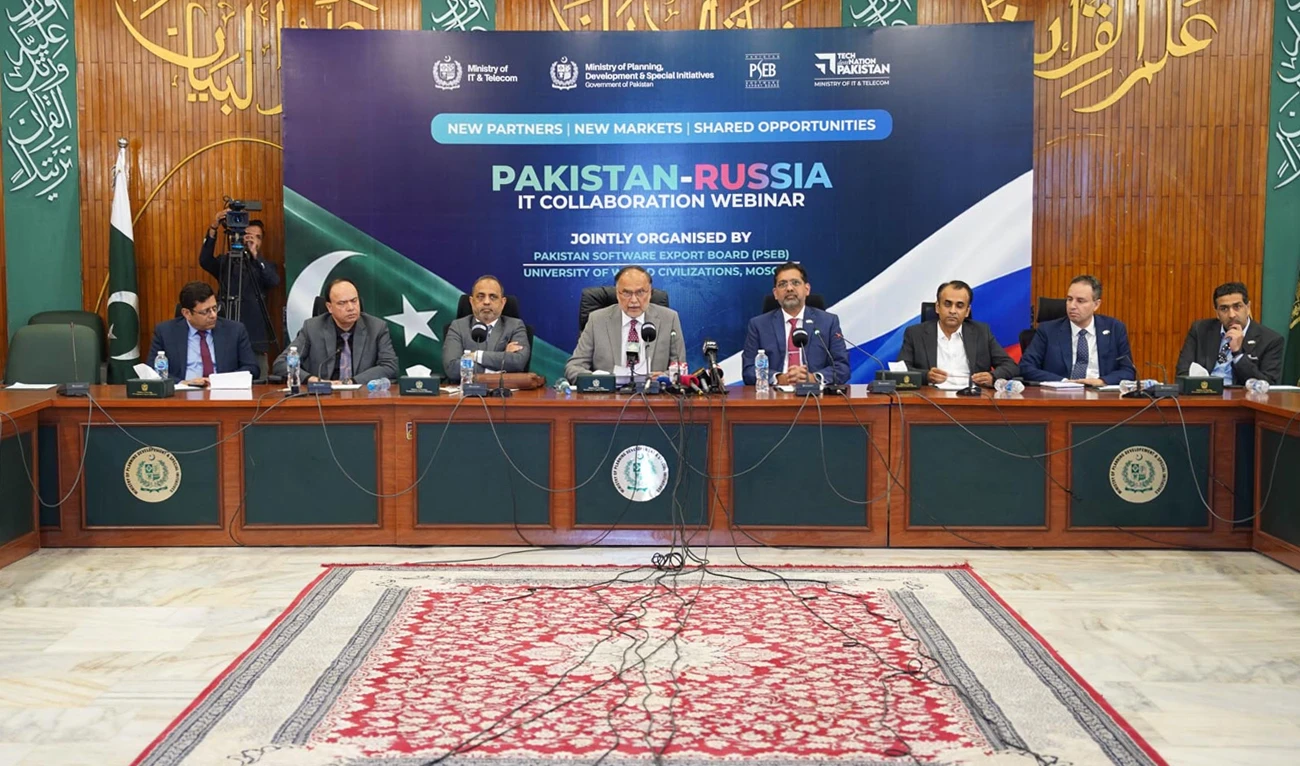
The proposed cooperation was discussed at a Pakistan-Russia technology webinar organized by the Pakistan Software Export Board (PSEB) and Moscow’s University of World Civilizations, according to a statement issued by Pakistan’s planning ministry.
The talks focused on connecting businesses from both countries to develop joint projects, explore new markets and identify investment opportunities, with the government playing a facilitating role.
“Pakistan-Russia relations have entered a more mature and multidimensional phase,” Pakistan’s Ambassador to Russia Faisal Niaz Tirmizi said at the webinar, according to the statement. “Technology and digital trade can become a new pillar of our economic partnership, and our Mission in Moscow will work closely with PSEB to open doors for Pakistani companies in the Russian market.”
The webinar, the third in a series of bilateral discussions, brought together government officials, industry associations and technology companies from both countries to explore commercial cooperation in across different areas sectors.
Planning Minister Ahsan Iqbal said technology had become central to Pakistan’s economic transformation, with digital development forming one of the five pillars of the government’s URAAN Pakistan economic plan, a national development initiative aimed at accelerating economic growth and expanding exports, which aims to build a $1 trillion economy by 2035.
He urged Pakistani and Russian companies to move beyond traditional bilateral cooperation toward commercially viable joint ventures, technology partnerships and the development of globally competitive digital products.
Iqbal said Pakistan produced more than 75,000 IT graduates annually and aimed to develop one million artificial intelligence professionals by 2030, alongside establishing seven new AI centers to strengthen research and industry collaboration.
The government says Pakistan’s IT and telecom exports reached a record $4.6 billion in the fiscal year ending June 2026, up around 20 percent from the previous year, as the country seeks to diversify export destinations and move into higher-value digital services.
Discussions between Pakistani and Russian companies covered six priority areas, including artificial intelligence and cloud computing, cybersecurity, digital governance, IT services trade, workforce development and quantum computing.
Representatives of Pakistani firms Ebryx and TMC joined Russia’s Positive Technologies and Russian Quantum Center in exploring opportunities for joint development and delivery of technology solutions in Pakistan, Russia and third-country markets.
“Partnerships rarely fail for lack of intent; they fail for lack of follow-up,” PSEB Chief Executive Faisal Jeddy said.
“That is the gap PSEB intends to close. Every company that engaged today will leave with a defined opportunity, a named counterpart and a clear next step, and PSEB will stay with them until those conversations become contracts.”
Pakistan’s IT Secretary Zarrar Hasham Khan said the discussions had produced a shortlist of potential projects in cybersecurity, enterprise software, artificial intelligence and cloud computing.
He said the ministry would focus on removing regulatory obstacles, providing market intelligence and helping companies gain access to each other’s markets, while reviewing progress with PSEB and Russian partners.
No commercial agreements or investment commitments were announced at the event.