- Pakistan temporarily suspended trade across Iran border last Saturday citing security reasons
- Week-long closure drove prices of LPG and triggered its shortage in various parts of Pakistan
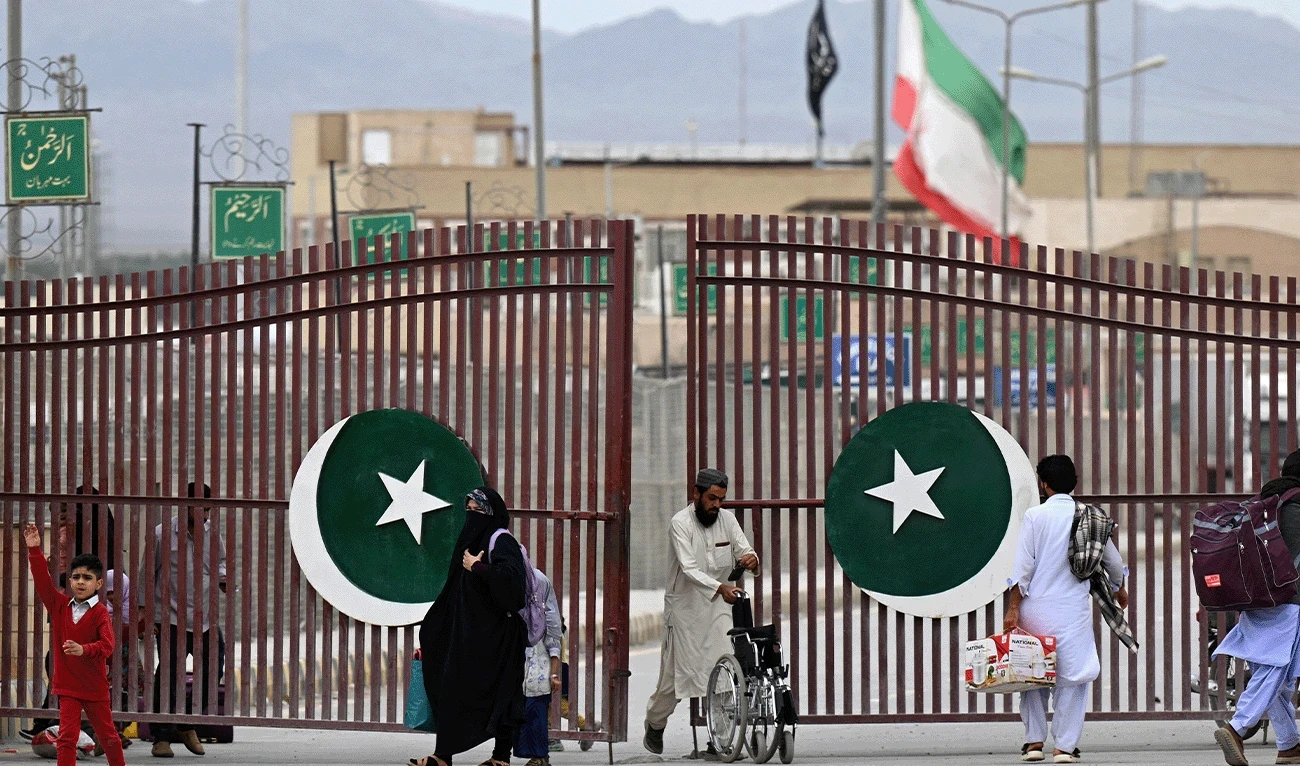
QUETTA: Pakistani authorities have re-opened a key border crossing with Iran through its southwestern Balochistan province, a businessperson and customs clearing agent said on Sunday, after temporarily closing it for a week due to security reasons.
Pakistan shares an over 900-kilometer (559 miles) border with Iran through which the two nations conduct trade and travel on a daily basis. Pakistani officials announced on Oct. 17 that authorities had temporarily closed border crossings with Iran due to security reasons, while Tehran pointed to technical reasons for the closure.
Pakistan and Iran have often been at odds over instability along their shared, porous border and routinely trade blame for not rooting out militancy. The suspension disrupted commercial activity at the Taftan and Gabd-Rimdan border crossings, leaving thousands of containers and trucks stranded there.
The week-long closure also triggered shortages of liquified petroleum gas (LPG) across the country, mainly in its most populous Punjab province, where most industries and residents rely on LPG for their domestic use. The closure spiked prices of LPG cylinders, with traders warning they would go up further if the closure persisted.
“Authorities opened the Gabd-Rimdan border crossing on Saturday,” Naveed Jan Kalamati, president of the Gwadar Chamber of Commerce, told Arab News.
“Hundreds of trucks loaded with rice and other food items crossed into Iran while LPG bowsers were allowed to cross into Pakistan,” he added.
He said the border crossing was “chocked” as a large number of trucks were trying to cross after the week-long closure.
Government officials in the port city of Gwadar and Quetta did not respond to Arab News queries on the border re-opening.
Pakistan has been facing security challenges for long in its southwestern Balochistan province, which shares a border with both Iran and Afghanistan.
Separatist militants routinely attack law enforcers, Chinese nationals and commuters from other provinces in Balochistan. A key strategic highway which connects Pakistan with Iran, N-40, has witnessed dozens of attacks on goods’ trucks recently that decreased trade activities through the route.
On Oct.22, a group of armed militants attacked the Gabd border crossing in Gwadar and set five trucks loaded with food items on fire.
Muhammad Rizwan, a customs clearing agent in Gabd, also confirmed that export and import activities have been restored through the Gabd-Rimdarn border crossing in Gwadar.
“Since yesterday [Saturday], I have cleared 28 trucks loaded with rice and other food items that crossed into Iran,” he told Arab News.
Hajji Liaquat, an LPG importer, said trade activities through the southwestern Taftan border have been temporarily restored since Saturday. However, he said export activities from Pakistan are yet to resume from there.
“Hundreds of trucks stranded at the Iranian side were allowed to cross into Pakistan including LPG bowsers,” he told Arab News. “But export from Pakistan has been suspended since last one week and yet to be restored.”
Reza Amiri Moghadam, Iran’s Ambassador to Pakistan, wrote on social media platform X that there are currently “no restrictions” on the Iranian side on the export of Iranian goods to Pakistan.
“Iran’s borders with all its neighboring countries remain open but changes in the implementation of Pakistan’s E-Form procedure for imports from Iran have created a situation in which traders are effectively and literally unable to dispatch cargo from Iran to Pakistan,” he wrote on Saturday.
The E-form is a document used in Pakistan’s import system to record and monitor commercial imports and their payment arrangements through banks.