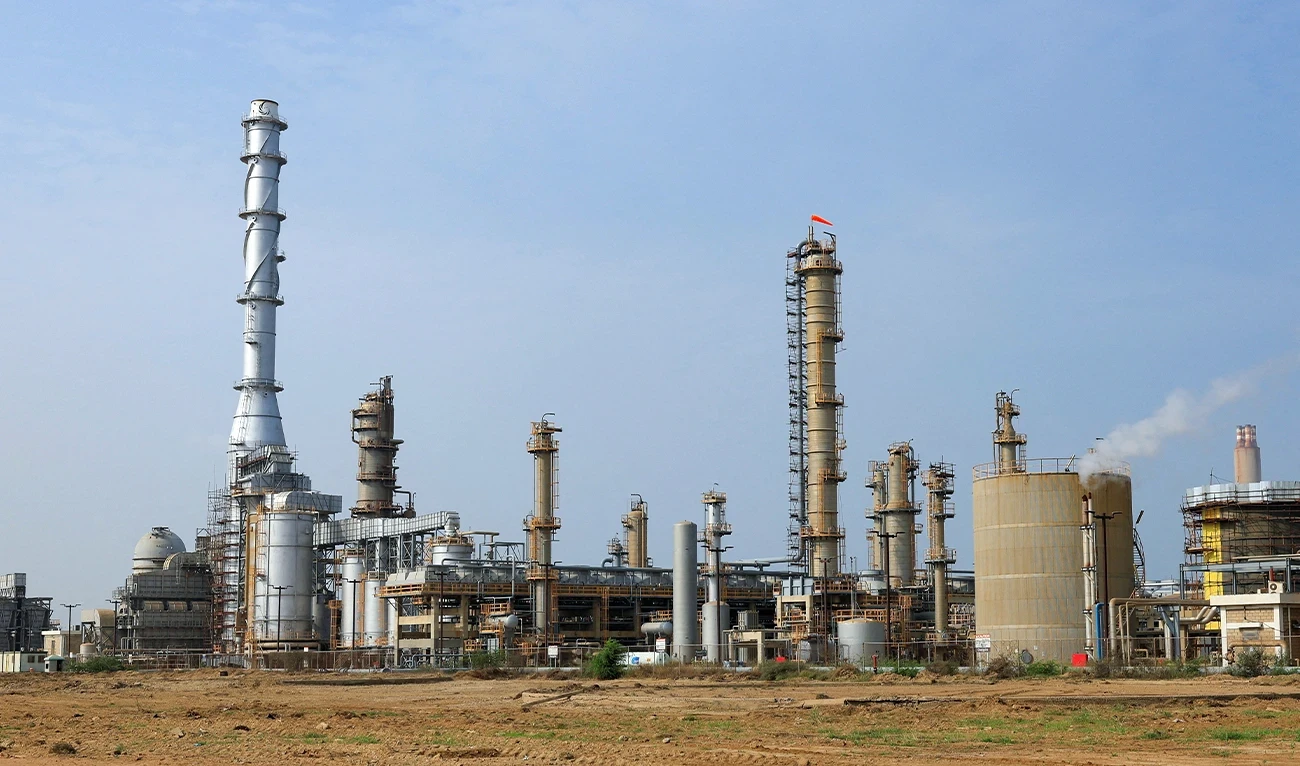
- Refiners say delays are costing Pakistan $1.5 billion a year in import-substitution charges
- Five refineries await approval for $6 billion upgrades to cut imports, produce cleaner fuels
KARACHI: Pakistan’s Economic Coordination Committee (ECC) is expected to consider today, Monday, a draft agreement that could clear a major hurdle to multibillion-dollar refinery upgrades, which industry stakeholders say have been costing the economy at least $1.5 billion annually in import-substitution charges.
Pakistan has been trying for years to modernize its aging refining infrastructure. The five refineries have a combined crude processing capacity of about 350,000 barrels per stream day but require substantial investment to produce higher-quality fuels and reduce reliance on furnace oil.
Pak-Arab Refinery Ltd. (PARCO), Attock Refinery Ltd. (ARL), National Refinery Ltd. (NRL), Cnergyico Pakistan Ltd. and Pakistan Refinery Ltd. (PRL) are expected to invest an estimated $6 billion to upgrade their plants which would then produce cleaner Euro-V standard fuels while reducing furnace oil output.
The government has already approved amendments to the country’s Brownfield Refining Upgradation Policy, which offers incentives to existing refineries to modernize aging facilities, produce cleaner fuels and reduce output of lower-value furnace oil, and designated Inter State Gas Systems (ISGS) to implement the upgrade agreements.
“The ECC is going to meet today and would consider the upgrade agreement for approval,” said a source privy to the upgrade matter, requesting anonymity.
An industry stakeholder, who wished not to be named as they were not allowed to speak to media, told Arab News that the refineries have been waiting for more than two years to go ahead with their projects under the upgradation policy that took seven years to formulate, with its latest amendment in February 2024.
“This undue delay in implementation of the policy has been causing $1.5 billion per annum loss to the country on account of imports substitution,” they said.
Asked what was causing the delay, the source cited “mainly opposition by import lobby, lack of cohesion and capacity of the relevant govt departments.”
Pakistan imported $16.9 billion worth of petroleum products, crude oil, liquefied petroleum gas and liquefied natural gas in the outgoing fiscal year that ended in June, according to the Pakistan Bureau of Statistics (PBS) data. The figure was about 24 percent of the country’s total merchandise imports of $69.8 billion during the year.
Pakistan’s petroleum ministry spokesperson Zafar Abbas did not respond to questions seeking comments on if and why the upgrade agreements were delayed and if the delay has been causing $1.5 billion annual loss to the economy.
The refineries were fully prepared to move ahead with the upgradation project and some of them had even finalized meetings with their foreign consultants, the industry stakeholder said, without naming the refineries.
“This would enable the refineries not only to meet Euro V specifications but also increase their motor gasoline production by at least 25 percent,” they said.
The delays appeared to be driven by a “strong lobby that preferred local refineries to shut down rather than upgrade,” which would leave Pakistan increasingly dependent on imported petroleum products, according to the industry insider.
“The bureaucracy apparently wants to play safe,” they said, adding that the Petroleum Division had assured refiners that the ECC would approve the agreement on Sept. 14.
“The prime minister is likely to chair signing of the upgradation agreements between Interstate Gas System and the refineries during this week,” they said.
Shankar Talreja, head of research at Karachi-based Topline Securities brokerage, said the refinery upgrades would bring Pakistan’s fuel production closer to international standards.
“The energy sector shall conform to global standards of Euro V complaint fuel, a more cleaner and environmental friendly fuel,” he told Arab News.
“Furthermore, the economics of domestic refineries will also improve as currently they are surrendering a huge chunk of money in quality differential and upgradation will also ensure minimal residual fuel i.e. furnace oil production.”