- Refiners say Islamabad wants refineries to buy crude at post-Gulf war premiums, sell at pre-war rates
- Pakistani officials defend pricing interventions to prevent profiteering, cushion consumers from shocks
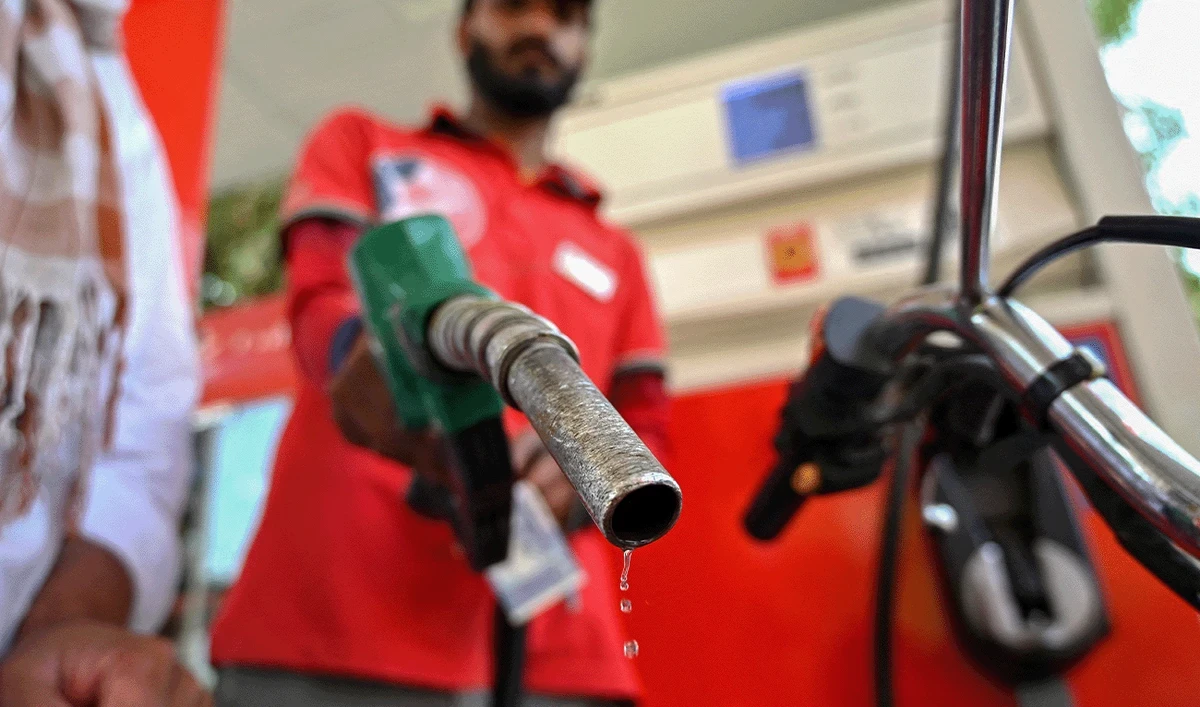
ISLAMABAD: Pakistan’s oil refineries on Sunday warned that a recent government decision to change petrol pricing rules threatens a planned $6 billion modernization of the country’s refining sector, saying the move could undermine investment and risks rendering operations unviable.
The petroleum ministry on Friday directed refiners to surrender price differentials under a formula based on March 7 benchmarks, imposing an additional financial burden of up to Rs49 ($0.18) per liter on locally produced petrol, according to industry estimates.
Refiners say the Oct. 30 decision, taken without consultation with stakeholders, undermines government commitments under its Brownfield Refineries Upgradation Policy at a time when companies are negotiating financing for major modernization projects.
“The timing could hardly have been worse,” Adil Khattak, chief executive officer of Attock Refinery Limited (ARL), told Arab News.
“Refineries are currently engaged in extensive discussions with local and international financial institutions to mobilize the enormous funding required for projects that are unprecedented in Pakistan’s industrial sector, both in their technical complexity and the magnitude of investment involved.”
The official directive issued by the Petroleum Division and seen by Arab News ordered six refiners, including Pak-Arab Refinery Limited (PARCO), Pakistan Refinery Limited (PRL), Attock Refinery Limited (ARL), National Refinery Limited (NRL), Cnergyico PK and ENAR, to immediately implement the revised pricing formula.
The measure is intended to cushion consumers from higher fuel costs linked to disruptions in global energy markets due to the United States-Iran war.
Under the temporary arrangement, while public petrol prices will track actual import costs based on recent Pakistan State Oil (PSO) shipments, local refineries must calculate ex-refinery prices using pre-war premiums, incidentals, and customs duty levels from March 7. It requires refineries to surrender any positive price differential to the government through the petroleum levy, effectively absorbing the difference.
Industry executives estimate the arrangement will cost refiners around Rs35 ($0.13) per liter through baseline pricing adjustments and another Rs14 ($0.051) per liter through diverted customs duty recoveries.
The decision comes as Pakistan’s refining sector prepares for a long-awaited modernization program. Four refiners signed upgrade agreements on September 24, following years of policy delays. PARCO has yet to sign the agreement.
Khattak noted that previous regulatory delays had cost the national economy an estimated $1.5 billion annually.
Refining executives pointed out that companies had already agreed twice to cap high-speed diesel (HSD) crack margins — first at $41.89 and later at $38 per barrel — to assist price stabilization efforts.
“This decision strikes at the very foundation of the Brownfield Refineries Upgradation Policy,” Khattak said.
“The policy specifically requires that proceeds of the 10 percent customs duty be deposited into dedicated refinery accounts to partially finance upgradation. Diverting these funds for other purposes defeats the very objective of this provision.”
Pakistan’s Petroleum Division and Minister of Petroleum Ali Pervaiz Malik did not respond to requests for comment. Officials have previously defended pricing interventions as essential measures to prevent market profiteering and cushion consumers from global energy shocks.
Industry executives have urged the government to hold immediate consultations, restore tariff protections, and uphold its commitments under the upgrade framework to safeguard energy security, warning that the revised pricing mechanism could make domestic refining operations financially unviable.
“If these decisions are not reconsidered, they could ultimately force refineries to curtail operations or even shut down, further increasing Pakistan’s dependence on imported petroleum products,” said Usama Qureshi, vice chairman of Cnergyico PK Limited.
Qureshi highlighted the contradiction between Islamabad’s efforts to attract foreign investment from Saudi Arabia, Qatar and the United States, and domestic regulatory interventions that erode investor confidence.
“We fully recognize the need to protect consumers, but short-term relief cannot come at the cost of destroying domestic refining capacity, jeopardizing energy security, and undermining investor confidence,” he told Arab News.
Other industry officials echoed the concerns, emphasizing the operational imbalance of forcing refiners to purchase crude at post-war international spot market rates while pricing output at pre-war levels.
“The government’s desire to lower prices for the public is totally understandable and is appreciated and supported by the industry,” said Asad Hasan, chief executive of National Refinery Limited, adding that refiners had contributed over Rs100 billion ($361 million) by agreeing to diesel margin caps.
“It’s quite perplexing that government wants the refineries to buy crude oil at current post-war premiums, however, wants us to sell MS (motor spirit or petrol) at pre-war prices,” he told Arab News.