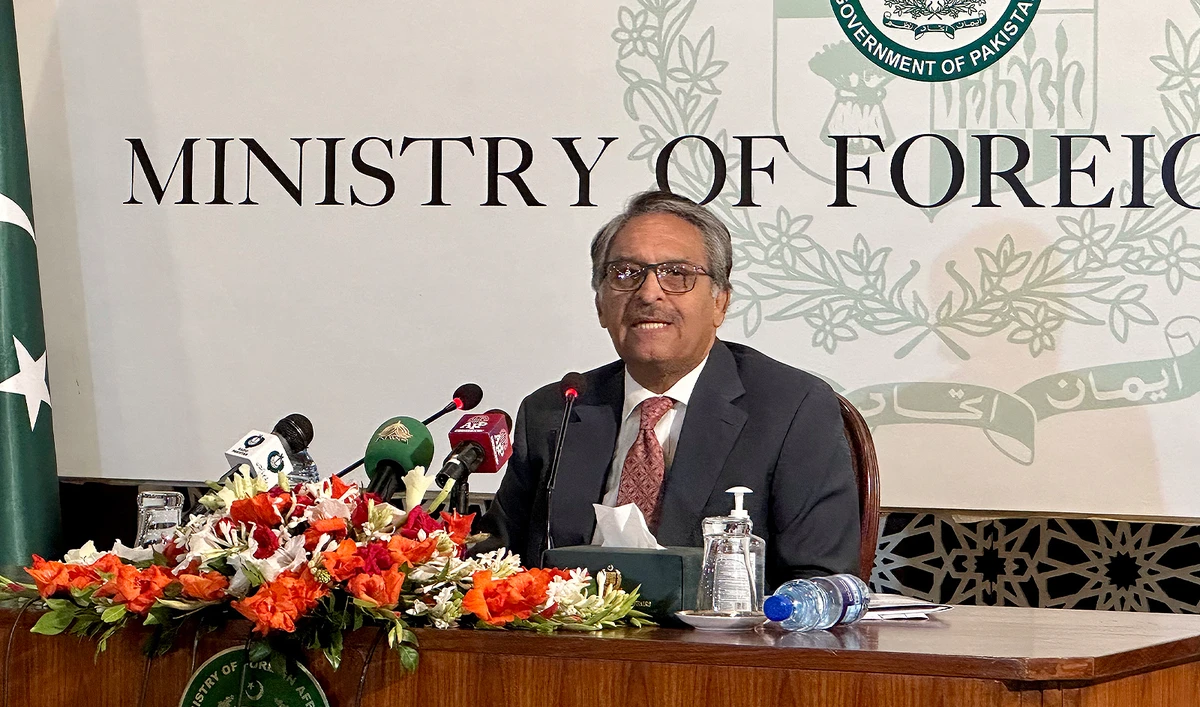
- In telephone call, Pakistan FM tells Iranian counterpart Islamabad is ready to work with Iran based on mutual trust
- The development comes after cross-border strikes by both countries raise alarm about wider conflict in Middle East
ISLAMABAD: Pakistan’s Foreign Minister Jalil Abbas Jilani on Friday urged his Iranian counterpart for “closer cooperation” on security issues, expressing Islamabad’s readiness to work with Iran.
Both officials held a telephonic conversation on Friday a day after Pakistan hit militant targets in Iran’s southeast in response to Tehran’s strikes this week that targeted what it called militant bases in Pakistan’s southwestern Balochistan province.
The strikes by the two countries are the highest-profile cross-border intrusions in recent years and have raised alarm about a wider conflict in the Middle East since Israel waged a war on Gaza after Oct. 7 attacks by Hamas.
Both Pakistan and Iran have already signaled their desire to deescalate tensions, although they have had a history of rocky relations.
“Foreign Minister Jilani expressed Pakistan’s readiness to work with Iran on all issues based on spirit of mutual trust and cooperation,” the Pakistani foreign ministry said on X. “He underscored the need for closer cooperation on security issues.”
The statement came as Pakistan’s Caretaker Prime Minister Anwaar-ul-Haq Kakar was due to chair a meeting of the country’s National Security Committee, with all the services chiefs in attendance.
Kakar, who was in Davos for the World Economic Forum, cut short his visit and returned home on Thursday to review the situation after the strikes.
Earlier in the day, FM Jilani spoke with his Turkish counterpart and shared Pakistan’s perspective on the recent developments.
“Pakistan’s Operation Marg Bar Sarmachar was aimed at terrorist camps inside Iran and that Pakistan has no interest or desire in escalation,” he told Turkish foreign minister, Hakan Fidan.
Islamabad said on Wednesday it had targeted the Baloch Liberation Front (BLF) and Baloch Liberation Army (BLA) separatist groups in Iran, while Tehran said its drones and missiles struck militants from the Jaish Al-Adl group in Pakistan’s Balochistan province.
The militant groups operate in an area that includes Pakistan’s southwestern Balochistan province and Iran’s southeastern Sistan-Baluchestan province, which are both mineral-rich but largely underdeveloped.