- The government has already decided to digitalize the tax system to prevent any leakages
- PM Sharif wants his administration to bring down expenditure for reduced fiscal deficit
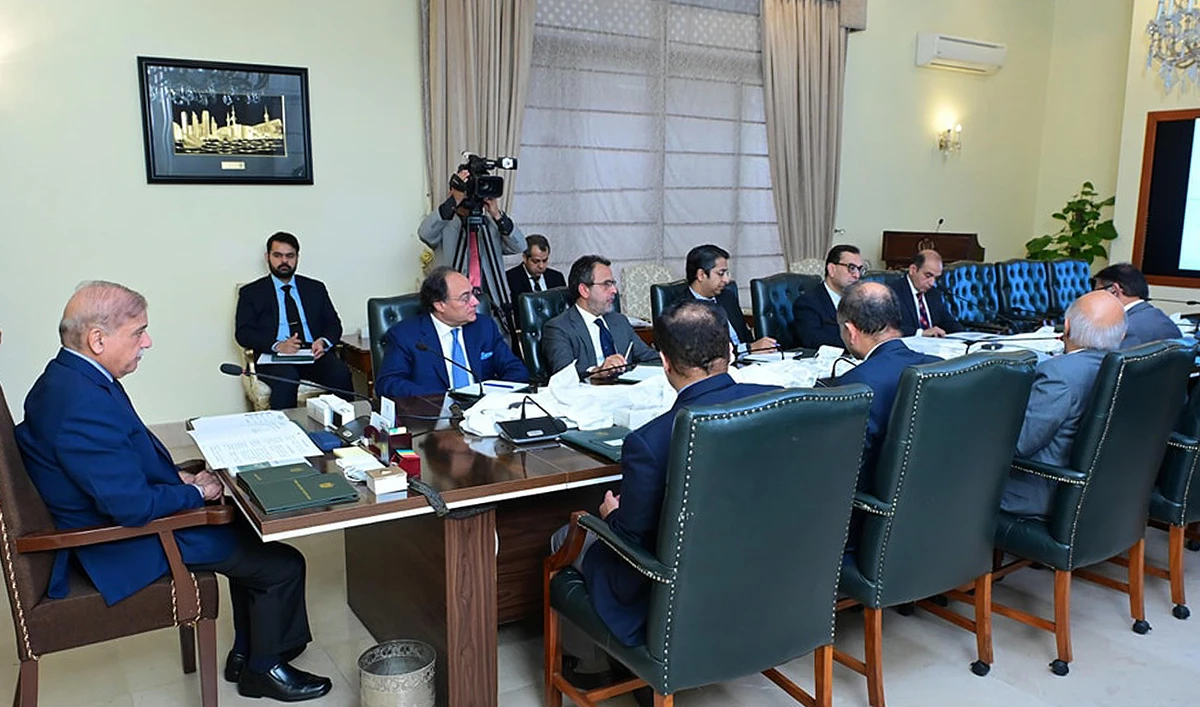
ISLAMABAD: Prime Minister Shehbaz Sharif on Thursday instructed the relevant authorities to devise a comprehensive plan for increasing tax revenue without burdening the common man, setting a target of a 15 percent tax-to-GDP ratio during his government’s current tenure.
Pakistan’s narrow tax base and enduring tax evasion issue leads to the problem of insufficient revenue collection. The shortfall exacerbates the government’s tendency to run a high fiscal deficit, often financed through domestic and international borrowing, increasing the nation’s debt burden.
The country’s new administration has decided to digitalize the tax collection system to prevent leakages, even as a large segment of the national economy remains undocumented.
“In the next five years, we will raise the tax to 15 percent of GDP,” the prime minister told meeting focusing on the affairs of the finance ministry. “Expenditure will be reduced to decrease the fiscal deficit.”
He emphasized the importance of expediting the privatization process of state-owned enterprises, especially those incurring losses.
“The government is focusing on gradually reducing public debt, pension and subsidy reforms, and the restructuring and privatization of state-owned enterprises,” he noted. “A comprehensive plan will also be formulated and presented to reduce foreign debt.”
The prime minister said the completion of the standby program with the International Monetary Fund (IMF) was encouraging, adding his administration would work hard to get a new bailout facility from the international lender.
He also maintained the government was willing to engage internationally renowned experts who could help strengthen the national economy.
The meeting, which was also attended by finance minister Muhammad Aurangzeb along with other senior cabinet members, was briefed about revenues, fiscal deficit, foreign exchange reserves, remittances and the current account.
Progress on the implementation of the government’s decision to reduce its expenditures, along with reforms in the subsidies and electricity sectors, also came up for discussion.