- Agreement aims to expand internationally aligned mediation, arbitration mechanisms for commercial disputes
- Islamabad increasingly promotes alternatives to lengthy litigation as it seeks to attract foreign investment
ISLAMABAD: Pakistan has partnered with the Organization of Islamic Cooperation’s arbitration body this week to strengthen mechanisms for resolving commercial and other disputes outside conventional courts, as Islamabad seeks internationally aligned alternatives to lengthy litigation and a more predictable environment for cross-border business.
Alternative dispute resolution, or ADR, allows businesses and individuals to settle disputes through mechanisms including arbitration, mediation and conciliation rather than conventional court proceedings. Such systems are particularly important for international commerce, where investors and companies often seek faster and more predictable ways of resolving contractual disputes across jurisdictions.
Pakistan has been expanding the use of ADR as part of broader legal reforms, including efforts to resolve some disputes before they reach courts. The government says mediation can settle cases within weeks that might otherwise take years and has been pursuing international cooperation to bring domestic practices closer to global standards.
“Cooperation of this nature between Pakistan and international partners would further strengthen international linkages in the fields of mediation and Alternative Dispute Resolution,” Law Minister Azam Nazeer Tarar said in a statement issued by his ministry.
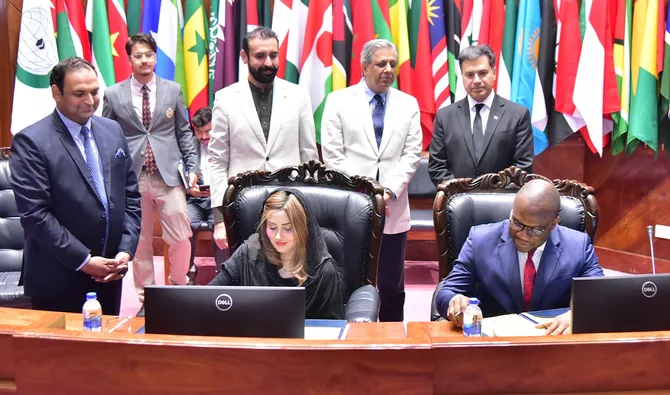
The comments came after Pakistan’s International Mediation and Arbitration Centre (IMAC) and the OIC Arbitration Centre signed a memorandum of understanding to establish long-term cooperation in mediation, arbitration and dispute prevention.
Under the agreement, the two institutions will exchange professional expertise, information and publications and jointly organize capacity-building programs, conferences, seminars and other activities.
They will also cooperate in identifying and recommending qualified mediators and arbitrators and developing professional networks, with the government saying the partnership was intended to promote internationally aligned dispute-resolution mechanisms in Pakistan and across the wider OIC region.
Tarar said Islamabad wanted to expand the scope of mediation and conciliation in Pakistan and deepen cooperation with international institutions working in the field.
Pakistan has increasingly linked improvements in commercial dispute resolution to its efforts to attract investment, where the speed and predictability with which contracts and disagreements can be resolved can influence investor confidence.
The partnership also comes as Islamabad tries to reduce reliance on conventional litigation domestically. Tarar said last week the government was pursuing legal measures to encourage disputes to be settled before reaching courts and strengthen pre-litigation mediation in certain cases.
He said some tax disputes were already being resolved outside courts and argued an effective mediation system could settle within weeks matters that would otherwise take years.
The OIC Arbitration Centre and IMAC have also been running a five-day program in Islamabad on civil, commercial and Shariah-integrated mediation, aimed at combining international mediation practices with Pakistan’s legal framework.
OIC Arbitration Centre Secretary General Umar A. Oseni said the new agreement reflected the two institutions’ intention to expand their existing cooperation internationally, according to the Pakistani statement.
He said the training model, which combines civil, financial and Shariah-aligned mediation principles, had generated international interest and that the two organizations would explore introducing it in other countries.
The law ministry said the partnership was ultimately intended to strengthen institutional capacity and professional networks while providing more effective and less costly mechanisms for resolving disputes in Pakistan and other OIC countries.