- Pakistan tells UN rights forum ‘where waters are shared, so are responsibilities’
- Islamabad says upstream states must not use water for political leverage, coercion
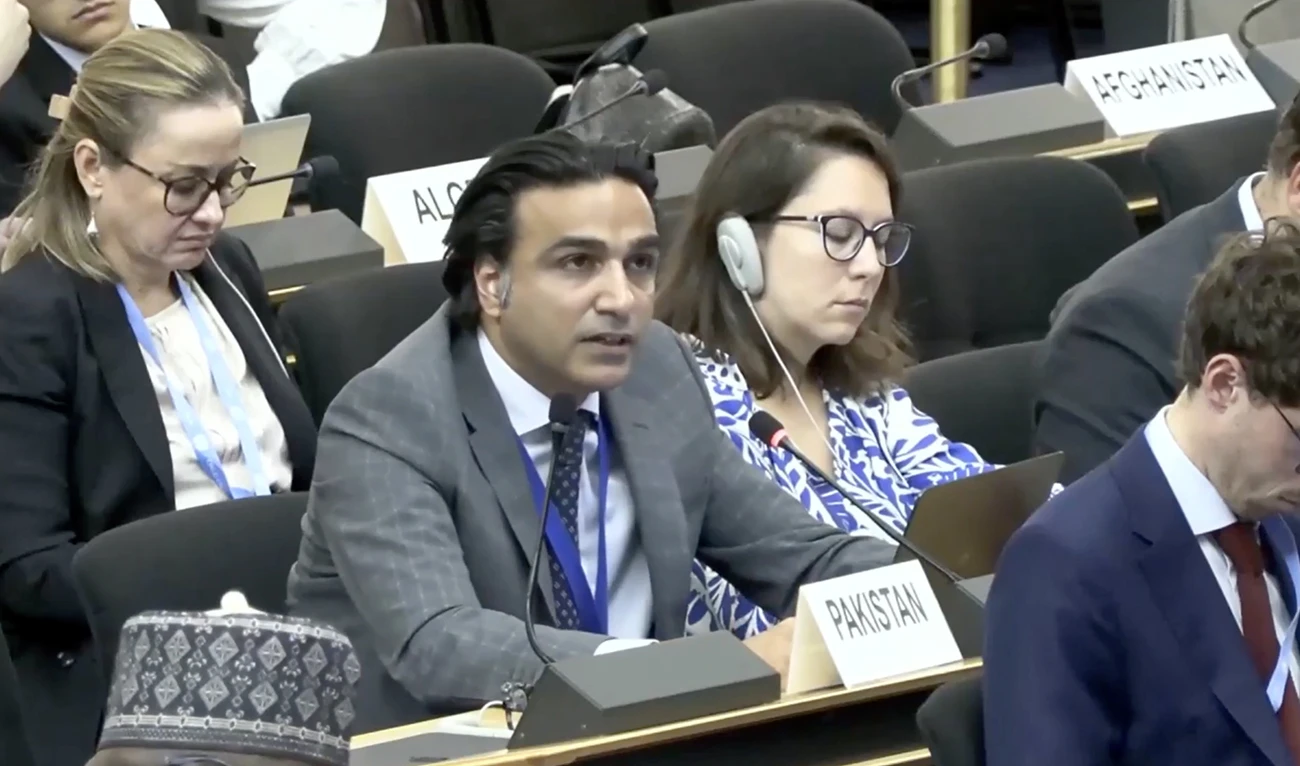
ISLAMABAD: Pakistan on Tuesday welcomed the inclusion of transboundary water cooperation in a UN resolution on access to safe drinking water and sanitation, saying a “significant majority” of countries had backed the principle that nations sharing water resources also shared responsibilities.
The position is significant for Islamabad amid its dispute with India over the 1960 Indus Waters Treaty, which governs the use of the Indus river system between the nuclear-armed neighbors. New Delhi put the treaty “in abeyance” after an April 2025 attack in Indian-administered Kashmir, accusing Pakistan of supporting cross-border militancy. Islamabad denies the charge and says India cannot unilaterally suspend the treaty.
The resolution on the human rights to safe drinking water and sanitation, presented by Spain and Germany at the 63rd session of the UN Human Rights Council in Geneva, included references to cooperation between countries sharing water resources. Two proposed amendments to the resolution were rejected by 17 votes to 10, with nine abstentions, before the overall text was adopted without a vote.
Pakistan said the outcome retained references to transboundary water cooperation that it considered critical.
“Cooperation is not a favor between neighbors. It is what SDG 6 asks of us all,” Pakistan’s First Secretary Adeel Khokhar told the council, referring to the UN Sustainable Development Goal on clean water and sanitation.
“Where waters are shared, so are responsibilities.”
Khokhar said the explicit recognition of transboundary water cooperation was in line with SDG 6.5, which calls for integrated water resources management at all levels, including through cooperation between countries sharing water resources.
“No state can guarantee safe water to its people while shared waters remain beyond the reach of cooperation,” he said, noting that 153 UN member states shared transboundary waters.
Khokhar said upstream states should not use shared water resources to exert pressure on their neighbors.
“No upper riparian should use water as an instrument of political leverage or coercion,” he said. “Legal instruments, including obligations under international law, must be upheld in good faith.”
He thanked what he described as a “significant majority” of states for supporting the retention of the references to transboundary water cooperation, saying this showed the principle was “a priority widely shared” across the council.
Pakistan has repeatedly accused India of seeking to “weaponize” water since New Delhi placed the Indus Waters Treaty in abeyance, while India has maintained that changed security circumstances mean the treaty cannot continue in its existing form.
Islamabad has said any attempt to stop or divert water allocated to Pakistan under the treaty would be considered an “act of war.”
The World Bank-brokered treaty, signed in 1960, allocates the three western rivers, the Indus, Jhelum and Chenab, largely to Pakistan and the three eastern rivers, Ravi, Beas and Sutlej, to India, while allowing India limited use of the western rivers, including for hydropower generation.
A Court of Arbitration at the Permanent Court of Arbitration in The Hague ruled in August that the treaty remained in force despite India’s decision to hold it in abeyance. India rejects the arbitration proceedings and does not recognize the court’s authority in the dispute.
Pakistan said it would continue raising transboundary water cooperation at the Human Rights Council and wanted the issue to receive greater prominence in future versions of the resolution.