- Last week government said GDP growth to slow to 5% for upcoming fiscal year beginning July 1 from 5.9% in outgoing year
- Pakistan has been waiting for the IMF board to clear a seventh review to resume a $6 billion rescue package signed in 2019
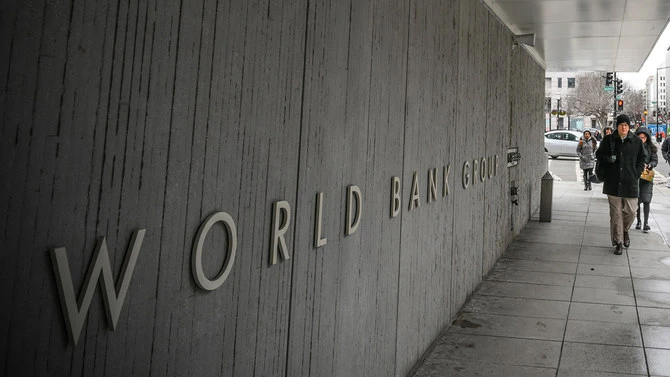
ISLAMABAD: The World Bank has said in its latest economic prospects report that growth in Pakistan would slow to four percent in 2022-23 from 5.7 percent in fiscal year 2020-21.
Pakistan is facing a balance of payment crisis with forex reserves falling below $10 billion, enough for around 45 days of imports, as well as double-digit inflation.
“In Pakistan, growth is expected to slow from 5.7 percent in FY2020/21 to 4.0 percent in 2022/23 as foreign demand slows significantly and policy support is withdrawn to contain external and fiscal imbalances,” the World Bank said in its Global Economic Prospects report for June 2022.
Last week the government said Pakistan GDP growth would slow to 5% for the upcoming fiscal year beginning on July 1, from 5.9% in the outgoing year, following budgetary tightening aimed at winning International Monetary Fund (IMF) support.
The planning ministry made the estimates ahead of the annual budget to be presented on June 10.
"Keeping in view external and local uncertain economic environment, GDP growth will slightly taper off and is envisaged at 5 percent for 2022-23 on the back of agriculture (3.9%), manufacturing (7.1%) and services sector (5.1%)," the ministry said in a working paper, which added that fiscal consolidation would be pursued to bring down the deficit through a combination of expenditure management and revenue enhancement.
Pakistan's foreign reserves have been on a steep decline in recent months - falling to $9.7 billion - and its double digit inflation and a widening current account deficit have put it in a tight spot.
Moody's has changed Pakistan's outlook to negative from stable.
Pakistan has been waiting for the IMF board to clear a seventh review to resume a $6 billion rescue package signed in 2019 after both sides concluded talks in Doha last month.
The paper said the fiscal deficit for the July-March portion of the outgoing fiscal year had widened to 4% of GDP, compared to 3% of GDP for the corresponding period last fiscal year.
The current account posted a deficit of $13.8 billion (3.5 % of GDP) in July-April of the outgoing financial year, it said.
Average inflation was recorded at 11.3% during July-May of the current fiscal year, as compared to 8.8% in the comparable period of the previous year.
The new government of Prime Minister Shehbaz Sharif who took over from ousted premier Imran Khan in April says that it has inherited a dire economic crisis.