- Search engine giant to provide 150,000 Google Career Certificates in Pakistan this year
- Both sides agree to cooperate on establishing an AI Center of Excellence in Islamabad
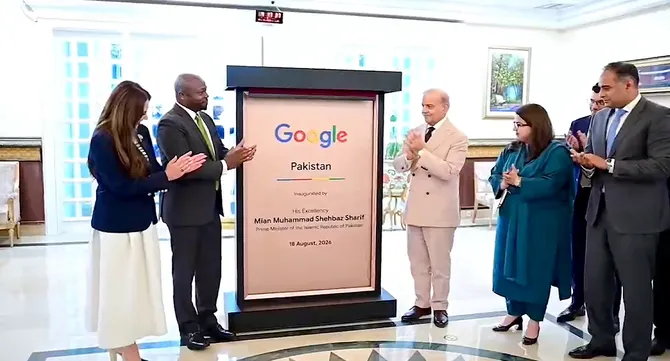
ISLAMABAD: Pakistan and Google signed a memorandum of understanding (MoU) on Friday aimed at promoting digital skills, information technology exports and innovation in the South Asian country, the information ministry said amid Islamabad’s push to enhance its annual IT exports to $30 billion.
The development takes place days after Google opened its first local office in Islamabad. The search engine giant says it has contributed to more than Rs3.9 trillion [$14.05 billion] of economic activity for local Pakistani businesses as well as households and contributed to over 960,000 jobs in the country.
Prime Minister Shehbaz Sharif hosted a reception in honor of Google’s team at the Prime Minister’s Office (PMO) where the MoU to promote national digital transformation and innovation was signed.
“The MoU aims to expand cooperation in promoting digital skills, IT exports and innovation in Pakistan,” the information ministry said.
The two sides agreed to cooperate on expanding Google’s Career Certificates program to promote digital skills in Pakistan, with the search engine setting a target of providing 150,000 Google Career Certificates in Pakistan this year.
Pakistan and Google also agreed to cooperate on expanding Pakistani students’ access to Google’s advanced artificial intelligence tools.
“Pakistani students will receive free access for one year to advanced AI tools, including Google AI Plus and Gemini,” the PMO said.
Both sides agreed to cooperate on establishing an AI Center of Excellence in Islamabad, enhance the global competitiveness of Pakistan’s mobile application and gaming industries, and cooperate on promoting Pakistan’s digital payments system and expanding the scope of digital commerce in the country.
Pakistan and Google agreed to also form a task force to prepare a roadmap for Pakistan’s IT exports and competitiveness, the ministry said.
The task force will comprise representatives from the government, Google, and relevant stakeholders to identify obstacles to IT exports and opportunities for growth, it added.
The signing of the agreement comes as Islamabad eyes an ambitious $30 billion annual export target for the IT sector, seeking to increase IT and IT-enabled services exports through investment in startups, artificial intelligence, cloud computing, digital skills training and improved connectivity.