- Pakistan’s cash-strapped government will bear $452 million to facilitate export sector for a year
- Exporters say if the dollar weakens, they will be suffering losses but are satisfied with fixed rate
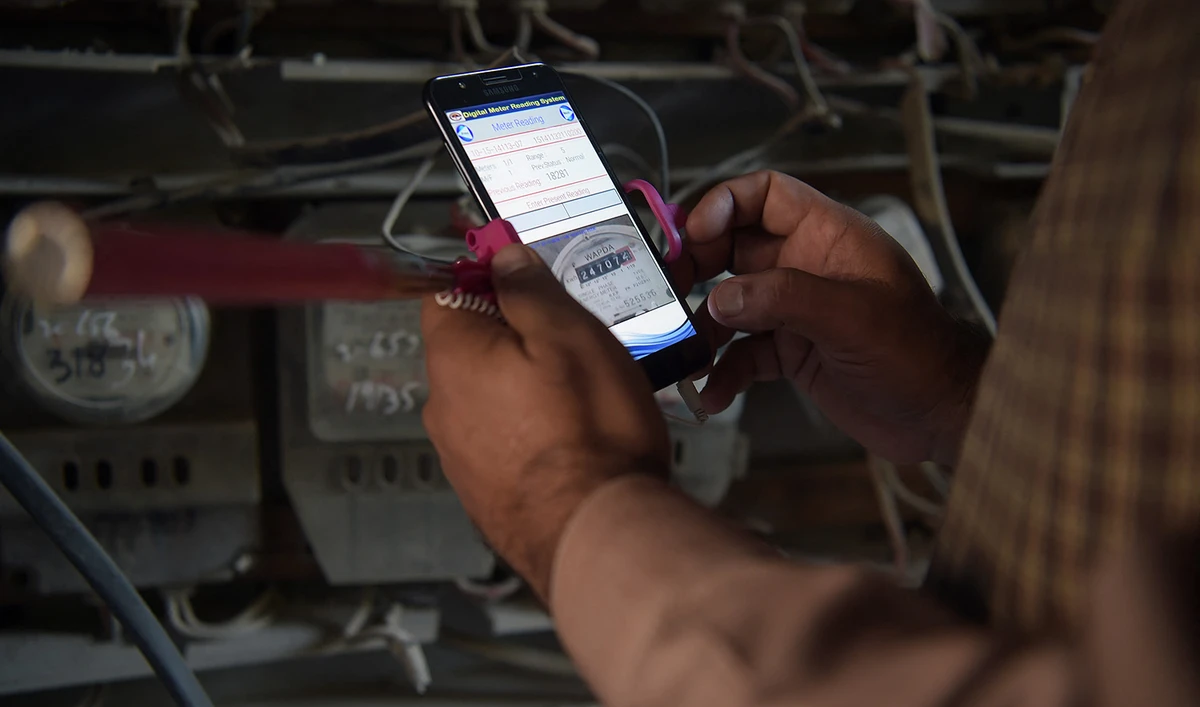
KARACHI: Pakistani exporters on Sunday expressed their hopes for stability in the country's exports after Islamabad moved to fix power tariff at Rs20 per unit for a year for five export-oriented industries, saying it would create a "level playing field" with regional competitors.
Pakistan's Finance Minister Ishaq Dar announced Rs19.99 per unit electricity price for the export-oriented industries after a meeting with a delegation of exporters on Thursday.
The government will bear the difference in the actual and subsidized rates, i.e. around Rs100 billion ($452 million), during this period. The move is part of the South Asian country's efforts to promote exports and improve its balance-of-payment position.
“There is nothing new but it is the continuity of the power tariff the exporters were availing previously... and if it was not granted it would have resulted in huge export losses,” Asif Inam, chairman of the All Pakistan Textile Mills Association (APTMA), told Arab News.
“Exports depend on the international situation but now we are regionally competitive and it is a level playing field… we would put our all efforts in to increase the exports,” said Inam, who led the APTMA delegation at the meeting with Dar.
“Power rates for the whole year have been fixed and now exporters are taking more orders as selling would be easy. There are chances of more orders and those in the pipeline will be improved.”
Pakistan exported goods worth $31.79 billion, including $19.32 billion or 60.77 percent textiles, in the outgoing fiscal year 2021-22.
The country's overall exports stood at $4.73 billion during the first two months of the current fiscal year, July and August, of which $3 billion or 63.42 percent contribution came from the textile sector.
Exporters say they are satisfied with the fixation of power tariff, but deny it offered them any monetary benefit.
“The is no monetary benefit because if the dollar weakens, we would be suffering losses but we are satisfied that the rate has been confirmed for the year till June 2023, because it has ended the future uncertainty for the power tariff and has created confidence,” Zubair Motiwala, chairman of the Businessmen Group at the Karachi Chambers of Commerce and Industry (KCCI), told Arab News.
“We were already paying 9 cents per unit previously and it is now fixed by converting it with the rupee exchange rate,” said Motiwala, who too was part of the meeting with Dar. “If the dollar weakens, we will have to suffer in monetary terms.”
Experts, however, say there have been mixed reactions to the five leading export industries receiving reduced power tariff to compete with regional markets.
“The recent decision to restore the subsidy of around Rs100 billion has as usual received mix reactions. The beneficiaries justify it for the much-needed dollars and an even playing field in the region,” Dr Ikramul Haq, a Lahore-based legal and financial expert, told Arab News.
“The critics are of the view that such a subsidy is abused as local production is concealed in the name of exports.”
Though the finance minister insisted the government had enough funds to provide the subsidy on power tariff, experts believe it would have a negative impact on the country's International Monetary Fund (IMF) program.
“As far as the IMF is concerned, knowing that program is just restored, it will be negatively viewed in the coming review… the fourth time federal finance minister told the press that he had fiscal space to justify it,” Haq said.
Experts say the real solution lies in moving towards cheap, alternate sources of energy, especially renewables, as well as diversified exports, particularly the information technology-related goods and services.