- The central bank cuts key policy rate to 12.50 percent amid the coronavirus pandemic to support the country’s economy
- The bank when continue to evaluate the economic situation and take further policy action, if required
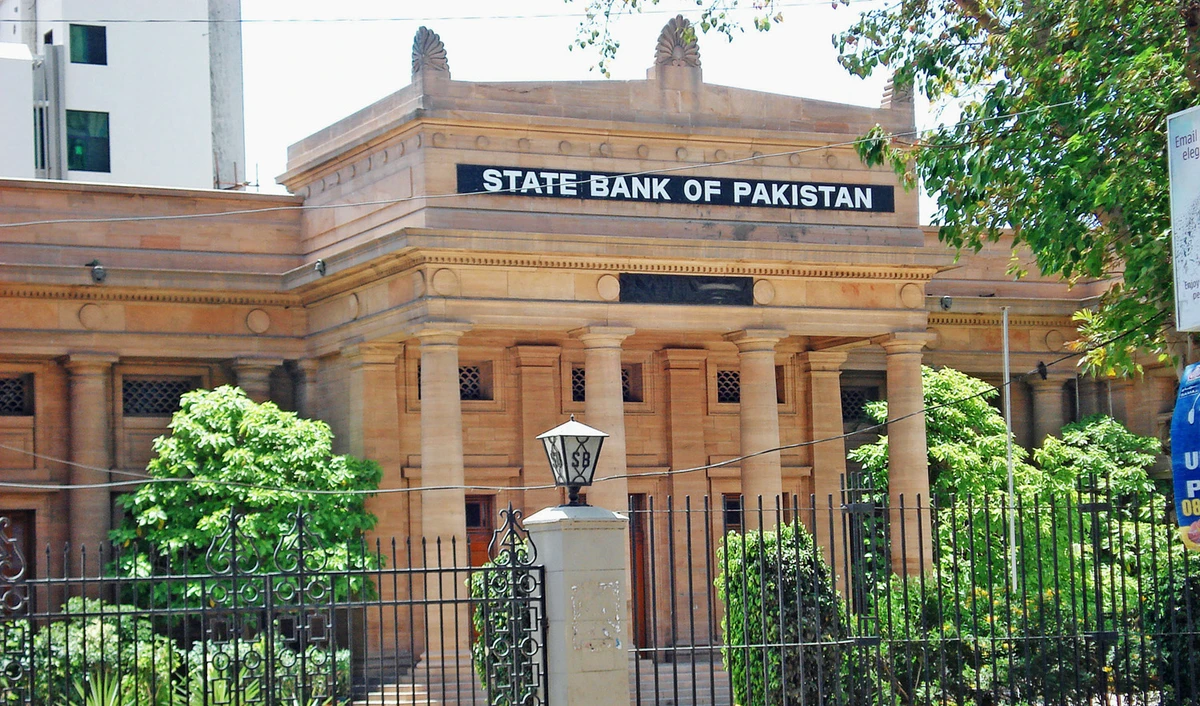
KARACHI: Pakistan’s central bank on Tuesday slashed its key interest rate by 75 basis points amid easing inflation to support the economy from the potential risks of coronavirus, the State Bank of Pakistan (SBP) said in a statement.
The central bank cut its key policy rate to 12.50 percent from 13.25 percent. The rate cut is less than the expectations of most financial experts and economists who were expecting it to be more than 100 basis points.
The decision to cut the policy rate shows shift in the monetary policy stance of the central bank that kept unchanged since July 2019.
“The decision reflected the MPC’s [Monetary Policy Committee’s] view that the outlook for inflation has improved in the light of the recent deceleration in domestic food prices, significant decline in consumer price expectations, sharp fall in global oil prices, and slowdown in external and domestic demand due to the Coronavirus pandemic,” the statement said.
Pakistan’s inflation eased to 12.4 percent in February 2020 from 14.6 percent in the previous month, with gains in price-growth expected to ease further on account of lower global oil prices.
The central bank says the average headline inflation is expected to remain within 11-12 percent in FY20 before falling to the medium-term target range of 5-7 percent somewhat earlier than previously forecast.
After the coronavirus pandemic, most central banks around the world slashed their interest rates while the US Federal Reserve (Fed) zeroed its key rate in a bid to counter the risks to their economies through policy actions. However, the governor of Pakistan’s central bank declined to compare his policy action with those of other central banks.
“There is no comparison between Pakistan and actions of other central banks because the inflation rate there was already lower than us,” Dr. Reza Baqir told reporters while announcing the policy. “This is the appropriate action in the current situation.”
The central bank governor assured that the bank was ready to take further measures to counter the impacts of coronavirus on economic growth as more information came in.
“Our decision is based on the available numbers. The figures of the impact of GDP have not been received. As more information comes in, we will take necessary measures accordingly,” Baqir added.
Owing to the recent domestic and international developments, the SBP now projects real GDP growth for FY20 to be around three percent while expecting a modest recovery next year, provided that the spillover impact of the coronavirus outbreak on global trade and financial markets is moderate and short-lived.
Earlier, its GDP growth forecast was 3.5 percent.
The governor said that the current market volatility being experienced in Pakistan was externally driven, and the strengthening of the fundamentals of Pakistan’s economy before the coronavirus outbreak remained intact.
“As a result, the volatility is likely to subside as global risk aversion reduces. The SBP stands ready to take whatever additional actions that may be necessary to safeguard the country’s financial stability and support its economic growth,” Baqir added.
The central bank also announced a “Temporary Economic Refinance Facility (TERF)” and its Shariah-compliant version to stimulate new investment in manufacturing. Under the scheme, the SBP will refinance banks to provide financing at a maximum end-user rate of seven percent for 10 years for setting up new industrial units.
“The size of the scheme is Rs 100 billion, with a maximum loan size per project of Rs 5 billion,” Baqir added. “It will be available for one year only, requiring a letter of credit (LC) to be opened by end-March 2021. The time is limited to ensure pressure and urgency.”
Responding to the outflows of foreign funds or hot money, the central bank governor said that the SBP reserves had maintained strong growth driven by the narrowing current account deficit. “The MPC noted that the SBP continues to monitor developments carefully and stands ready to respond effectively to address any disorderly market conditions.”
The central bank also announced a “Refinance Facility for Combating COVID-19 (RFCC)” and its Shariah-compliant version to support hospitals and medical centers to combat the spread of virus. Under the scheme, the SBP will refinance banks to provide financing at a maximum end-user rate of three percent for five years for the purchase of equipment to detect, contain and treat coronavirus.
The SBP will provide this facility to banks at zero percent. All hospitals and medical centers registered with federal or provincial health agencies, which are engaged in the control and eradication of COVID-19, will be eligible for this facility.
The total size of the scheme is Rs 5 billion, with a maximum financing limit per hospital or medical center of Rs 200 million. This scheme will help contain the spread of coronavirus and reduce its human toll. It is available until end-September 2020.