- G-24 features developing economies who coordinate positions on global monetary and finance issues
- Pakistan says will advocate for more equitable and fair governance in global decision-making as group chair
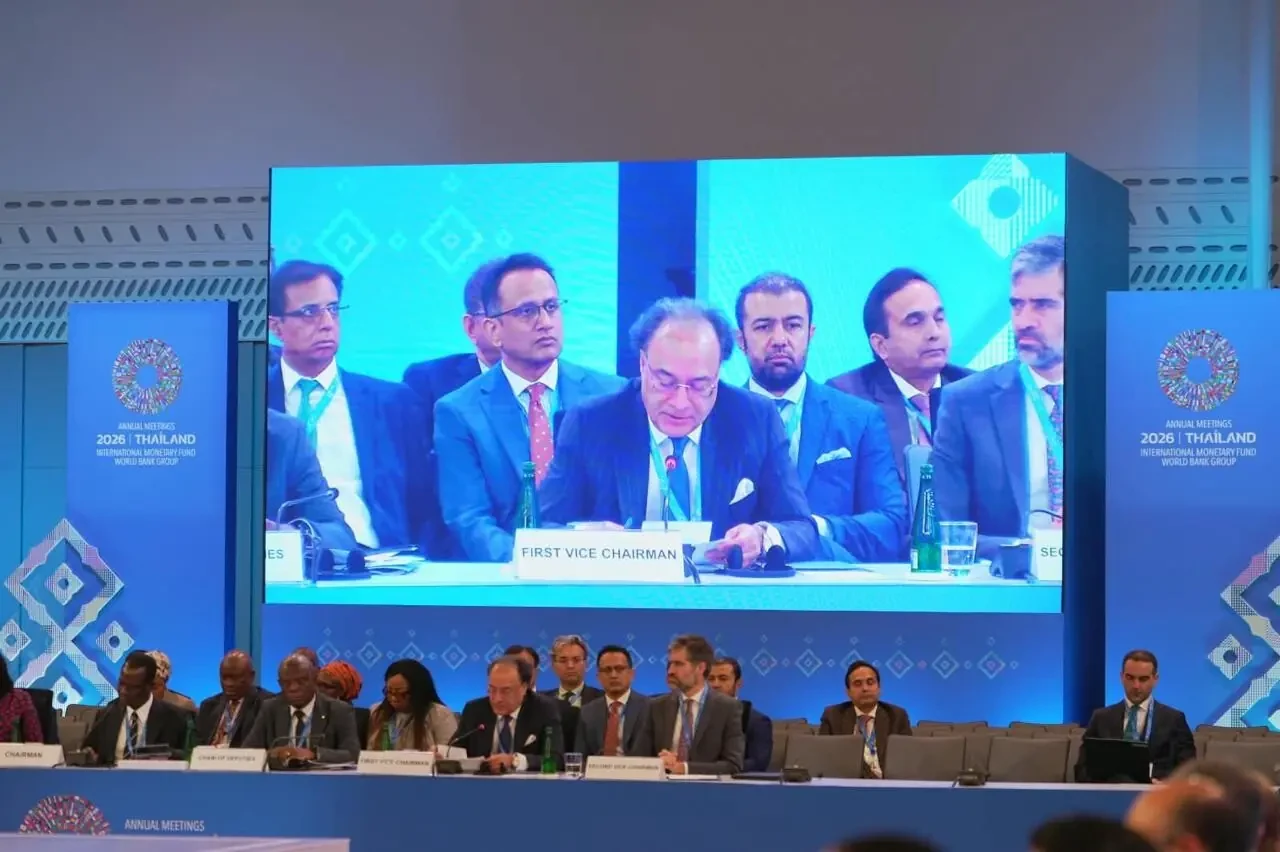
KARACHI: Pakistan has assumed the chairmanship of the Intergovernmental Group of Twenty-Four (G-24) countries, the Finance Division said on Sunday, vowing to use the platform to strengthen the voice of developing economies worldwide.
The G-24 is an intergovernmental organization that coordinates the position of developing countries on monetary and development issues, and ensures they are represented particularly at the International Monetary Fund (IMF) and the World Bank.
Current members include 28 nations including Algeria, Argentina, Brazil, Egypt, India, Iran, Lebanon, Pakistan, South Africa, Sri Lanka, Syria and others. Additionally, China participates as a special invitee at G-24 sessions.
“Pakistan today assumed the chairmanship of the Intergovernmental Group of Twenty-Four (G-24), reaffirming its commitment to strengthening the collective voice of developing economies and advancing a more responsive, fair and development-oriented international financial system,” the Finance Division said.
Finance Minister Muhammad Aurangzeb described the G-24’s chairmanship as a profound responsibility, calling for renewed international cooperation, stronger multilateral institutions and reinforced global commitments to address climate shocks, development financing gaps and global economic fragmentation.
“The future of developing economies is not peripheral to the future of the global economy, it is central to it,” Aurangzeb said.
He highlighted the potential of emerging and developing nations as drivers of investment, innovation, entrepreneurship and global growth.
The minister outlined three priorities for Pakistan as the chair of the group. He said Pakistan, as the group’s chair, would place development at the center of global economic policymaking.
Second, he said Islamabad would strengthen multilateral frameworks for the collective benefit of members through more inclusive and representative institutions.
“Pakistan will advocate for more equitable and fair governance, meaningful participation in decision-making and greater responsiveness of the Bretton Woods institutions to the evolving needs and realities of their members,” he said.
Third, he said Islamabad would advance a development-oriented international financial architecture. Its priorities will include affordable and timely development financing, sustainable debt solutions and stronger global financial safety nets and climate resilience, he added.
“Our task is to ensure that the immense potential of developing economies is not constrained by an international financial architecture that has yet to fully adapt to a changing world,” Aurangzeb said.
The development takes place as Pakistan attempts to consolidate its economic standing worldwide with the help of a $7 billion loan program from the International Monetary Fund and eyes greater trade and investment ties with regional countries.