- Top generals reaffirm commitment to security and sanctity of Islam’s holiest mosques
- Corps Commanders warn against May 9-style unrest ahead of Imran Khan party march
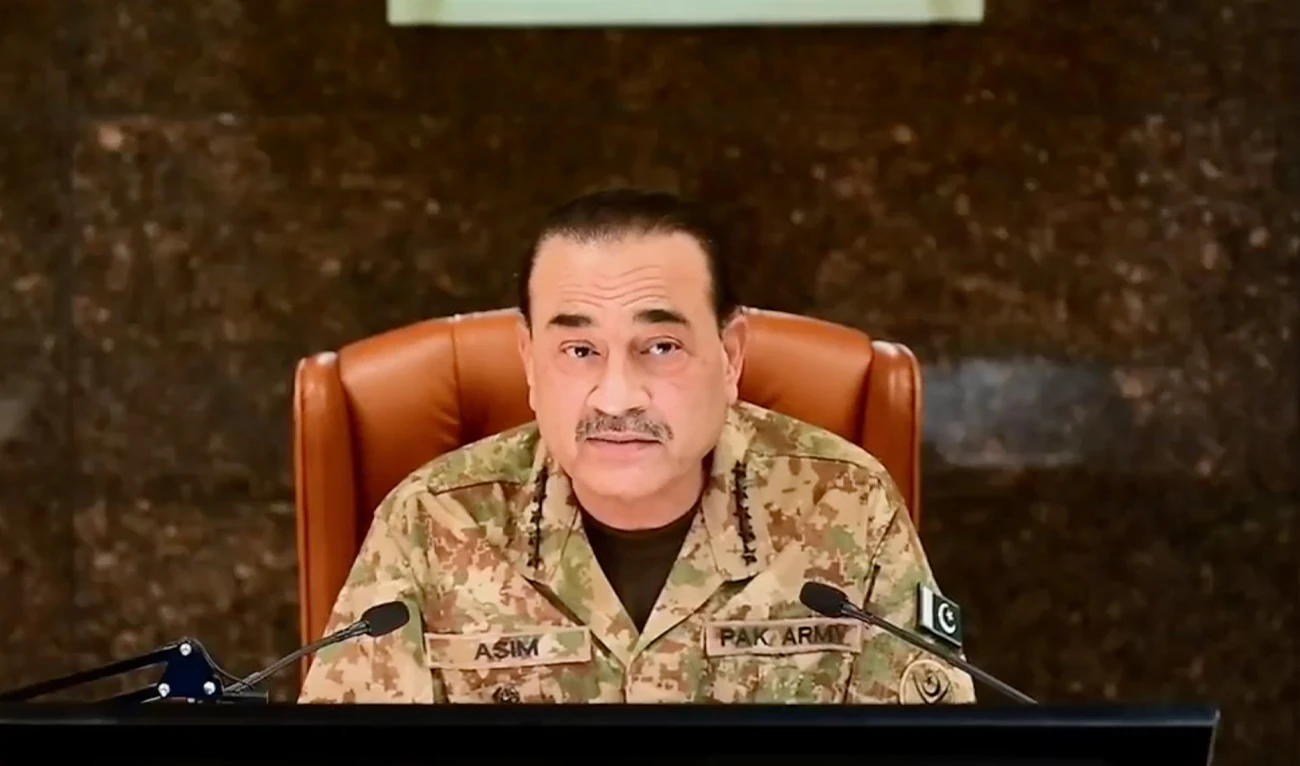
ISLAMABAD: Pakistan’s top army commanders on Friday backed a trilateral defense pact with Saudi Arabia and Türkiye at a meeting chaired by army chief Field Marshal Asim Munir, condemned Houthi attacks on the Kingdom and reaffirmed Islamabad’s commitment to the security of Islam’s two holiest mosques in Makkah and Madinah.
The 277th Corps Commanders’ Conference at the army headquarters in Rawalpindi came a day after Pakistan’s military said its commitment to Saudi security was “absolute,” amid missile and drone attacks by Yemen’s Iran-aligned Houthi militia targeting Saudi cities. The commanders also warned against domestic unrest as jailed former prime minister Imran Khan’s party prepares for an Oct. 4 march while holding negotiations with the government.
“The forum welcomed the Makkah Joint Defense Agreement between Pakistan, Saudi Arabia and Türkiye, noting its contribution to longstanding strategic and collective defense ties,” the military’s media wing, the Inter-Services Public Relations (ISPR), said in a statement.
“It strongly resented Houthi attacks against Saudi Arabia, expressed solidarity with the Kingdom and affirmed Pakistan’s commitment to the security and sanctity of the Haramain Sharifain.”
The Makkah Joint Defense Agreement, signed by Pakistan, Saudi Arabia and Türkiye on Aug. 7, stipulates that an armed attack against any of the three countries would be considered an attack against all.
On Thursday, military spokesperson Lt. Gen. Ahmed Sharif Chaudhry said Pakistan’s commitment to the Makkah alliance and to the security and stability of Saudi Arabia was “absolute,” though he said details of how the agreement would be operationalized were confidential.
The Corps Commanders’ Conference came after the military chiefs of Pakistan, Saudi Arabia and Türkiye recently met in Riyadh as the three countries continue to develop the framework of their defense alliance.
INTERNAL STABILITY
The commanders also “underscored the importance of internal stability” and warned against a repeat of the unrest that swept Pakistan on May 9, 2023, after Khan was arrested.
The warning comes as Khan’s Pakistan Tehreek-e-Insaf (PTI) party prepares to begin a march on Oct. 4 demanding his release and as the opposition and government hold talks aimed at easing political tensions.
“Any attempt to cause agitation or create 9th May like situation, on any pretext whatsoever, will be dealt with decisive force and rule of law, without hesitation and discrimination,” the ISPR statement said.
The military did not name PTI or explicitly link the warning to the planned march.
The government and opposition concluded a first round of negotiations on Friday without announcing an agreement and are due to meet again at 2 p.m. on Saturday. PTI said earlier on Friday that its march remained on schedule.
The May 9 unrest erupted after Khan was briefly arrested in Islamabad in 2023, with protesters attacking military installations and other state buildings. Khan has denied allegations that he incited the violence, while PTI says cases against him are politically motivated.
The commanders also reviewed the regional security situation and reaffirmed what they described as Pakistan’s right to self-defense and to take targeted action against militancy emanating from Afghanistan.
The forum said the Taliban leadership bore responsibility for the consequences of what it described as facilitating militant violence “on behalf of India.”
Pakistan has repeatedly accused Afghanistan’s Taliban authorities of allowing militants to use Afghan territory to launch attacks inside the country, allegations Kabul denies.
The commanders praised intelligence-based counterterrorism operations but said military action needed to be complemented by non-military measures, including grassroots governance, public engagement, dismantling links between terrorism and criminal networks and strengthening police capacity.
The conference also reiterated Pakistan’s position on the disputed Kashmir region and its support for a resolution in accordance with UN Security Council resolutions and the aspirations of Kashmiris.