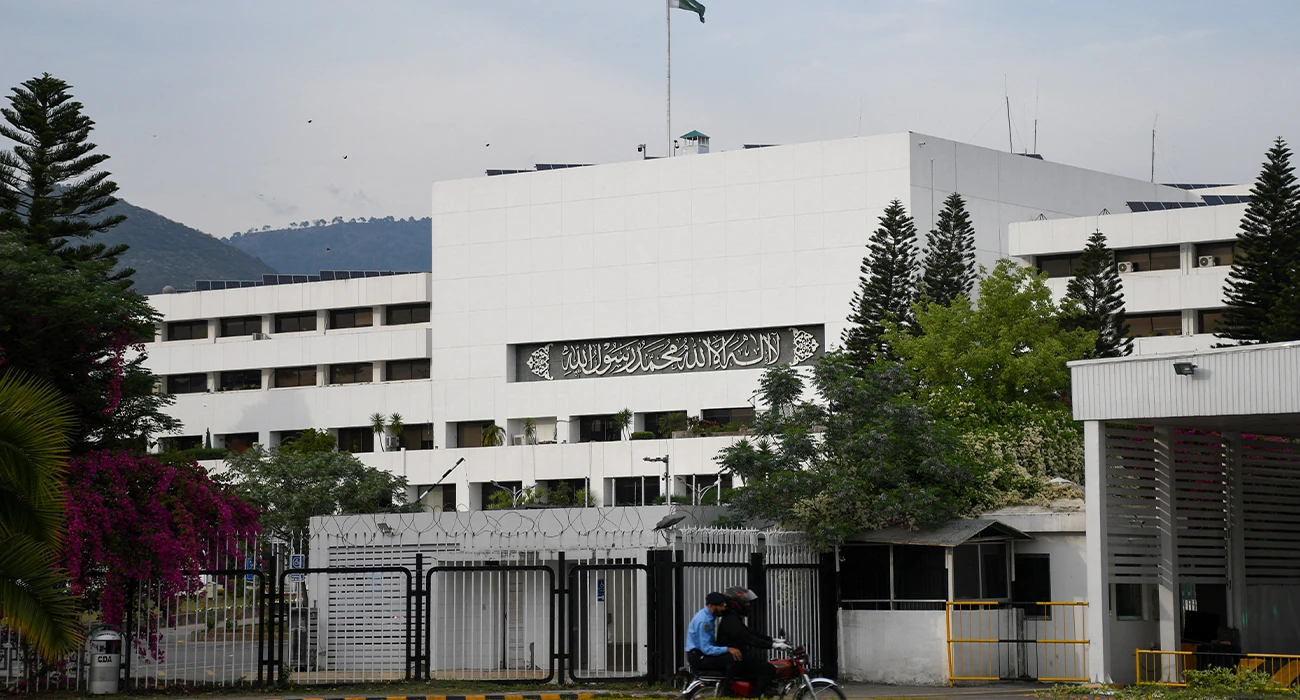
- IT secretary says approved project to provide protected devices for official communication
- Cybercrime agency says officials’ call records, travel histories and location data were targeted
ISLAMABAD: Pakistan has approved a project to provide senior officials with encrypted phones for government business, a top technology official told lawmakers Thursday, as cybercrime investigators reported the theft and sale of sensitive data about public officials.
IT and Telecommunication Secretary Zarrar Hasham Khan said a government development committee had cleared the phone project. He did not say how many devices would be provided, when they would be issued or how much the project would cost.
The plan addresses concerns over the security of official communications and personal information. At a Senate committee hearing on Thursday, Pakistan’s National Cyber Crime Investigation Agency said records concerning senior officials and other government personnel had been targeted, including data that could reveal their movements and contacts. The agency did not say when the alleged theft occurred.
“It will be secure phones, whose development is done, on which all official communication will happen,” Khan told the Senate Standing Committee on Information Technology and Telecommunication.
Khan also said government offices had begun using Beep, a locally developed application for messaging and calls, for official business.
“Instead of using WhatsApp or Zoom, we have started using it in our official business,” he said.
The government first introduced Beep in 2023 as a platform designed for communication between public employees, with data hosted in Pakistan. Khan’s remarks did not establish how widely it is now used or whether officials have been barred from using other applications.
The secretary cited mobile-device tracking in Iran as a reason for strengthening the security of government communications but did not identify a specific incident. He also said work was under way on a broader application combining messaging, payments and other services, without giving a completion date.
The Ministry of Information Technology and Telecommunication did not respond to a request for details of the phone project’s cost, specifications or timetable. The Federal Investigation Agency, a separate federal law-enforcement body, also did not respond to a request for comment.
In a separate briefing at the same hearing, Ehsanullah Chohan, an additional director of the cybercrime agency’s Islamabad office, said sensitive records relating to government officials had been targeted.
“High-profile data belonging to government dignitaries, senior officials, the bureaucracy, and personnel from our other agencies was targeted,” Chohan told lawmakers.
He said the information included call-detail records, travel histories, data linked to Pakistan’s national identity database, family information, mobile subscriber details and location records. The agency said a raid in Rawalpindi had uncovered a five-person network accused of obtaining and selling sensitive data.
Chohan did not specify how many officials were affected, where the records came from or whether the alleged data theft involved the communication systems the new phones are intended to replace. The agency’s claims could not be independently verified.
Pakistan has yet to enact a comprehensive personal data protection law, despite years of work on draft legislation. Lawmakers at Thursday’s meeting called for the pending bill to be advanced.