- Islamabad says targets linked to militant attacks and failed Afghan drone incursions
- Kabul denies launching drones, condemns strikes on Kandahar, Paktia and Khost
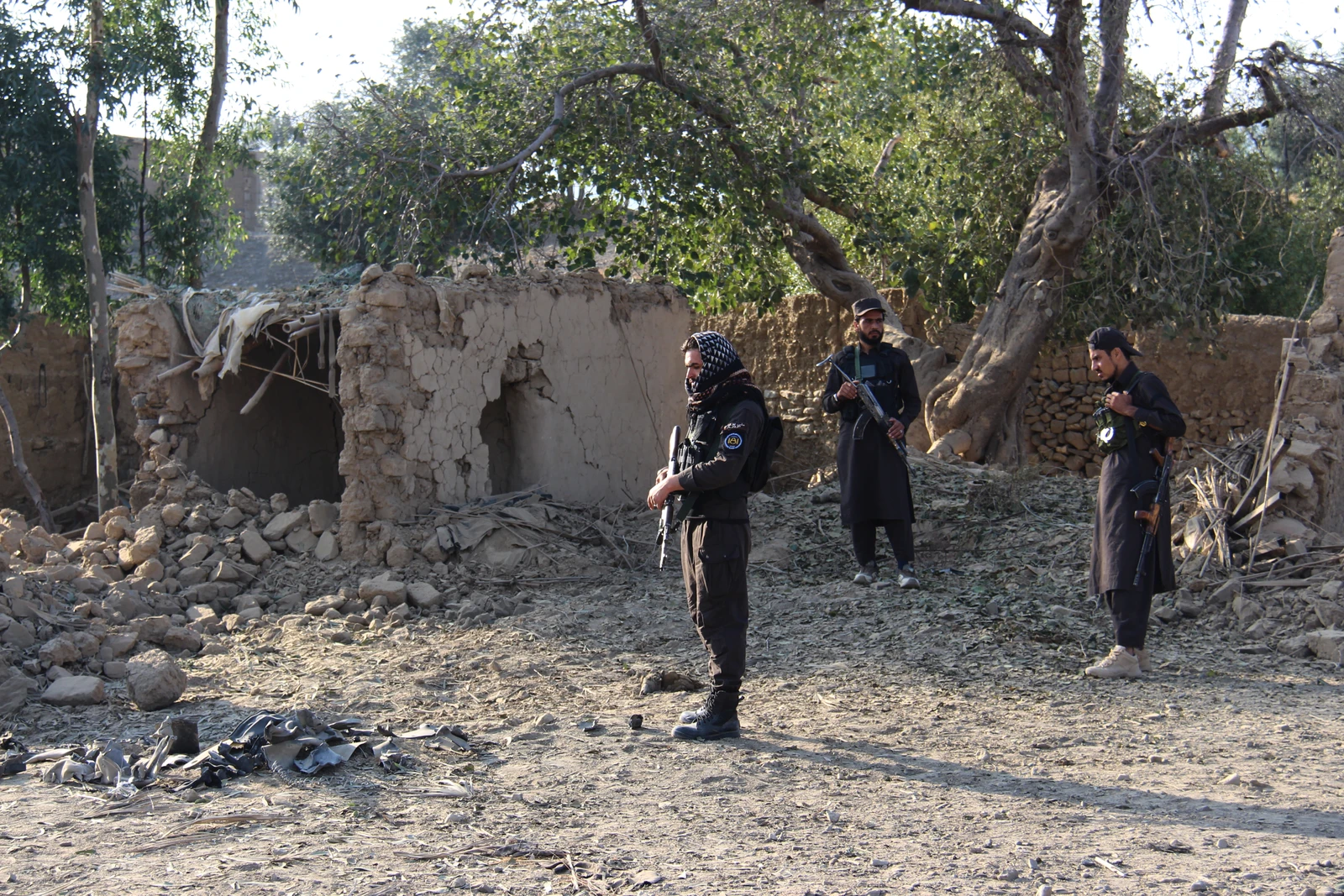
ISLAMABAD: Afghanistan vowed an “appropriate response” on Thursday after Pakistan struck 10 sites across three Afghan provinces, with Kabul saying four civilians were killed and Islamabad describing the targets as militant and drone infrastructure.
The strikes marked Pakistan’s second attack inside Afghanistan in four days, reigniting a confrontation that had remained relatively quiet for nearly three months and threatening regional efforts to resolve the neighbors’ dispute over cross-border militancy.
Islamabad has long accused Afghanistan’s Taliban government of sheltering the Tehreek-e-Taliban Pakistan and allied groups that it says launch attacks from Afghan territory. Kabul denies the accusation and says Pakistan’s growing militancy is an internal security problem.
Information Minister Attaullah Tarar said Thursday’s operation was part of Pakistan’s Ghazab lil Haq counterterrorism campaign and released footage that he said showed militant hideouts and drone infrastructure being destroyed.
“Through precise aerial and drone strikes as seen in attached clip, terrorist hideouts and support infrastructure including drone launching and storage sites across 10 locations in areas under the control of Afghan Taliban regime were comprehensively destroyed,” Tarar said in a statement.
“These targets were linked to terrorist attacks inside Pakistan against unarmed civilians and recent foiled drone intrusion by Afghan Taliban regime on 23 September.”
Pakistan said its air defense systems detected and intercepted drones launched from Afghan territory on Wednesday before they could reach their intended targets. Pakistani security sources separately said eight drones had entered the country’s airspace, with four intercepted near the Torkham border and another four in mountainous areas near the northwestern city of Kohat.
Tarar said the strikes were limited to identified military targets and described the alleged drone incursions as a violation of Pakistan’s sovereignty and territorial integrity.
Afghanistan’s Taliban government disputed Pakistan’s account, denying it had launched drones across the border and accusing Islamabad of using the allegation to justify attacks inside Afghan territory.
Taliban spokesperson Zabihullah Mujahid said Pakistani strikes had hit Kandahar, Paktia and Khost provinces and killed four civilians. He did not provide a breakdown of where the deaths occurred.
“The Islamic Emirate of Afghanistan assures the people that these shameless acts of aggression and attacks by the Pakistani military regime will be met with an appropriate response through a decisive stance,” Mujahid said in a statement posted on X.
He described the strikes as “a flagrant violation of all principles and a clear act of aggression and crime.”
“In an apparent attempt to justify such brazen aggression and oppression, Pakistani military circles spread a claim yesterday that drones had allegedly crossed into their territory from Afghanistan,” Mujahid said.
A resident of Kandahar, home to Taliban supreme leader Hibatullah Akhundzada, told AFP an airstrike had hit the city overnight, saying they heard a jet followed by a large explosion and saw a fire in the city center.
Afghan officials also reported strikes in Paktia and Khost. Mohammad Rasool Ahmadi, a spokesperson for the Paktia governor, told AFP jets had bombed the Afghan army’s 203rd Mansouri Corps, while a Khost official said strikes there had caused no casualties.
Pakistan’s latest operation followed airstrikes on three targets in eastern Afghanistan on Monday. Islamabad said those strikes destroyed militant camps, including a suicide-bomber training center, and killed 28 militants and suicide bombers.
Afghan authorities said Monday’s strikes killed three civilians and wounded four others. The UN mission in Afghanistan confirmed that a man, a woman and a girl were killed in Kunar province.
The earlier strikes followed an attack on a police compound in Kohat last Friday that killed 23 people, including 17 police officers. Eight attackers were also killed during a subsequent security operation.
The attack was claimed by Shura Ittehad-ul-Mujahideen, an alliance led by militant commander Hafiz Gul Bahadur. The Pakistani Taliban, which is organizationally separate from Afghanistan’s Taliban government but shares ideological and historical ties with it, denied involvement.
Pakistan and Afghanistan have been involved in sporadic cross-border fighting since October last year. The two countries agreed to a ceasefire in March following their worst confrontation in years, but mediation efforts by regional states have failed to produce a lasting settlement.
The presence of anti-Pakistan militants in Afghanistan remains the central point of contention, and the latest exchange of strikes and threats risks triggering renewed fighting along their shared border.
“Pakistan will continue to defend its territorial integrity and protect lives and properties of its citizens against any externally sponsored, sheltered and abetted threat by terrorist proxies,” Tarar said.
With inputs from AFP