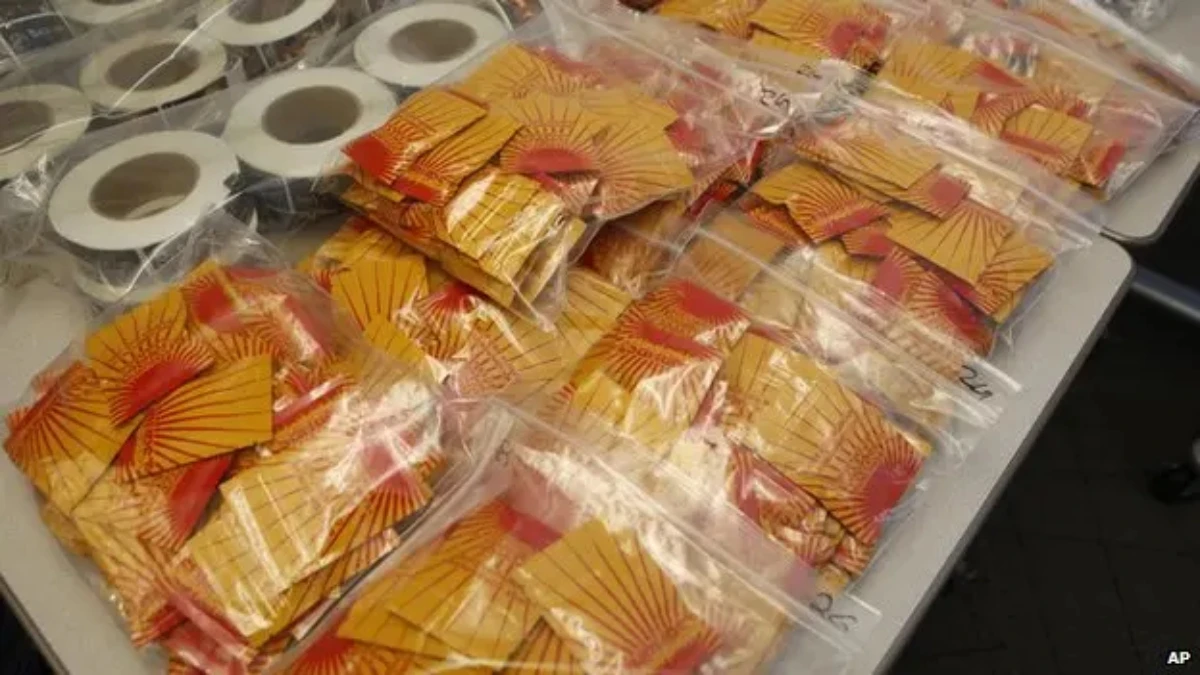
- Shipment was intercepted at Colombo port last month after an intelligence-sharing operation
- US Embassy says American training helps Pakistan disrupt international trafficking networks
ISLAMABAD: The United States on Thursday credited Pakistan’s anti-narcotics agency with helping seize 463 kilograms of Afghan-origin crystal methamphetamine worth $21 million that was bound for Sri Lanka in an operation conducted last month.
The seizure took place on Aug. 30. Sri Lankan authorities previously said the drugs were discovered concealed in bath towels inside a shipping container at Colombo port.
Earlier accounts focused on intelligence supplied by the US Drug Enforcement Administration and the interception by Sri Lankan police and customs authorities. The latest US statement said Pakistan’s Anti-Narcotics Force (ANF) ad coordinated with the American agency on the operation.
“The US Drug Enforcement Agency and the Pakistani Anti-Narcotics Force seized 463 kilograms of Afghan-origin crystal meth worth $21 million bound for Sri Lanka, leading to multiple arrests,” the embassy said on X.
The statement did not identify those arrested or specify whether they were detained in Pakistan or Sri Lanka. Sri Lankan police said after the original seizure that two Pakistani nationals had been arrested.
“The US government has provided foreign assistance to train Pakistani forces on a sustained basis, helping them serve as a partner in counternarcotics interdiction,” the embassy said.
It described the operation as an example of bilateral cooperation against international trafficking networks and said disrupting the movement of narcotics across borders also contributed to US security.
The methamphetamine intercepted in Colombo was believed to have originated in Afghanistan before traveling through Pakistan, according to the US account. Sri Lankan authorities said at the time that the shipment was linked to a Pakistan-based trafficking network and was intended to pass through the island country to international markets.
Afghanistan has long been a major source of illicit opiates and has more recently emerged as a significant producer of methamphetamine, including drugs manufactured from the wild ephedra plant. Pakistan’s shared border with Afghanistan and access to Arabian Sea shipping routes make it an important transit point for narcotics moving toward other markets.