- Over 5,000 candidates will contest for 266 National Assembly seats throughout Pakistan on Thursday
- Pakistan’s election regulator has completed arrangements to hold polling across country, says state media
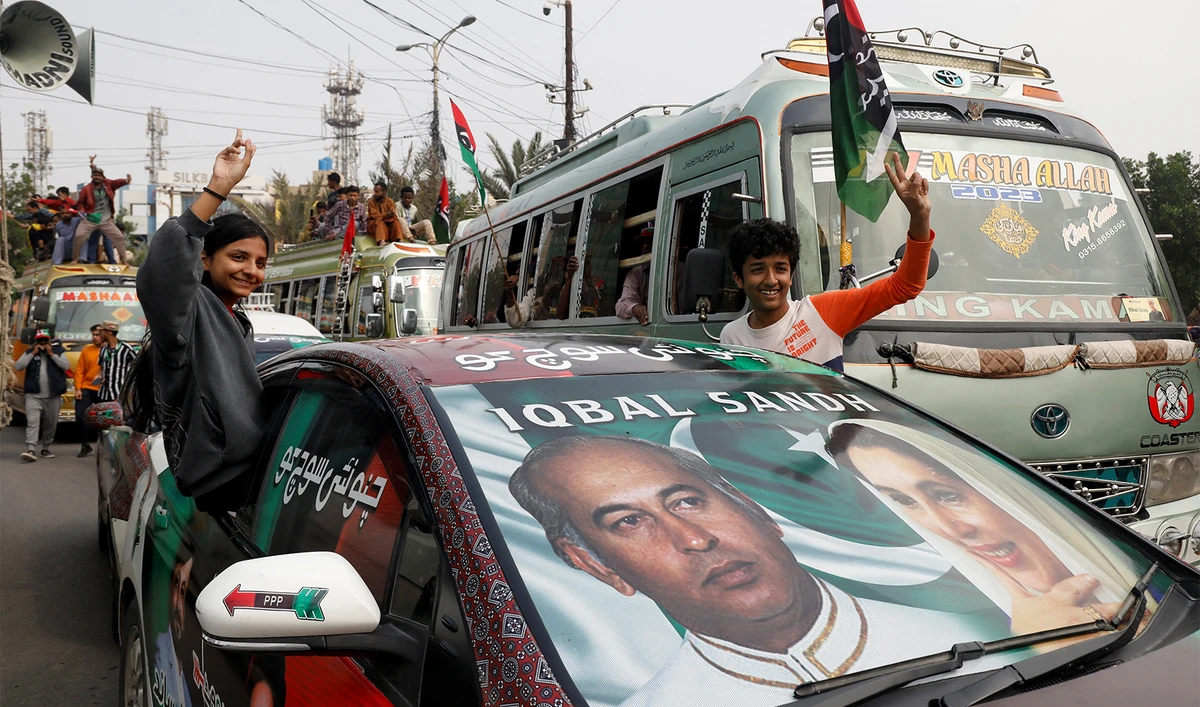
ISLAMABAD: Political parties and independent candidates across the country have until midnight today, Tuesday, to campaign for the upcoming national elections before thousands of polling booths open for millions of voters nationwide on Feb. 8.
Political parties have stepped up their campaigns to sway voters ahead of Pakistan’s national polls in recent weeks, which take place as the South Asian country faces overlapping security, economic and political crises. Pakistan’s election regulator has completed arrangements for polling and set up 90,675 polling stations in all four provinces, the state-run Radio Pakistan said.
“The election campaign by political parties and independents concludes across the country at midnight tonight for the general elections to be held on Thursday,” Radio Pakistan said in a report. “Elections will be held on two hundred and sixty-six general seats of the National Assembly and five hundred and ninety-three general seats of four provincial assemblies.”
According to figures provided by the state media, 5,121 candidates are in the race for the National Assembly seats, of which 4,807 are males and 312 females. Two transgenders are also contesting the polls.
For the four provincial assemblies of Sindh, Punjab, Khyber Pakhtunkhwa (KP), and Balochistan, a total of 12,695 candidates are contesting for the polls, out of which 12,123 are males and 570 are women.
There are a total of 128,585,760 registered voters in the country, out of which Punjab has the most, 73, 207,896. Sindh comes second with 26,994,769 registered voters while Khyber Pakhtunkhwa third with 21,928,119 voters. Balochistan, Pakistan’s most sparsely populated province and its poorest, has 5,371,947 registered voters while Pakistan’s capital Islamabad has 1,083,029 voters.
Pakistan heads to the polls marred by allegations of pre-poll rigging, mainly by former prime minister Imran Khan’s Pakistan Tehreek-e-Insaf (PTI). Khan and his party have accused the country’s powerful military of cracking down on his supporters in a bid to keep him away from national elections out of fear of his growing popularity.
The military, which has ruled Pakistan directly for over 30 years, has strongly rejected Khan’s allegations and said it does not interfere in political matters.
Apart from an economic crisis that has drastically reduced Pakistan’s reserves and weakened its national currency, a newly elected government will have to contend with a growing security threat in the country. Pakistan has seen a rise in militant attacks leading up to the polls, especially in its western provinces bordering Afghanistan, in recent weeks.
An election rally led by the PTI in southwestern Balochistan’s Sibi city was targeted in a blast last week, killing four people and injuring five. Balochistan has seen several attacks in the last week targeting security forces, political parties and the Election Commission of Pakistan (ECP).