- IHC decision comes after police file terror charges against Khan over alleged threats to public officials in a Saturday speech
- Following speech, Pakistan Electronic Media Regulatory Authority prohibited live broadcasts of Khan’s speeches by news channels
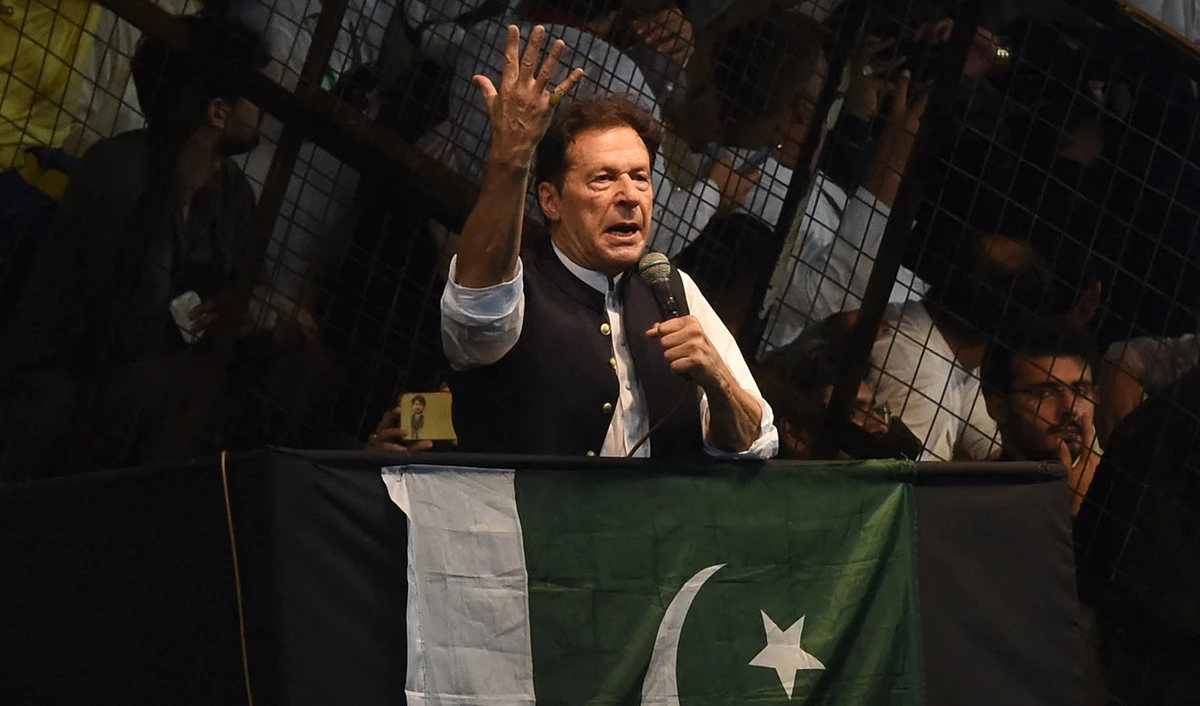
ISLAMABAD: The Islamabad High Court (IHC) on Monday said it would initiate contempt of court proceedings against ex-premier and head of the Pakistan Tehreek-e-Insaf (PTI) party, Imran Khan, for passing controversial remarks against a district court judge.
The IHC decision comes a day after police filed terrorism charges against Khan over what they said was a threat to public officials in a speech on Saturday. In the address, Khan hurled threats at Islamabad's police chief and a female judge, Zeba Chaudhry, over what he called the arrest and alleged torture of a close aide who faces sedition charges for urging the military's lower ranks to defy the orders of superiors.
Following the speech, the Pakistan Electronic Media Regulatory Authority (PEMRA) prohibited live broadcasts of Khan’s speeches by news channels, with immediate effect. Police subsequently filed terrorism charges on Khan on Sunday but a court in Islamabad Monday issued “protective bail” for Khan for three days, preventing police from arresting him over the charges.
“A larger bench comprising Justice Mohsin Akhtar Kayani, Justice Babar Sattar and Justice Miangul Hassan Aurangzeb will hear the case which is expected to be take up tomorrow Tuesday,” Dawn reported on contempt proceedings with regards to Khan’s comments about Justice Chaudhry.
Hundreds of PTI supporters stood outside Khan’s home on Sunday night and well into Monday in a show of support as the former premier held meetings inside. The party has warned that it will hold nationwide rallies if Khan is arrested while working to try to squash the charges in court.
A senior PTI leader, Ali Amin Khan Gandapur, warned his party would “take over Islamabad” if Khan was arrested by the government.
Khan was prime minister from 2018 until April when he was ousted in a parliamentary vote of no-confidence vote. He has since campaigned for new elections and refused to accept the coalition government led by PM Shehbaz Sharif.
Fawad Chaudhry, a spokesman for the PTI, has dismissed all accusations against Khan as politically motivated, telling reporters on Monday they were being used to block Khan from leading anti-government rallies.
The use of anti-terrorism laws as the basis of cases against political leaders is not uncommon in Pakistan, where Khan's government also used them against opponents and critics when it was in power.
Khan rose to power with what political analysts said was the support of the military. Khan has denied ever having military support and the army, which has ruled the country for more than three decades of Pakistan's 75-year history, denies involvement in civilian politics.