- The government has decided to increase gas and electricity prices for the revival of an IMF bailout program
- The development is likely to impact the country’s exports and make them more uncompetitive internationally
KARACHI: Industrialists in Pakistan warned of a significant rise in the cost of production on Tuesday after the government announced it would table a finance bill in parliament to levy additional taxes of $636 million for the resumption of a $7 billion International Monetary Fund (IMF) loan program.
Cash-strapped Pakistan jacked up the price of natural gas by up to 124 percent for domestic and commercial consumers earlier this week while approving an increase of Rs15.5 per unit in electricity tariff.
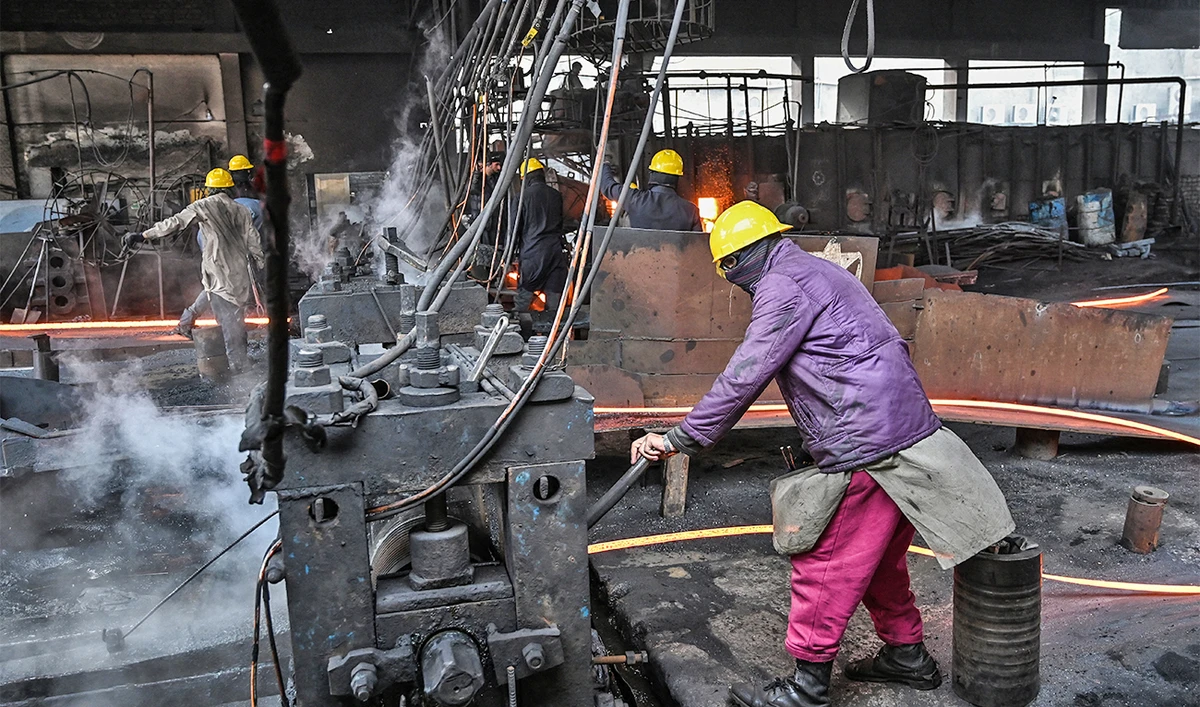
The increase is meant to bridge the overall revenue shortfall, though Pakistani industrialists and officials believe it will lead to about 30 percent rise in the overall production cost in the country along with the rapid depreciation of national currency.
Muhammad Zubair Motiwala, chief executive officer of the Trade Development Authority of Pakistan (TDAP), said the tariff hike will be “unbearable” for the export-oriented sector.
“After the proposed tariff hike and rupee devaluation that has increased raw material prices, the cost of production will increase by 25 to 30 percent,” he said.
“The tariff rate of electricity will almost double and the impact [on exports] is expected to be around 80 percent,” he continued. “Personally, I feel the gas rate hike has not been much under the circumstances since we are in the IMF program.”
Motiwala noted the existing price difference between Pakistan and other regional competitors had been about 21 percent even without factoring in new rate hikes.
He vowed to take up the issues faced by the country’s industrialists with the commerce ministry and Prime Minister Shehbaz Sharif in the coming days.
Other members of the business community also agreed that the development prove detrimental for the country’s exports and industry.
“We are condemning the move because it will lead to a total collapse of the industry and local trade,” Muhammad Suleman Chawla, senior vice president of the Federation of Pakistan Chambers of Commerce and Industry (FPCCI), told Arab News.
“With record high inflation, it is already challenging to do business in Pakistan,” he continued. “Now, such a rate hike will largely impact the export sector, especially our textiles which will become 20 percent more expensive.”
The FPCCI official said the exports from Pakistan were likely to become “more uncompetitive” as compared to other regional peers.
“Our estimates suggest that the cost of doing business will increase by 20 percent across industries,” he added.
Muhammad Babar Khan, chairman of the Pakistan Hosiery Manufacturers and Exporters Association (PHMA), agreed with Chawla, saying the surge in power tariffs would have a direct impact on the industry.
“We are already facing an energy crisis and will lose our export markets to regional competitors after the rate hike,” Khan told Arab News. “The way out is for the government to realize the gravity of the situation and provide us a level playing field.”
Pakistan previously increased gas prices in October 2020 by up to eight percent for different sectors.