- The statement comes a day after PM hopeful Nawaz Sharif called for forming a coalition government
- Thursday’s election failed to produce a clear winner with ex-PM Khan-backed candidates outperforming rivals
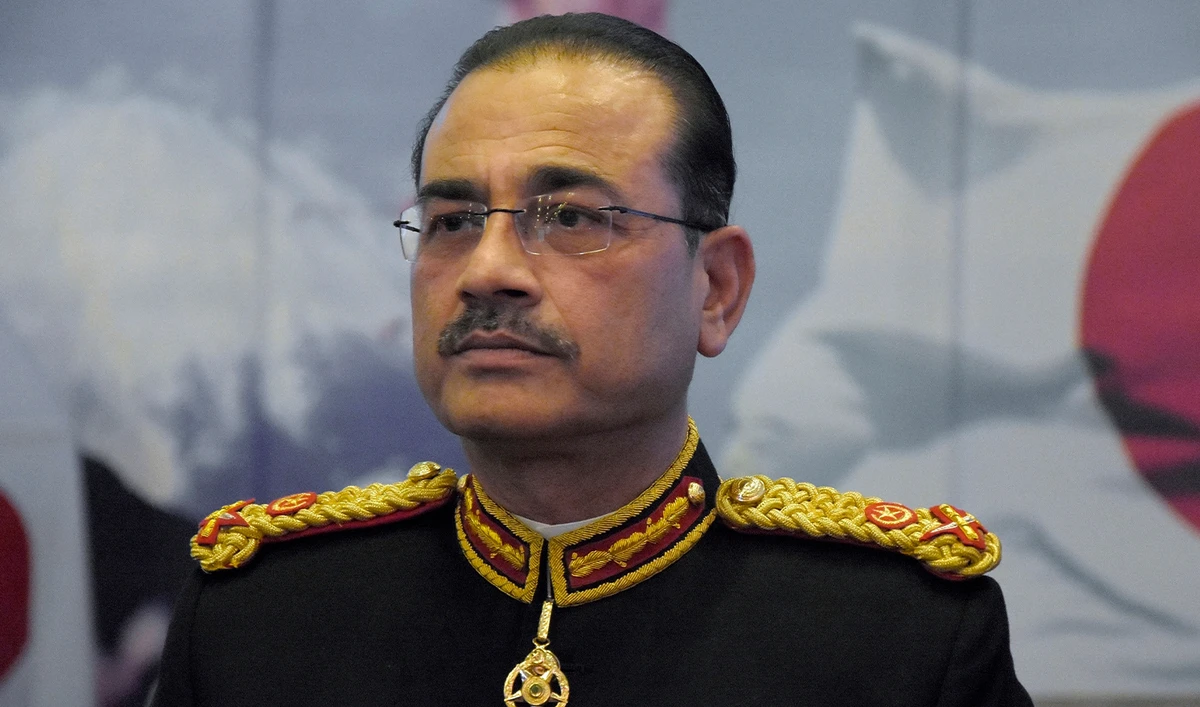
ISLAMABAD: In rare public comments on politics, Pakistan’s army chief on Friday called for Pakistani political parties to form a “unified government” that would help the country move on from the politics of “anarchy and polarization.”
General Asim Munir’s remarks came a day after prime ministerial hopeful Nawaz Sharif called on allied parties to form a coalition government after his Pakistan Muslim League-Nawaz party did not win enough seats to rule alone following general elections on Thursday. Ahead of the polls, Sharif, a three-time former prime minister, was believed to be the favorite to win and was widely seen as having the backing of the army. He denies this and the army says it does not interfere in political affairs.
Though the final count of all 265 National Assembly seats has not yet been released, candidates backed by the Pakistan Tehreek-e-Insaf (PTI) party of jailed ex-PM Imran Khan were leading the race with 99 seats, followed by Sharif’s PML-N with 71 and the Pakistan Peoples Party (PPP) with 53.
It is by all admissions a shocking victory for Khan, whose party has defied a months-long crackdown that included restrictions on campaigning, with many important leaders of the party in jail or disallowed from running. Khan himself was missing from elections as he has been in prison since August last year and is also disqualified from contesting elections for ten years.
Ahead of the polls, allegations of military meddling took center-stage, casting a shadow over a historic event that marked only the country’s third-ever democratic transition of power.
“Pakistan’s diverse polity and pluralism will be well-represented by a unified government of all democratic forces imbibed with national purpose,” the army chief said in a statement shared by the military’s media wing.
“Elections and democracy are means to serve people of Pakistan and not ends in themselves. The nation needs stable hands and a healing touch to move on from the politics of anarchy and polarization which does not suit a progressive country of 250 million people.”
Munir also called for political parties to show “maturity and unity” and for politicians and their supporters to “rise above self-interests” and work together to make Pakistan’s democracy “functional and purposeful.”
The army chief’s remarks came as top leaders of Shaif’s PML-N and the PPP led by Bilawal Bhutto-Zardari had already started discussions on the formation of a new government.
It is as yet not clear if they will also reach out to the PTI, which on Thursday rejected Sharif’s offer to be part of a coalition set-up.
“We are not going to form any alliance or coalition with them. They are not trustworthy people,” spokesman Raoof Hassan told Arab News.
But there is little doubt that any coalition, without the inclusion of PTI, would only bring more resentment and instability to Pakistan at a time when it is facing a surge in militancy and a seemingly intractable economic crisis that has left millions disillusioned.
The days ahead are likely to see political feuding and possible horse trading as the PML-N and the PPP — in their battle to hold sway over parliament where the most important decisions require a two-thirds majority — scramble to form alliances with independents and smaller parties.
Though the temptation to jump Khan’s ship and join another party forming the government will be high and could make the independents a political wild card in the coming days, PTI-backed candidates have repeatedly said they will not join the mainstream parties but return into the fold of Khan’s party once it wins back its bat symbol, of which it was stripped ahead of the elections.
The party had lost its symbol because the election commission said it did not hold intra-party elections, a legal requirement to run in polls as a party, forcing all its candidates to run as independents, each with a distinct symbol.
PTI’s Hassan told reporters on Friday new intra-party elections would be held within a fortnight.